


Route Planning
Map route requirements, trench depth, and site access before deploying Mayura TO.
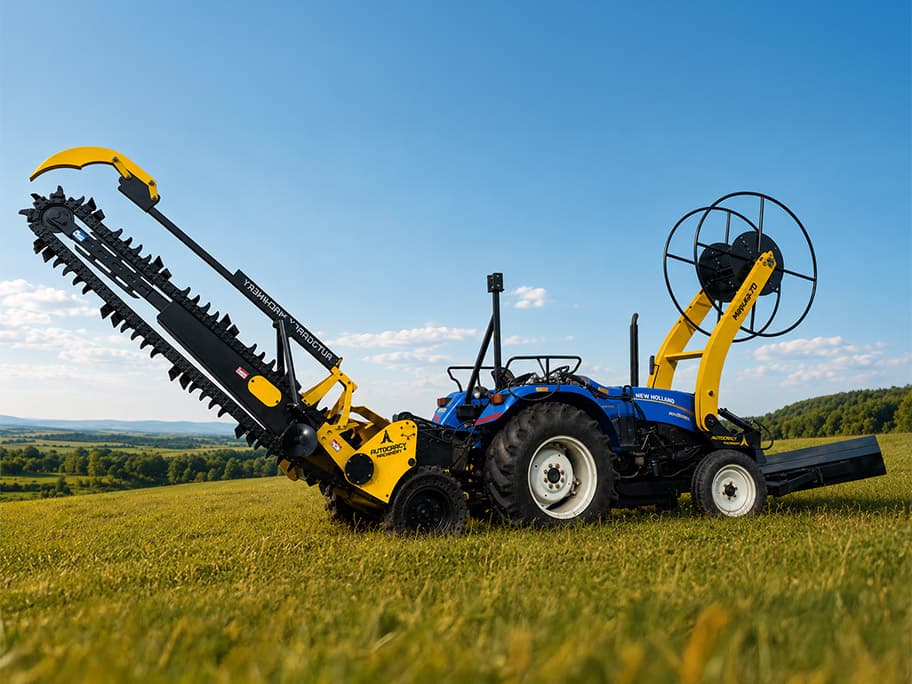
- | Equipment
Tractor
>60 HP
PTO / Hydraulic
300 m/hr (150 m/hr in soft soil, 90 m/hr in hard soil)
110–280 mm
Up to 1800 mm
30–60 mm
Contemporary construction projects increasingly require integrated utility installation methods that minimize site disruption and accelerate project delivery. The Mayura TO construction trencher is suited for developments involving transport infrastructure, industrial facilities, urban expansion, and utility network deployment where installation efficiency is critical. Its one-pass operating capability allows trench excavation, duct placement, and backfilling to be completed within a single workflow, reducing equipment movements across active construction sites.
This approach is particularly valuable on projects with restricted working windows, traffic management requirements, or limited access corridors. By consolidating multiple activities into one operation, project teams can better coordinate construction sequencing, optimize resource allocation, and maintain progress across linear infrastructure developments while reducing temporary site occupancy.
PROJECT EXECUTION
Construction
Contemporary construction projects increasingly require integrated utility installation methods that minimize site disruption and accelerate project delivery. The Mayura TO construction trencher is suited for developments involving transport infrastructure, industrial facilities, urban expansion, and utility network deployment where installation efficiency is critical. Its one-pass operating capability allows trench excavation, duct placement, and backfilling to be completed within a single workflow, reducing equipment movements across active construction sites.
This approach is particularly valuable on projects with restricted working windows, traffic management requirements, or limited access corridors. By consolidating multiple activities into one operation, project teams can better coordinate construction sequencing, optimize resource allocation, and maintain progress across linear infrastructure developments while reducing temporary site occupancy.
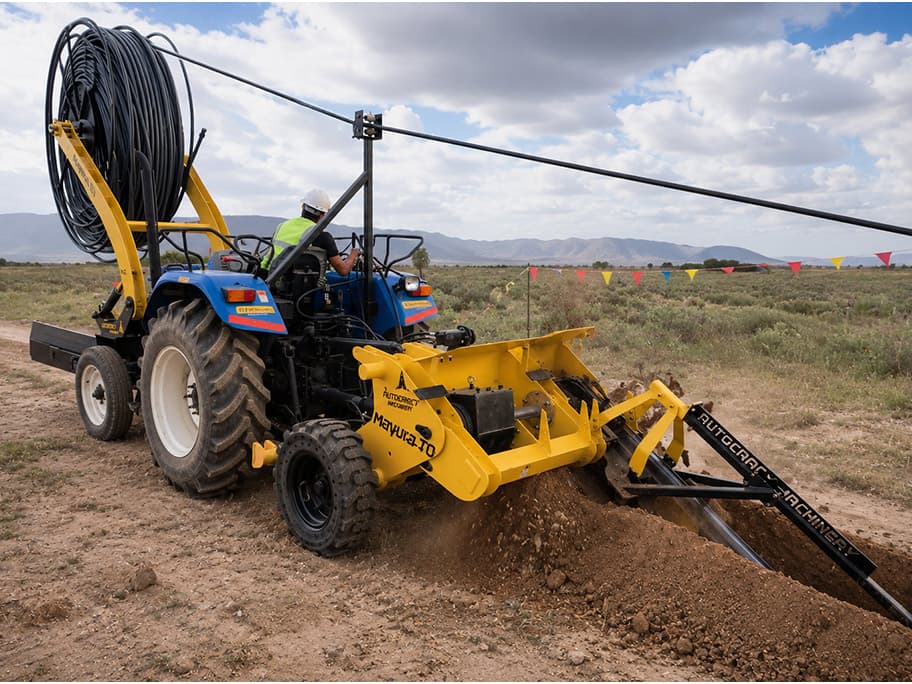
Construction
Successful utility installation within construction environments requires careful planning of excavation sequences, service alignments, and traffic interface management. The Mayura TO infrastructure installation machine supports projects where rapid utility deployment must be integrated with broader civil construction activities. Before execution, project teams should complete utility surveys, verify subsurface conditions, and establish clear installation tolerances to prevent conflicts with existing infrastructure.
Operational priorities should also include spoil management, access planning, and coordination between trenching and downstream commissioning activities. Implementing a one-pass installation methodology can help reduce equipment congestion, streamline site logistics, and improve overall construction efficiency. Continuous monitoring of trench quality and installed assets further supports compliance with engineering specifications and long-term infrastructure performance.
WORKFLOW
Map route requirements, trench depth, and site access before deploying Mayura TO.
Use the attachment setup to keep trench output consistent across project sites, road edges, smart-city corridors, and underground utility zones.
Cleaner trench profiles help utility laying, inspection, backfill, and civil finishing teams proceed with less rework.
Autocracy Machinery can help match machine configuration, brochure details, and application guidance to the project.
APPLICATION SUPPORT
Share your site conditions, output goals, and timeline so the Autocracy team can guide model fit, brochure details, and next steps for your project.
Built for performance. Trusted by contractors, municipalities, and EPC teams across sectors.
| Feature | Value |
|---|---|
| ID of Duct roll (adjustable) | 850 mm (adjustable) |
| Width of Duct Roll | 600 mm |
| OD of Duct roll | Up to 2000 mm |
| Fuel Consumption Rate | 5–6 L/hr |
| Max Backfilling Depth: | 2000 mm |
| Max Blades Filling Width: | 2500 mm |
| Min Blades Filling Width: | 1000 mm |
| Overall Length: | 10500 mm |
| Overall Width: | 3200 mm |
| Overall Height: | 4500 mm |
Common questions about using Mayura TO in this application.
| Attachment

Industry model fit in UAE
Mayura TO is listed here for project teams in UAE planning construction work with trenchers. Selection should come down to carrier fit, operating method, route clearance, equipment movement, working width, daily output, and safety coordination, and whether the machine supports site productivity, crew coordination, depth control, and fast mobilisation.
For Construction work, compare Mayura TO against route clearance, equipment movement, working width, daily output, and safety coordination before finalising equipment deployment, because these details decide whether the machine fits the route, access, and daily output target.
Mayura TO may suit building services, drainage, foundations, road-edge utilities, and site preparation when access, output goals, support arrangements, and follow-on crews line up with the job.
Use the page to move from specification review into a clearer discussion about construction suitability, brochure details, field support, and quotation requirements.
For trenchers, check trench depth, trench width, spoil handling, route crossings, surface reinstatement, and carrier fit together with active jobsites, compacted ground, access-controlled work fronts, and staged civil activity; this helps separate a suitable construction setup from a generic model match.


