Route Planning
Map route requirements, trench depth, and site access before deploying Dhruva 100.
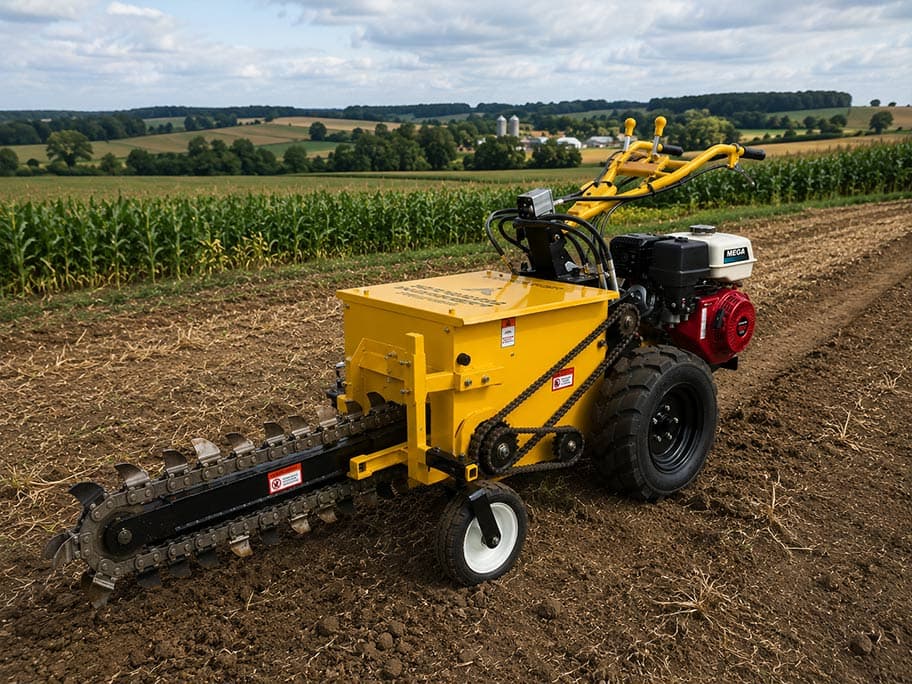
Mini trencher machine | Equipment
Self Propelled
11 HP
Gear Drive Transmission
40–80 m/hr
120–200 mm
500 mm max depth
12,28 V,Ah
Dhruva 100 is configured for construction utility trenching and urban infrastructure work where controlled output and reliable site performance are essential.
Dhruva 100 helps teams working across project sites, road edges, smart-city corridors, and underground utility zones improve clean utility trenches, predictable production, and smoother site coordination.
PROJECT EXECUTION
Construction
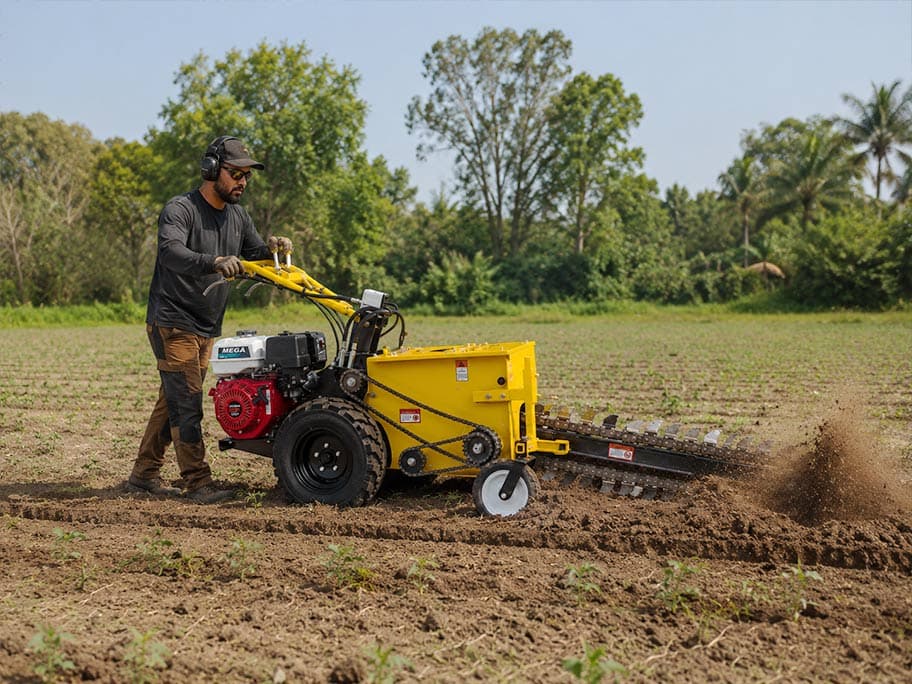
Walk Behind Trenchers is used for construction utility trenching and urban infrastructure work where route consistency and execution speed directly impact rollout schedules.
Teams deploy it across project sites, road edges, smart-city corridors, and underground utility zones with planning around utility drawings, site access, trench dimensions, traffic constraints, and reinstatement plans.
The machine helps maintain cleaner worksite output for utility laying, inspection, backfill, and civil finishing teams.
Construction
Maintain consistent trench depth and alignment to reduce rework during construction utility trenching and urban infrastructure work and site reinstatement.
Plan route productivity based on utility drawings, site access, trench dimensions, traffic constraints, and reinstatement plans.
Use predictable trench output to improve handoff quality between utility laying, inspection, backfill, and civil finishing teams.
WORKFLOW
Map route requirements, trench depth, and site access before deploying Dhruva 100.
Use the attachment setup to keep trench output consistent across project sites, road edges, smart-city corridors, and underground utility zones.
Cleaner trench profiles help utility laying, inspection, backfill, and civil finishing teams proceed with less rework.
Autocracy Machinery can help match machine configuration, brochure details, and application guidance to the project.
APPLICATION SUPPORT
Share your site conditions, output goals, and timeline so the Autocracy team can guide model fit, brochure details, and next steps for your project.
Built for performance. Trusted by contractors, municipalities, and EPC teams across sectors.
| Feature | Value |
|---|---|
| Chain Type | Shark with Carbide Tips |
| Gross weight | 250 kgs |
| Overall length | 2800 mm |
| Overall width | 900 mm |
| Overall height | 1100 mm |
Common questions about using Dhruva 100 in this application.
Industry model fit in Bahrain
Dhruva 100 Mini trencher machine is listed here for regional project teams planning construction work with walk behind trenchers. Selection should come down to carrier fit, operating method, route clearance, equipment movement, working width, daily output, and safety coordination, and whether the machine supports site productivity, crew coordination, depth control, and fast mobilisation.
For Construction work, compare Dhruva 100 against route clearance, equipment movement, working width, daily output, and safety coordination before finalising equipment deployment, because these details decide whether the machine fits the route, access, and daily output target.
Dhruva 100 may suit building services, drainage, foundations, road-edge utilities, and site preparation when access, output goals, support arrangements, and follow-on crews line up with the job.
Use the page to move from specification review into a clearer discussion about construction suitability, brochure details, field support, and quotation requirements.
For walk behind trenchers, check access width, turning room, target depth, spoil control, crew size, and transport between work fronts together with active jobsites, compacted ground, access-controlled work fronts, and staged civil activity; this helps separate a suitable construction setup from a generic model match.
Dhruva 100 Mini trencher machine for Construction in Bahrain should be reviewed as part of the full site workflow, not only as a standalone equipment listing. Buyers usually need to compare the required output, route length, working width, access condition, operator availability, and delivery timeline before selecting a machine for field deployment.
Dhruva 100 Mini trencher machine is listed here for regional project teams planning construction work with walk behind trenchers. Selection should come down to carrier fit, operating method, route clearance, equipment movement, working width, daily output, and safety coordination, and whether the machine supports site productivity, crew coordination, depth control, and fast mobilisation. This makes the page useful for early project planning, tender comparison, contractor discussions, and internal equipment shortlisting where teams need clear information before speaking with a supplier.
For Construction work, compare Dhruva 100 against route clearance, equipment movement, working width, daily output, and safety coordination before finalising equipment deployment, because these details decide whether the machine fits the route, access, and daily output target. The same review should also include soil or surface condition, transport access, available carrier or tractor capacity, daily productivity expectation, service support, and the practical handoff between excavation, installation, backfilling, lifting, or finishing work.
Dhruva 100 may suit building services, drainage, foundations, road-edge utilities, and site preparation when access, output goals, support arrangements, and follow-on crews line up with the job. For infrastructure and utility projects, the equipment decision often affects crew size, fuel use, rework, route consistency, safety planning, and the number of machines required on site. A structured comparison helps avoid choosing a model only by headline specification.
Use the page to move from specification review into a clearer discussion about construction suitability, brochure details, field support, and quotation requirements. Autocracy Machinery pages are organised to help project owners, EPC teams, contractors, municipalities, utilities, agriculture teams, and site managers connect product capability with real operating conditions before requesting a quote or brochure.
When evaluating Dhruva 100 Mini trencher machine for Construction in Bahrain, teams can use the model information, media, specifications, application notes, and quote conversation together. This gives procurement and site teams a clearer basis for confirming fit, planning mobilisation, and preparing the next step with Autocracy Machinery.
A practical selection process also considers how the machine will move between work fronts, how operators will maintain output through the day, and how the surrounding crew will manage material handling, marking, inspection, and finishing work after the equipment completes its pass.
For many field projects, the right equipment choice is the one that balances specification, availability, maintenance access, and predictable output. Dhruva 100 Mini trencher machine for Construction in Bahrain should therefore be discussed with both procurement teams and site supervisors before finalising the requirement.
Project teams can prepare a stronger quote request by sharing route length, expected depth or working range, ground condition, preferred carrier, transport limits, daily target, and any special constraints such as narrow access, road-edge work, finished surfaces, utilities, or active public areas.
The content on this page is intended to support that discussion with enough context to compare options, understand the application fit, and decide whether a standard model, attachment configuration, brochure review, or direct consultation is the right next step.
Autocracy Machinery supports buyers who need equipment for trenching, pole installation, material handling, aquatic work, agricultural operations, landscaping, water management, solar EPC activity, telecom routes, defence infrastructure, and general construction requirements.
Before mobilisation, teams should confirm safety practices, operator familiarity, service support, spare availability, site preparation, and the handoff between machine output and downstream work. That final check helps keep deployment practical once the equipment reaches the project site.