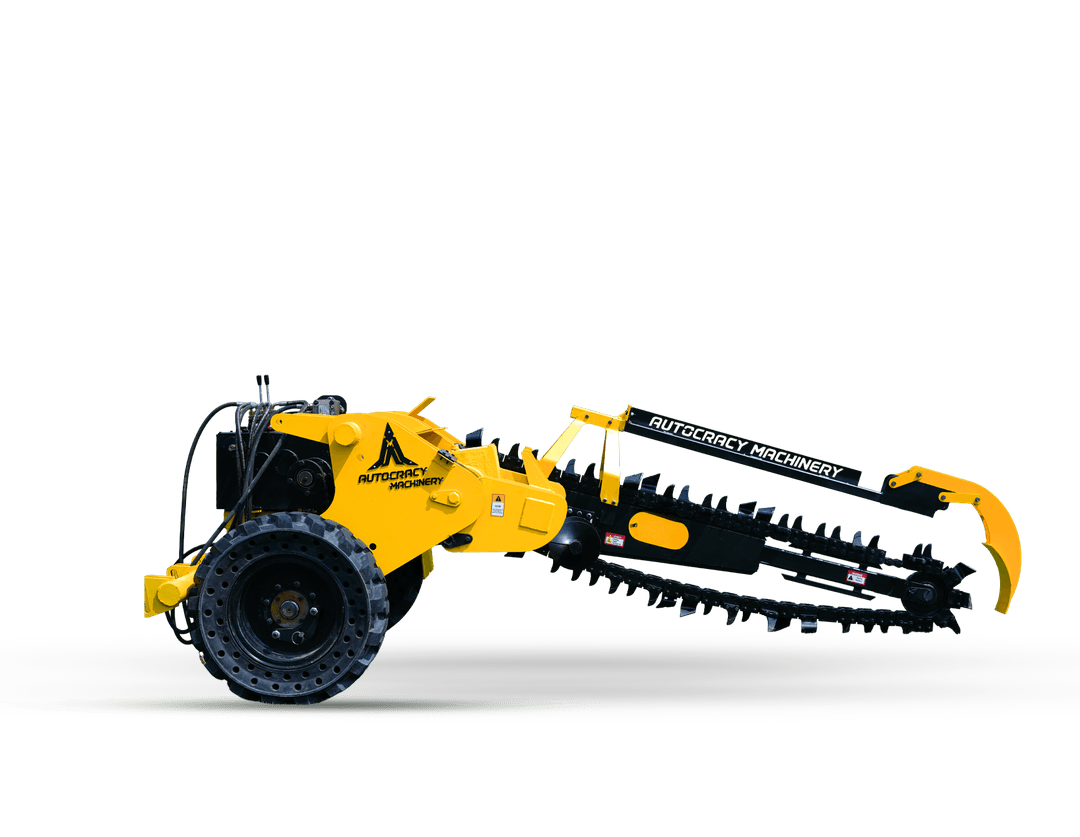
Route Planning
Map route requirements, trench depth, and site access before deploying Gaja 100XT.
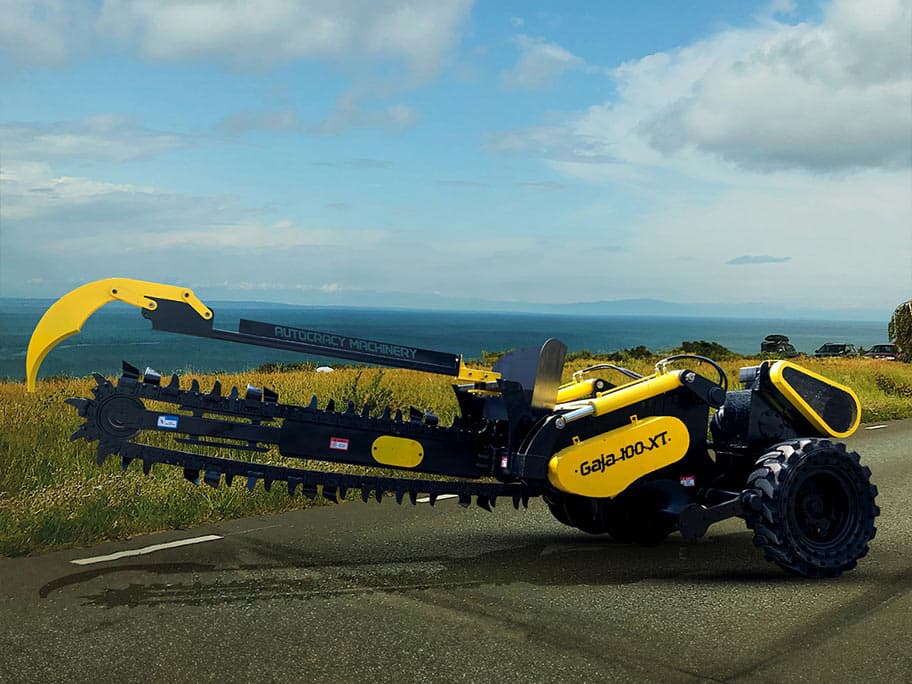
- | Attachment
Tractor
>60 HP
PTO / Hydraulic
200m/hr in soft soil, 150m/hr in hard soil
110-280 mm
1200-1500 mm
>25 lpm
The successful execution of water infrastructure projects depends on trenching equipment that supports pipeline installation, drainage improvements, irrigation network development, and utility corridor expansion while delivering accurate excavation and operational efficiency. The Gaja 100XT is designed to address these requirements through deep trenching capability and controlled excavation performance across varying site conditions. With trench depths reaching up to 1500 mm, the machine supports the installation of buried water infrastructure that requires protection from surface activity and environmental exposure.
As a Gaja100XT Underground Water Pipeline Trencher, it is well suited for projects involving transmission pipelines, water distribution systems, groundwater recharge facilities, and network modernization programs. The machine’s narrow trench profile helps reduce excavation volumes and restoration requirements, enabling project teams to improve construction efficiency while maintaining compliance with engineering specifications and project execution schedules.
PROJECT EXECUTION
Water Management
Water management projects frequently involve the development of interconnected infrastructure networks that transport water across agricultural zones, utility corridors, industrial facilities, and end-user distribution systems. The machine supports trench excavation for irrigation pipelines, drainage channels, water supply connections, and underground utility installations where trench accuracy is critical. In utility corridors, controlled trench widths assist in maintaining separation from existing services while reducing unnecessary ground disturbance.
The equipment is also suitable for last-mile connectivity projects that extend water access to remote facilities and expanding service areas. As Gaja100XT Trenching Machinery for Water Management, it enables contractors to construct pipeline routes efficiently while supporting consistent installation standards. Its ability to maintain trench quality across changing soil conditions contributes to improved project coordination and reduced disruption during infrastructure deployment.
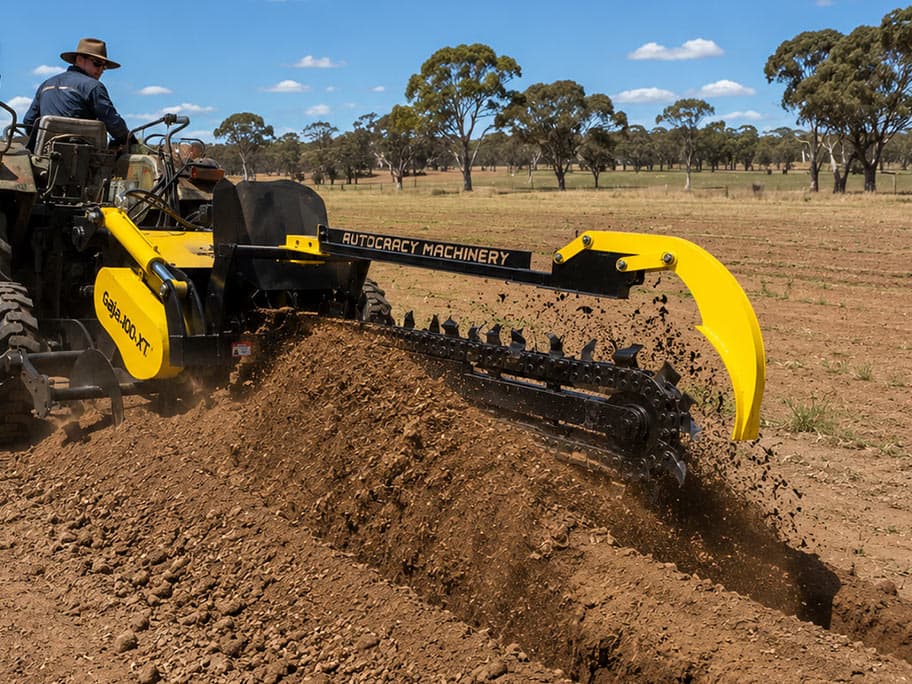
Water Management
Successful water infrastructure delivery depends on construction productivity, trench consistency, resource optimization, and adherence to design requirements. The Gaja 100XT supports these priorities through a heavy-duty drivetrain, PTO and hydraulic power transmission, and stable operating performance during continuous trenching operations. Its controlled excavation capability helps contractors maintain specified trench dimensions, reducing the likelihood of corrective work during pipeline installation. The machine’s fuel-efficient operation contributes to improved equipment utilization and predictable operating costs across large-scale projects.
As Gaja100XT Drainage Trenching Machinery, it is particularly effective for projects requiring long trench runs, drainage network expansion, and water flow management infrastructure. By combining trenching precision with reliable field performance, the machine supports efficient project execution while helping stakeholders achieve quality, schedule, and operational objectives throughout the construction lifecycle.
WORKFLOW
Map route requirements, trench depth, and site access before deploying Gaja 100XT.
Use the attachment setup to keep trench output consistent across rural pipeline routes, municipal utility lines, and field irrigation networks.
Cleaner trench profiles help pipe laying, jointing, testing, and backfilling teams proceed with less rework.
Autocracy Machinery can help match machine configuration, brochure details, and application guidance to the project.
APPLICATION SUPPORT
Share your site conditions, output goals, and timeline so the Autocracy team can guide model fit, brochure details, and next steps for your project.
Built for performance. Trusted by contractors, municipalities, and EPC teams across sectors.
| Feature | Value |
|---|---|
| Gross Weight | 2100kgs |
| Overall Length | 5.1 mts |
| Overall Width | 1.85 mts |
| Overall Height | 1.3 mts |
Common questions about using Gaja 100XT in this application.
Industry model fit in Bahrain
For Water Management deployment on Bahrain project sites, Gaja 100XT is considered when a attachment must handle canal edges, drainage alignments, wet soil pockets, and rural or municipal water routes. The model should be reviewed against route cutting, trench preparation, and utility corridor work where line accuracy matters, water flow continuity, depth consistency, soil handling, and low rework, and the way crews hand work over after each pass.
The first comparison for Gaja 100XT should be gradient, water table, spoil placement, pipe depth, and monsoon-season access, because those factors usually decide field fit before horsepower, headline capacity, or attachment choice.
Gaja 100XT can support drainage, irrigation channels, pipeline routes, desilting support, and water distribution works, depending on route condition, access, output target, operator workflow, and site support availability.
This model page is meant to support a more practical conversation about water management fit, brochure review, transport planning, deployment timing, and quote needs.
A better water management shortlist connects trench depth, trench width, spoil handling, route crossings, surface reinstatement, and carrier fit with canal edges, drainage alignments, wet soil pockets, and rural or municipal water routes, so Gaja 100XT is reviewed against the actual job sequence.