


Route Planning
Map route requirements, trench depth, and site access before deploying Rudra Prime mini.
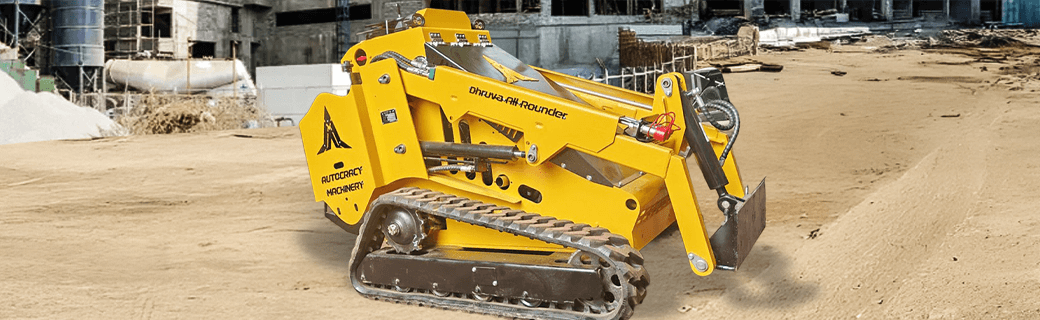
Self Propelled Multi Utility Machine | Equipment
2500mm x 1000mm x 1400mm
40 L
40 L
1300 Kgs
"800mm(on soft soil) and 500mm(on Hard soil)"
100mm
0.5 m³
Rudra Prime mini is configured for construction utility trenching and urban infrastructure work where controlled output and reliable site performance are essential.
Rudra Prime mini helps teams working across project sites, road edges, smart-city corridors, and underground utility zones improve clean utility trenches, predictable production, and smoother site coordination.
PROJECT EXECUTION
Construction
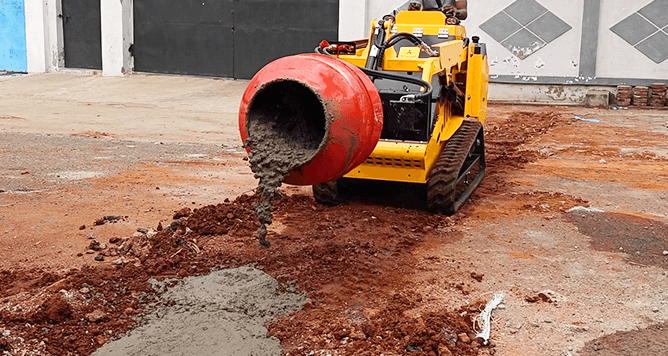
Self-propelled Multi Attachments Machine is used for construction utility trenching and urban infrastructure work where route consistency and execution speed directly impact rollout schedules.
Teams deploy it across project sites, road edges, smart-city corridors, and underground utility zones with planning around utility drawings, site access, trench dimensions, traffic constraints, and reinstatement plans.
The machine helps maintain cleaner worksite output for utility laying, inspection, backfill, and civil finishing teams.
Construction
Maintain consistent trench depth and alignment to reduce rework during construction utility trenching and urban infrastructure work and site reinstatement.
Plan route productivity based on utility drawings, site access, trench dimensions, traffic constraints, and reinstatement plans.
Use predictable trench output to improve handoff quality between utility laying, inspection, backfill, and civil finishing teams.
WORKFLOW
Map route requirements, trench depth, and site access before deploying Rudra Prime mini.
Use the attachment setup to keep trench output consistent across project sites, road edges, smart-city corridors, and underground utility zones.
Cleaner trench profiles help utility laying, inspection, backfill, and civil finishing teams proceed with less rework.
Autocracy Machinery can help match machine configuration, brochure details, and application guidance to the project.
APPLICATION SUPPORT
Share your site conditions, output goals, and timeline so the Autocracy team can guide model fit, brochure details, and next steps for your project.
Built for performance. Trusted by contractors, municipalities, and EPC teams across sectors.
| Feature | Value |
|---|---|
| Width (Post Hole Digger) | Dig Dia 250mm |
| Depth (Post Hole Digger) | 1000 mm |
| Speed (Post Hole Digger) | 2 holes for 3 minutes |
| Sweep Cover Width (Sweeper) | 1200 mm |
| Capacity (Loading and Unloading Bucket) | 0.5m³ |
| Working width (Loading and Unloading Bucket) | 1200 mm |
| Total width (Loading and Unloading Bucket) | 1200 mm |
| Capacity (Dozer Split bucket) | 0.5m³ |
| Working width at max angle (Dozer Split bucket) | 0.5m³ |
| Working width at max angle (Dozer Split bucket) | 1200 mm |
| Total width (Dozer Split bucket) | 1200 mm |
| Impact Rate (Breaker) | 400 - 600 BPM |
| Chisel Diameter (Breaker) | 1.5 inch |
| Dozer Capacity | 0.5m³ |
| Working width at max angle (Dozer) | 1000 mm |
| Total width | 1200 mm |
Common questions about using Rudra Prime mini in this application.
Industry model fit in Brazil
Rudra Prime mini Self Propelled Multi Utility Machine is listed here for project teams in Brazil planning construction work with self-propelled multi attachments machine. Selection should come down to carrier fit, operating method, route clearance, equipment movement, working width, daily output, and safety coordination, and whether the machine supports site productivity, crew coordination, depth control, and fast mobilisation.
For Construction work, compare Rudra Prime mini against route clearance, equipment movement, working width, daily output, and safety coordination before finalising equipment deployment, because these details decide whether the machine fits the route, access, and daily output target.
Rudra Prime mini may suit building services, drainage, foundations, road-edge utilities, and site preparation when access, output goals, support arrangements, and follow-on crews line up with the job.
Use the page to move from specification review into a clearer discussion about construction suitability, brochure details, field support, and quotation requirements.
For self-propelled multi attachments machine, check attachment changeover, access limits, fuel support, operator workflow, and daily task mix together with active jobsites, compacted ground, access-controlled work fronts, and staged civil activity; this helps separate a suitable construction setup from a generic model match.