


Route Planning
Map route requirements, trench depth, and site access before deploying Decoiler.
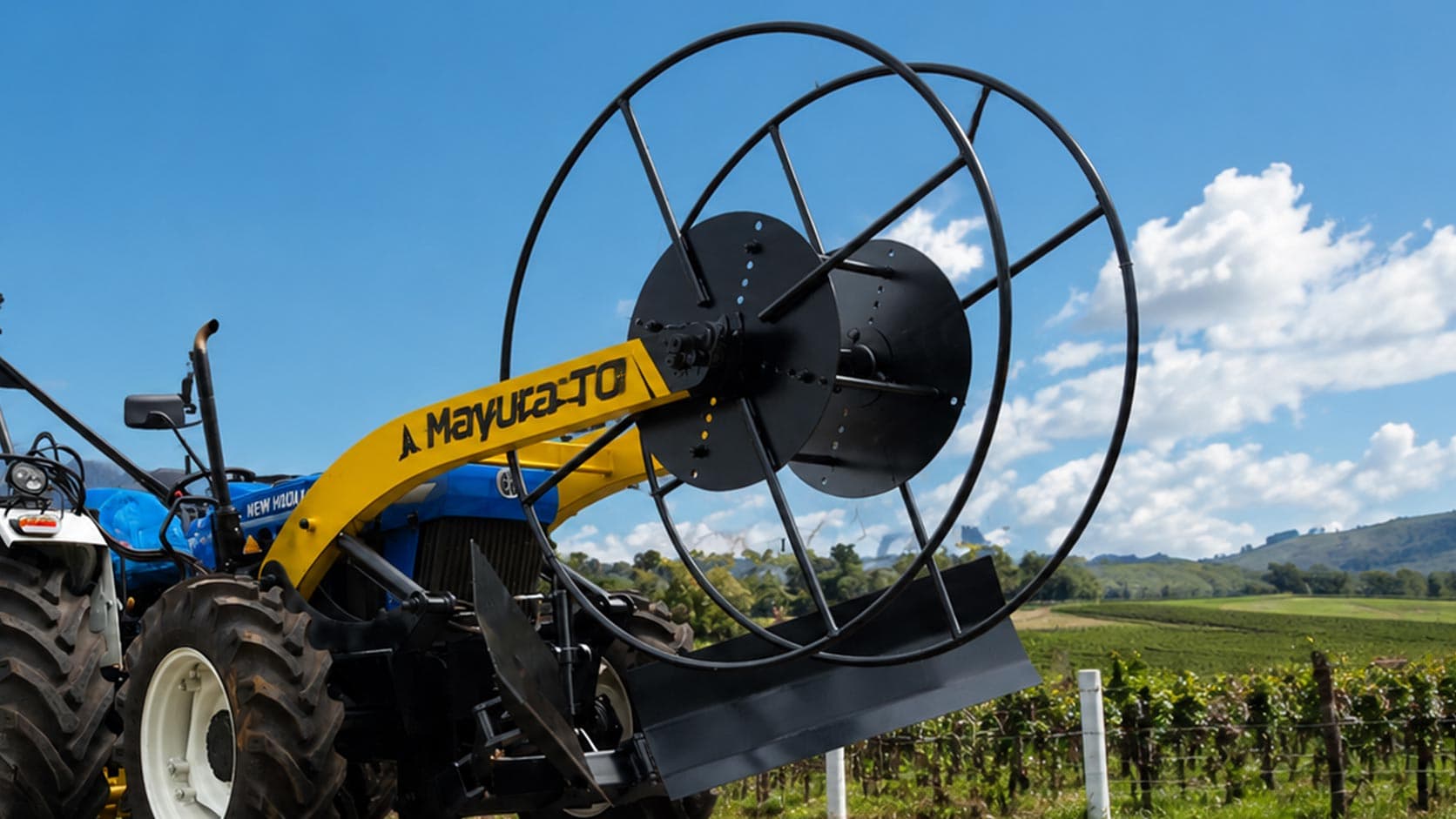
- | Attachment
Tractor
60 mm
60-120 HP
250 bar
150 L/min
850 mm
2 – 8 L/hour
The Front Mount Decoiler is purpose-built to support modern OFC telecommunications infrastructure projects requiring fast, consistent, and controlled duct deployment. Compatible with 60–120 HP tractors, the machine enables efficient installation of HDPE ducts used for optical fiber networks across highways, rural broadband routes, urban communication corridors, and large-scale telecom expansion programs.
Its fully hydraulic operating system ensures smooth duct payout while minimizing manual handling and deployment interruptions. The adjustable bobbin mechanism accommodates varying duct roll dimensions, enabling contractors to handle multiple project requirements using a single machine. As a reliable OFC Cable Decoiler, the machine integrates directly with trenching operations to maintain continuous workflow, improve installation accuracy, and support high-output duct laying activities essential for long-distance fiber optic network development.
PROJECT EXECUTION
OFC Telecommunications
The Front Mount Decoiler serves a wide range of applications within the OFC telecommunications sector. It is extensively used for backbone fiber deployment along national highways, state roads, railway corridors, and utility right-of-way projects where long-distance duct installation is required. In urban environments, the machine supports fiber network expansion for broadband, smart city infrastructure, and enterprise connectivity projects.
It also plays a critical role in last-mile connectivity initiatives by enabling efficient duct deployment in residential developments, industrial zones, and rural communication networks. Operating as a dependable Optical Fiber Cable Decoiler, the machine ensures controlled duct handling across varying terrain conditions, helping contractors maintain installation speed and consistency while supporting large-scale telecom infrastructure growth.
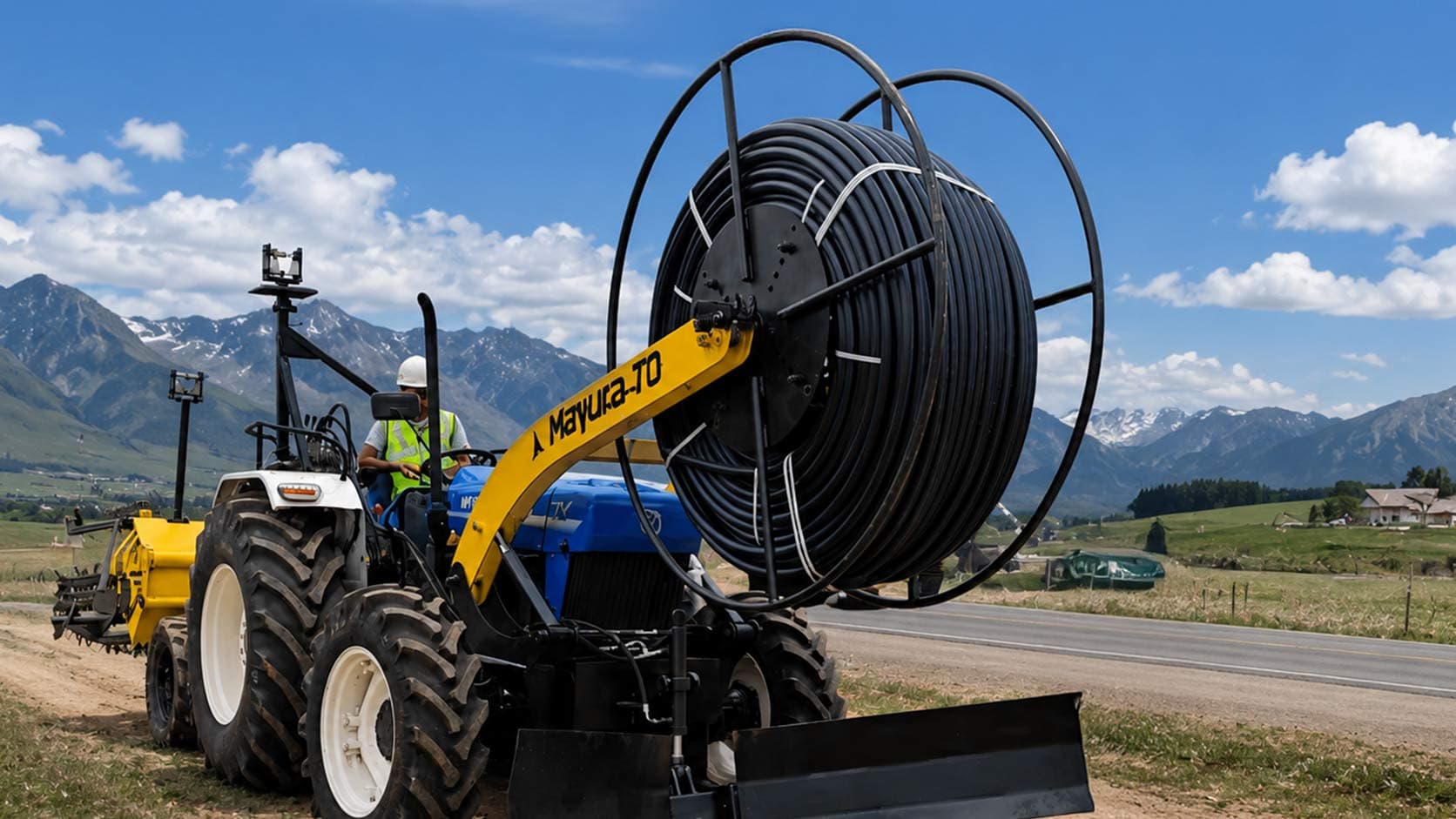
OFC Telecommunications
Successful OFC deployment projects require speed, consistency, safety, and minimal downtime during duct installation activities. The Front Mount Decoiler addresses these priorities through its hydraulic deployment system, adjustable bobbin assembly, and high-capacity duct handling capability. Supporting duct rolls up to 400 kg and operating at hydraulic pressures up to 250 bar, the machine enables continuous deployment with reduced interruptions.
Its removable bobbin design improves transportation efficiency between project locations, while tractor-mounted mobility allows rapid movement along installation routes. Functioning as specialized Telecom Cable Deployment Equipment, it helps contractors improve workforce utilisation, maintain project schedules, and achieve higher daily installation output. These advantages contribute directly to faster network rollout, improved operational efficiency, and more predictable project execution.
WORKFLOW
Map route requirements, trench depth, and site access before deploying Decoiler.
Use the attachment setup to keep trench output consistent across rural, semi-urban, and last-mile utility corridors.
Cleaner trench profiles help duct laying, cable pulling, jointing, and surface restoration teams proceed with less rework.
Autocracy Machinery can help match machine configuration, brochure details, and application guidance to the project.
APPLICATION SUPPORT
Share your site conditions, output goals, and timeline so the Autocracy team can guide model fit, brochure details, and next steps for your project.
Built for performance. Trusted by contractors, municipalities, and EPC teams across sectors.
| Feature | Value |
|---|---|
| Total Weight | 600 kg |
Common questions about using Decoiler in this application.
Industry model fit in Egypt
Decoiler is listed here for project teams in Egypt planning ofc telecommunications work with tractor attachments. Selection should come down to carrier fit, operating method, right-of-way, duct depth, spoil handling, traffic interface, and crew sequencing, and whether the machine supports route accuracy, cable protection, trench consistency, and kilometre-level productivity.
For OFC Telecommunications work, compare Decoiler against right-of-way, duct depth, spoil handling, traffic interface, and crew sequencing before finalising equipment deployment, because these details decide whether the machine fits the route, access, and daily output target.
Decoiler may suit OFC cable laying, telecom ducts, utility corridors, broadband rollout, and city network expansion when access, output goals, support arrangements, and follow-on crews line up with the job.
Use the page to move from specification review into a clearer discussion about ofc telecommunications suitability, brochure details, field support, and quotation requirements.
For tractor attachments, check tractor compatibility, hydraulic requirement, lift target, load handling pattern, and turnaround space together with road shoulders, urban corridors, utility crossings, and long linear cable routes; this helps separate a suitable ofc telecommunications setup from a generic model match.

