


Route Planning
Assess waterbody access, sediment distribution, equipment reach, disposal routes, and environmental constraints before mobilisation and dredging operations begin.
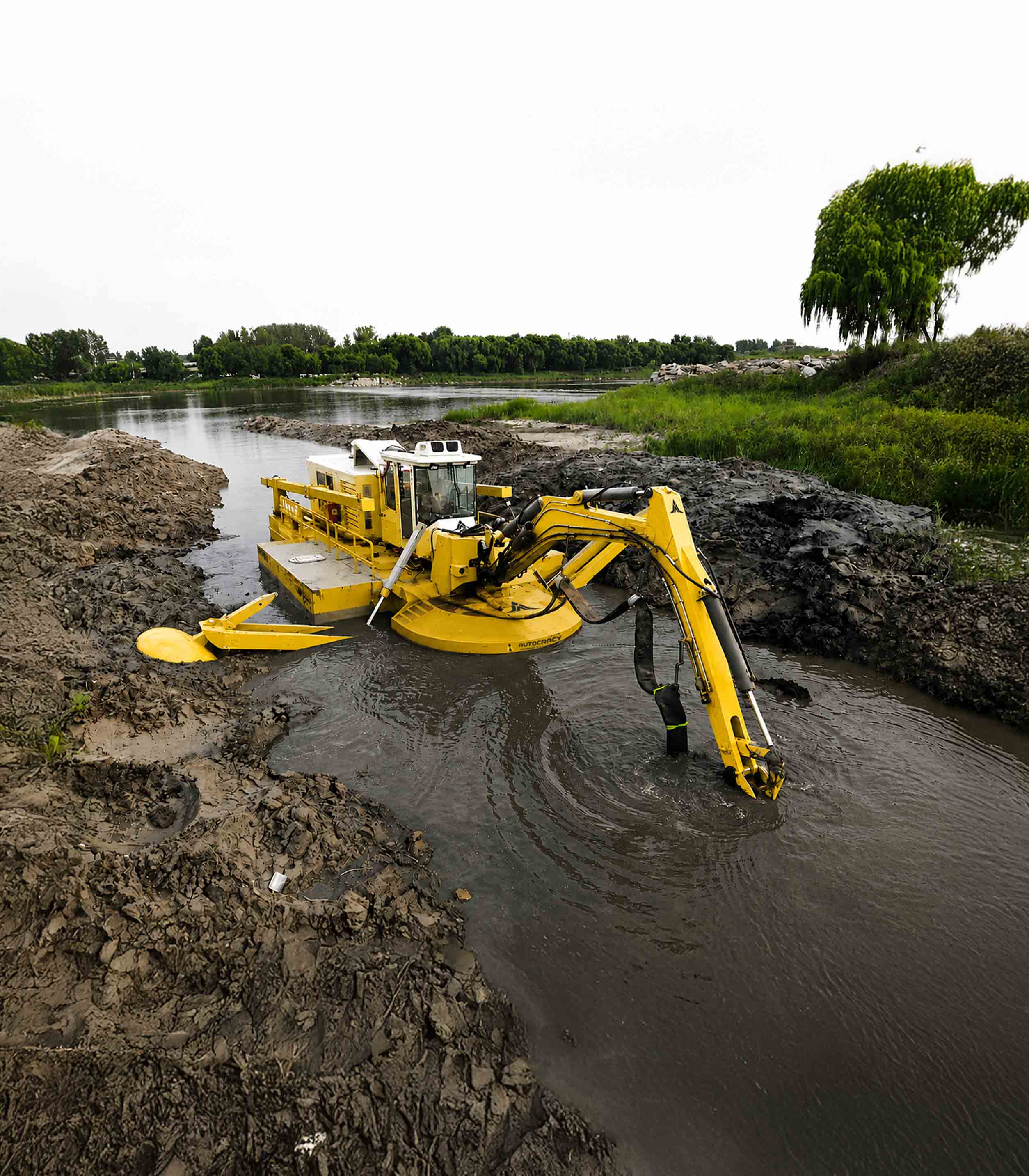
Amphibious Multipurpose Dredger | Equipment
11m x 3.3m x 1.15m
179kw/2200rpm
130 ml
180°
50 kN
7.5m
5.0m
Dredging projects are often required where sediment accumulation, aquatic vegetation, sludge, and deposited waste reduce the functional capacity of a water body. A lake dredger can support restoration programmes by removing accumulated materials and recovering usable water depth across lakes, reservoirs, canals, and managed waterways. Project suitability depends on sediment characteristics, water depth, access conditions, environmental constraints, and the required disposal or reuse pathway. An amphibious dredger is particularly applicable where shallow water, soft banks, marshy margins, or difficult access limit conventional equipment. Before mobilisation, project teams should assess bathymetric conditions, sediment quality, ecological sensitivity, dewatering requirements, and downstream impacts. These assessments help define an appropriate dredging method and establish practical controls for turbidity, material handling, equipment movement, and environmental protection throughout execution.
PROJECT EXECUTION
Environmental Sustainability
A dredger machine can be integrated into environmental restoration and infrastructure maintenance programmes where sediment removal is required to maintain hydraulic performance and access. Typical applications include lake and reservoir desilting, canal maintenance, stormwater retention systems, flood mitigation works, navigation channels, and restoration of degraded water bodies.
Dredging can also support utility corridors where water crossings, drainage channels, or sediment-affected access routes require controlled excavation and maintenance. For last-mile connectivity projects, maintaining drainage and waterway capacity can help protect roads, crossings, embankments, and associated infrastructure from water-related deterioration.
The selected dredger equipment should match the working depth, sediment condition, access limitations, production requirements, and material disposal strategy. Integration with pumps, hydraulic systems, stabilisation equipment, and material transport arrangements is essential for maintaining continuity across project activities.
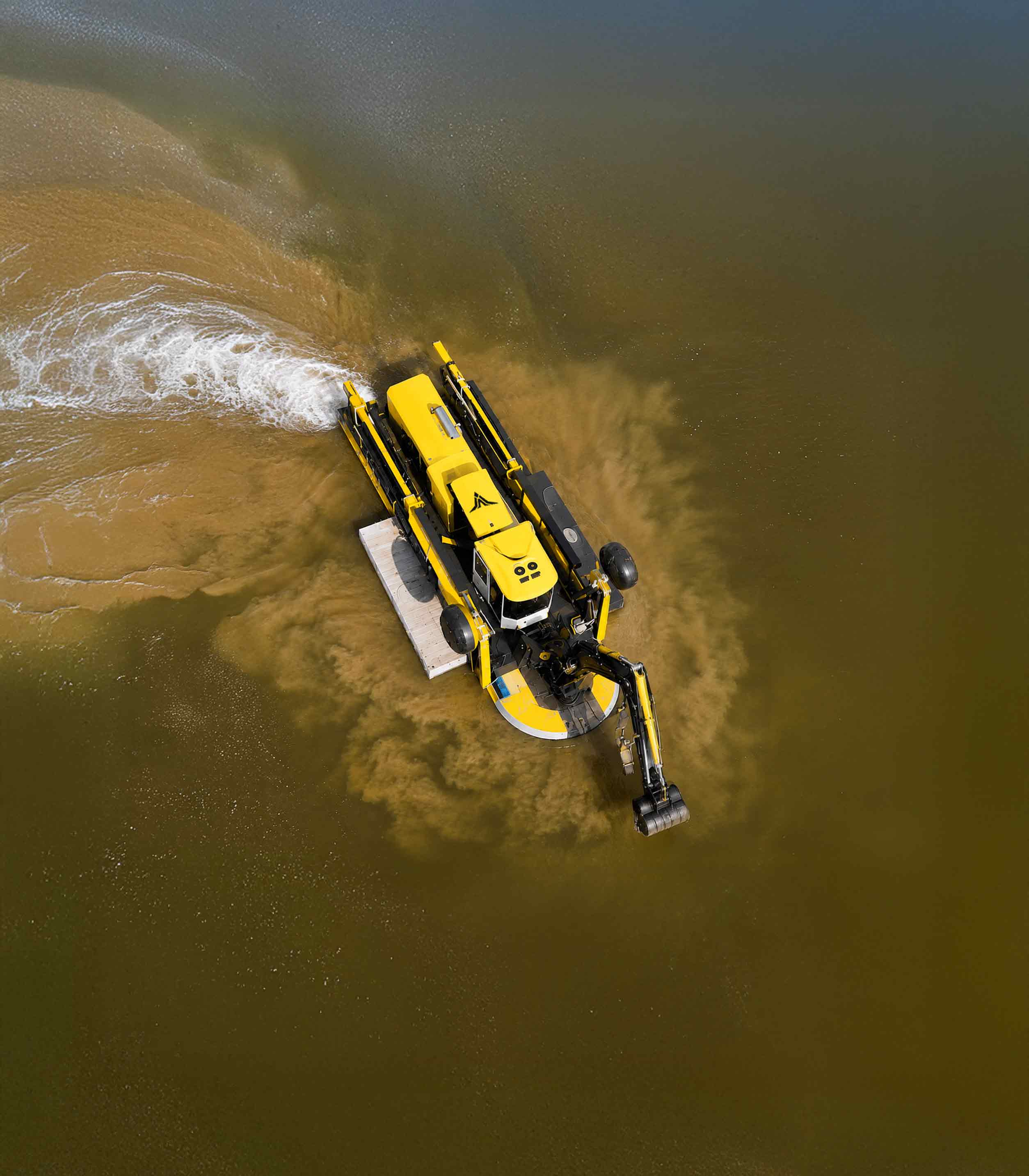
Environmental Sustainability
Successful dredging requires coordinated planning from site assessment through material disposal. Project owners and engineering teams should establish baseline bathymetric data, sediment volumes, water-quality conditions, and environmental constraints before selecting equipment.
The dredger equipment configuration should correspond to required working depth, sediment density, pumping distance, site accessibility, and expected production rates. During execution, controlled excavation is important to avoid unnecessary disturbance of the bed profile and surrounding habitat. Sludge and sediment handling should follow an approved containment, dewatering, transport, reuse, or disposal plan based on material characteristics and applicable regulations.
Continuous monitoring of turbidity, water quality, equipment positioning, and production progress can help maintain operational control. Clear coordination between contractors, environmental specialists, regulators, and site authorities also supports safe execution, compliance, and measurable restoration outcomes.
WORKFLOW
Assess waterbody access, sediment distribution, equipment reach, disposal routes, and environmental constraints before mobilisation and dredging operations begin.
Maintain controlled excavation depths and profiles while managing sediment disturbance, turbidity, equipment stability, and surrounding environmental conditions.
Coordinate dredged material transfer, dewatering, transportation, disposal, and site restoration requirements between field and downstream teams.
Select equipment capacity according to water depth, sediment characteristics, pumping distance, production targets, access limitations, and project scale.
APPLICATION SUPPORT
Share your site conditions, output goals, and timeline so the Autocracy team can guide model fit, brochure details, and next steps for your project.
Use these supplied specifications for initial project planning. Confirm attachment, discharge, transport, and site-specific requirements with Autocracy Machinery before deployment.
| Feature | Value |
|---|---|
| Maximum depth of rear (spud) | 6.0m |
| Suction diameter | 200mm |
| Dredging Depth | 6.5m |
Common questions about using Varuna P in this application.
Industry model fit in Ethiopia
For Environmental Sustainability deployment on Ethiopia project sites, Varuna P Amphibious Multipurpose Dredger is considered when a equipment must handle mixed field conditions, access limits, and project deadlines. The model should be reviewed against planned field execution, equipment fit, and dependable daily output, equipment fit, reliable output, operator workflow, and service support, and the way crews hand work over after each pass.
The first comparison for Varuna P should be site access, working depth, carrier compatibility, productivity target, and deployment timing, because those factors usually decide field fit before horsepower, headline capacity, or attachment choice.
Varuna P can support infrastructure, utility, municipal, and contractor-led field work, depending on route condition, access, output target, operator workflow, and site support availability.
This model page is meant to support a more practical conversation about environmental sustainability fit, brochure review, transport planning, deployment timing, and quote needs.
A better environmental sustainability shortlist connects working range, support equipment, transport access, operator availability, and service readiness with mixed field conditions, access limits, and project deadlines, so Varuna P is reviewed against the actual job sequence.

