


Route Planning
Map route requirements, trench depth, and site access before deploying Dozer Single Blade.
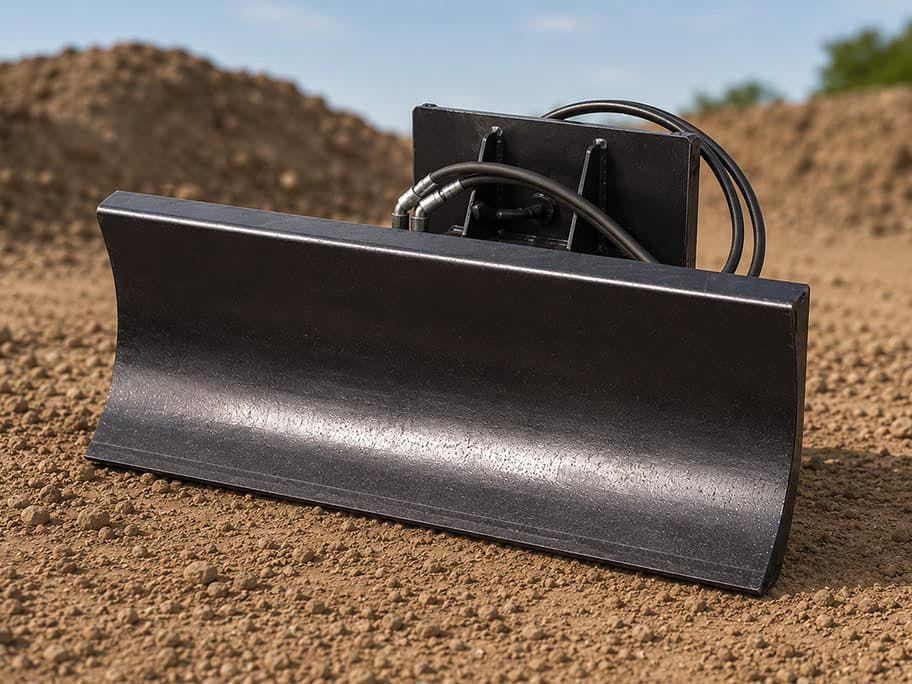
- | Attachment
Tractor
2400 mm
850 mm
10 mm
20 mm
Approx. 1.0 m³
Above 75 HP
Construction projects frequently require efficient ground preparation, material redistribution, and final surface restoration to maintain schedule continuity. The Construction Dozer Blade Attachment is suited for infrastructure developments where grading, trench reinstatement, and site finishing activities must be performed alongside primary construction operations. It supports industrial developments, transport infrastructure, utility installations, and renewable energy projects requiring accurate terrain profiling and controlled soil movement.
The attachment is particularly beneficial on projects where existing tractor fleets are utilized for multiple site functions, improving equipment utilization and reducing reliance on dedicated earthmoving machines. By supporting grading and restoration activities throughout different construction phases, project teams can maintain accessible work areas, improve site drainage conditions, and prepare surfaces for subsequent construction activities while optimizing operational resources.
PROJECT EXECUTION
Construction
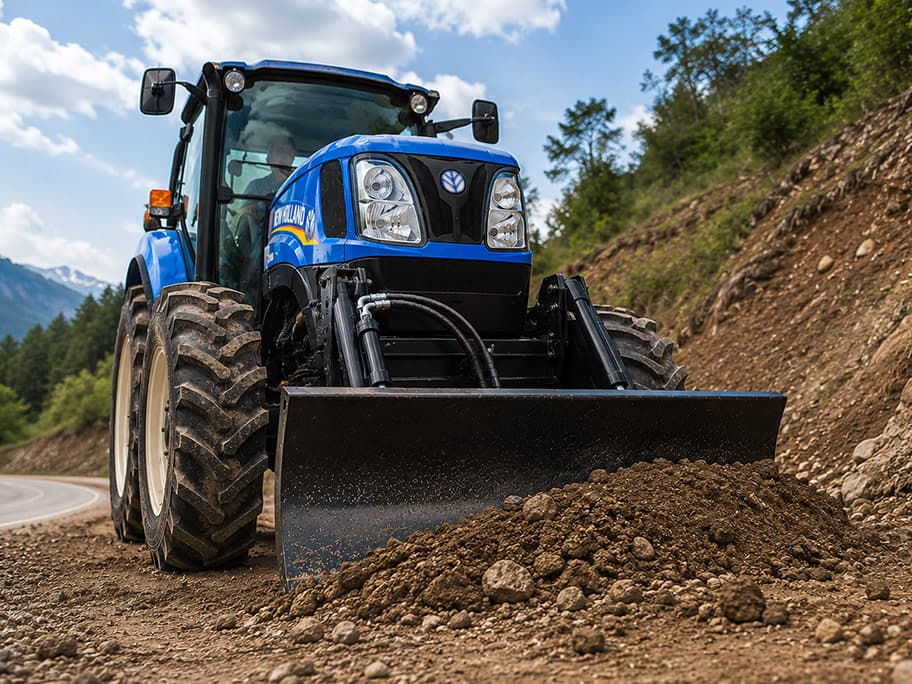
Linear infrastructure projects often require continuous grading and reinstatement activities along extensive work corridors. The Single Blade Dozer Construction Attachment supports backfilling and surface restoration following installation of underground utilities, pipelines, drainage systems, and communication networks. It is also suitable for shaping embankments, preparing equipment access routes, and maintaining temporary haul roads within active construction zones.
In last-mile connectivity projects, the attachment assists contractors in restoring disturbed surfaces and establishing stable access across dispersed installation locations. The equipment can additionally support land preparation for substations, renewable energy facilities, and utility service areas where controlled material placement and surface uniformity are essential for subsequent construction stages.
Construction
Successful grading and restoration operations depend on detailed planning of earthwork quantities, final design levels, and site drainage requirements. The Site Formation Dozer Attachment supports projects where accurate surface preparation directly influences construction quality and long-term asset performance. Prior to execution, project teams should establish grading benchmarks, verify finished surface elevations, and identify material suitability for backfilling and reinstatement activities.
Construction managers should also coordinate grading sequences with trenching, utility installation, and civil works to avoid unnecessary rehandling of materials. Attention should be given to compaction requirements, erosion control measures, and temporary drainage provisions to ensure stable working conditions. Continuous verification of finished grades supports compliance with engineering specifications and facilitates efficient progression of subsequent construction activities.
WORKFLOW
Map route requirements, trench depth, and site access before deploying Dozer Single Blade.
Use the attachment setup to keep trench output consistent across project sites, road edges, smart-city corridors, and underground utility zones.
Cleaner trench profiles help utility laying, inspection, backfill, and civil finishing teams proceed with less rework.
Autocracy Machinery can help match machine configuration, brochure details, and application guidance to the project.
APPLICATION SUPPORT
Share your site conditions, output goals, and timeline so the Autocracy team can guide model fit, brochure details, and next steps for your project.
Common questions about using Dozer Single Blade in this application.
Industry model fit in Peru
For Construction deployment on Peru project sites, Dozer Single Blade is considered when a attachment must handle active jobsites, compacted ground, access-controlled work fronts, and staged civil activity. The model should be reviewed against tractor-based lifting, handling, loading, and support tasks that need flexible site deployment, site productivity, crew coordination, depth control, and fast mobilisation, and the way crews hand work over after each pass.
The first comparison for Dozer Single Blade should be route clearance, equipment movement, working width, daily output, and safety coordination, because those factors usually decide field fit before horsepower, headline capacity, or attachment choice.
Dozer Single Blade can support building services, drainage, foundations, road-edge utilities, and site preparation, depending on route condition, access, output target, operator workflow, and site support availability.
This model page is meant to support a more practical conversation about construction fit, brochure review, transport planning, deployment timing, and quote needs.
A better construction shortlist connects tractor compatibility, hydraulic requirement, lift target, load handling pattern, and turnaround space with active jobsites, compacted ground, access-controlled work fronts, and staged civil activity, so Dozer Single Blade is reviewed against the actual job sequence.


