


Route Planning
Map route requirements, trench depth, and site access before deploying Dhruva 100.
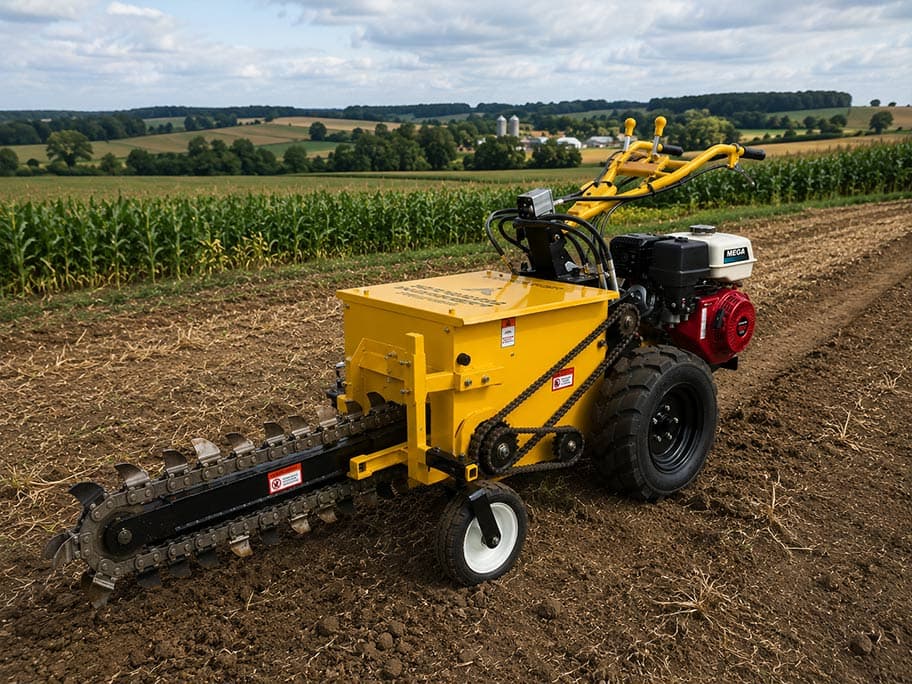
Mini trencher machine | Equipment
Self Propelled
11 HP
Gear Drive Transmission
40–80 m/hr
120–200 mm
500 mm max depth
12,28 V,Ah
Dhruva 100 is configured for solar EPC cable trenching, earthing, and utility routing where controlled output and reliable site performance are essential.
Dhruva 100 helps teams working across solar park rows, inverter blocks, and power evacuation corridors improve clean cable routes, controlled trench dimensions, and faster EPC execution.
PROJECT EXECUTION
Solar Energy
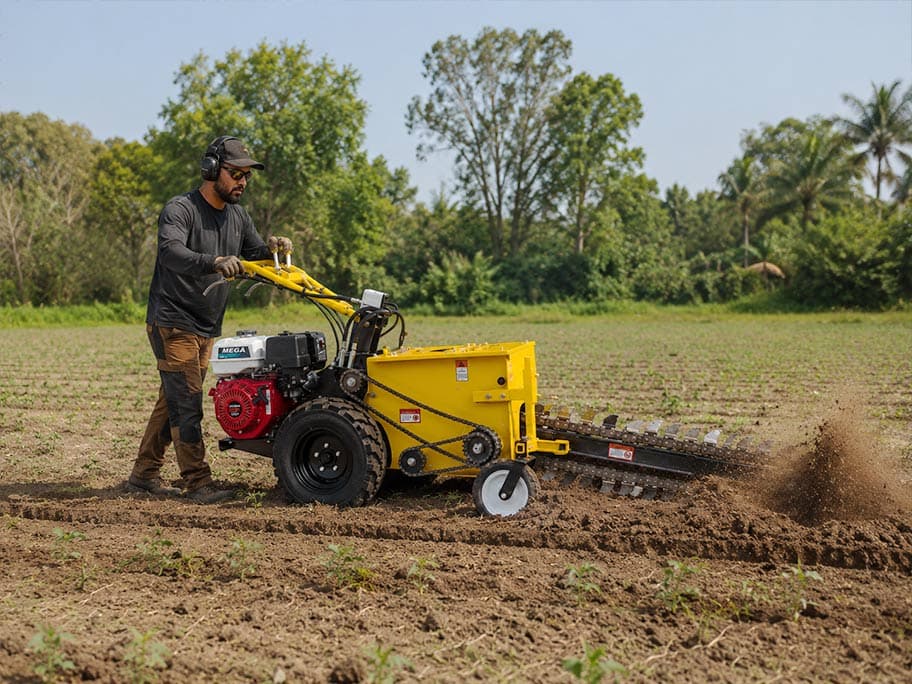
Walk Behind Trenchers is used for solar EPC cable trenching, earthing, and utility routing where route consistency and execution speed directly impact rollout schedules.
Teams deploy it across solar park rows, inverter blocks, and power evacuation corridors with planning around row spacing, cable depth, earthing runs, soil condition, and access between arrays.
The machine helps maintain cleaner worksite output for cable laying, earthing, backfilling, and commissioning teams.
Solar Energy
Maintain consistent trench depth and alignment to reduce rework during solar EPC cable trenching, earthing, and utility routing and site reinstatement.
Plan route productivity based on row spacing, cable depth, earthing runs, soil condition, and access between arrays.
Use predictable trench output to improve handoff quality between cable laying, earthing, backfilling, and commissioning teams.
WORKFLOW
Map route requirements, trench depth, and site access before deploying Dhruva 100.
Use the attachment setup to keep trench output consistent across solar park rows, inverter blocks, and power evacuation corridors.
Cleaner trench profiles help cable laying, earthing, backfilling, and commissioning teams proceed with less rework.
Autocracy Machinery can help match machine configuration, brochure details, and application guidance to the project.
APPLICATION SUPPORT
Share your site conditions, output goals, and timeline so the Autocracy team can guide model fit, brochure details, and next steps for your project.
Built for performance. Trusted by contractors, municipalities, and EPC teams across sectors.
| Feature | Value |
|---|---|
| Chain Type | Shark with Carbide Tips |
| Gross weight | 250 kgs |
| Overall length | 2800 mm |
| Overall width | 900 mm |
| Overall height | 1100 mm |
Common questions about using Dhruva 100 in this application.
Industry model fit in Paraguay
For Solar Energy deployment on Paraguay project sites, Dhruva 100 Mini trencher machine is considered when a equipment must handle solar parks, cable corridors, pile rows, open sites, and long internal utility runs. The model should be reviewed against narrow-access trenching, compact service routes, and lighter utility work near finished areas, repeatable output, cable-route accuracy, panel-field access, and EPC schedule control, and the way crews hand work over after each pass.
The first comparison for Dhruva 100 should be array layout, cable depth, tracker clearance, soil profile, and commissioning milestones, because those factors usually decide field fit before horsepower, headline capacity, or attachment choice.
Dhruva 100 can support DC cable trenches, earthing routes, tracker support works, inverter corridors, and solar EPC utilities, depending on route condition, access, output target, operator workflow, and site support availability.
This model page is meant to support a more practical conversation about solar energy fit, brochure review, transport planning, deployment timing, and quote needs.
A better solar energy shortlist connects access width, turning room, target depth, spoil control, crew size, and transport between work fronts with solar parks, cable corridors, pile rows, open sites, and long internal utility runs, so Dhruva 100 is reviewed against the actual job sequence.
