


Route Planning
Map route requirements, trench depth, and site access before deploying Rudra 150XT.
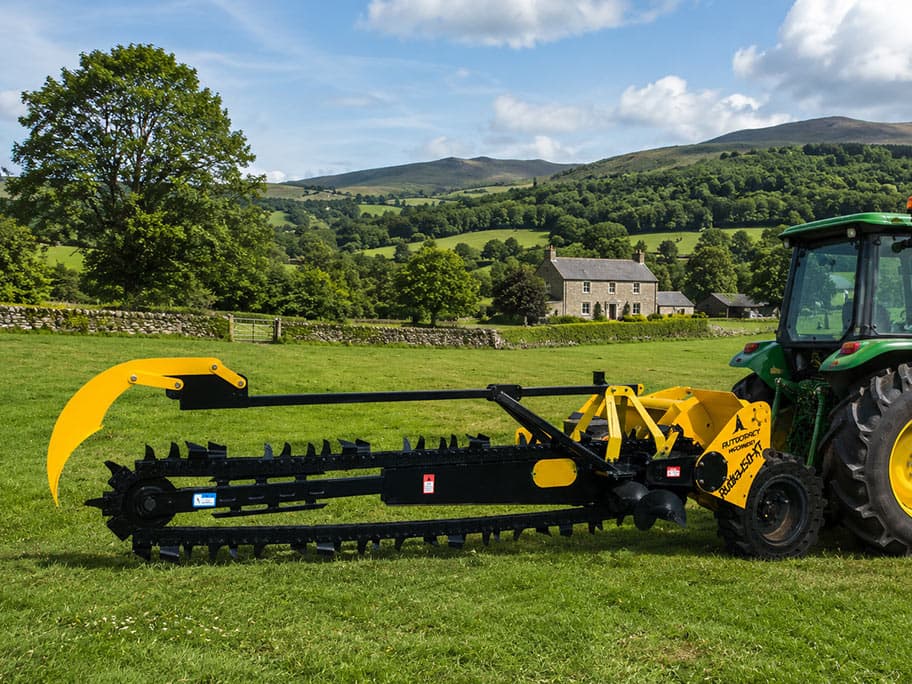
- | Attachment
Tractor
>60 HP
PTO / Hydraulic
40 - 300m/hr (according to trench depth and soil condition)
110–280 mm
Up to 1800 mm
5–6 L/hr
The development of defence infrastructure increasingly requires underground utility systems that support secure operations, resilient communications, and dependable service delivery. Projects involving operational facilities, logistics centers, equipment maintenance zones, training establishments, and support infrastructure require precise trenching solutions capable of maintaining installation accuracy over long distances.
The Rudra 150XT is engineered to support these requirements through controlled trench excavation for underground cable, conduit, and pipeline installation. Its robust construction and stable operating characteristics enable efficient deployment across varied soil conditions often encountered in large defence projects. As a Rudra 150XT defence trencher, the machine contributes to infrastructure readiness by supporting the installation of essential utility networks while helping project teams maintain construction quality, route consistency, and operational efficiency throughout project execution.
PROJECT EXECUTION
Defence
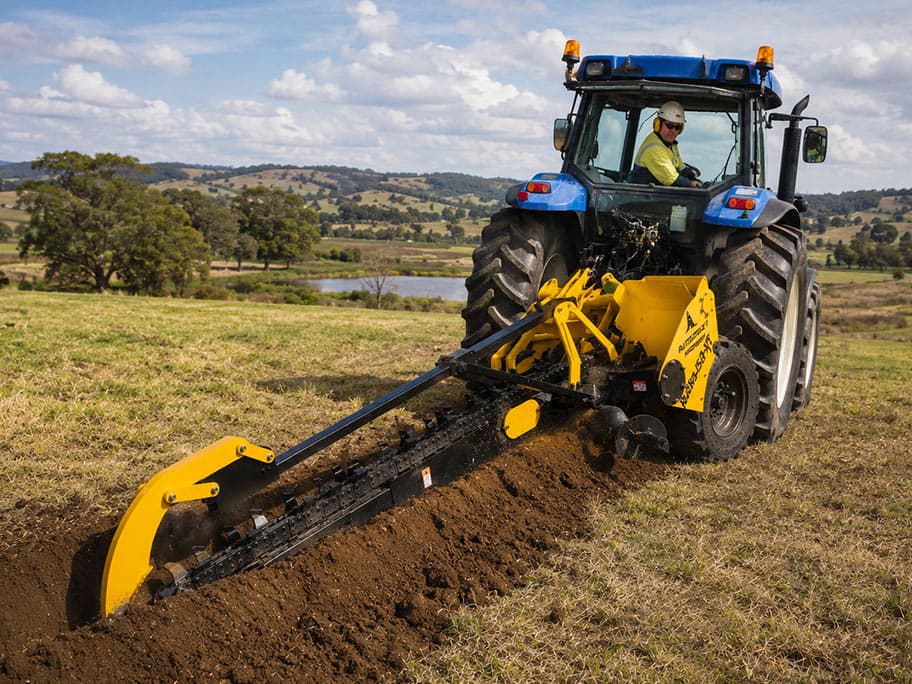
Underground utility corridors are a critical component of modern defence infrastructure, enabling secure and organized routing of communication systems, electrical networks, surveillance infrastructure, and support utilities. The Rudra 150XT is suitable for creating trench pathways that connect command facilities, logistics hubs, operational compounds, storage locations, and technical support assets. Its adjustable trench dimensions allow installation requirements to be matched to specific project specifications.
As a Rudra 100XT Strategic Route Construction Machine, it supports utility corridor development where accurate route planning and infrastructure integration are essential. The machine is equally effective for last-mile connectivity projects, providing efficient underground utility extensions that link remote facilities with central infrastructure networks while maintaining installation consistency across the project area.
Defence
Defence construction programs often operate under strict timelines and infrastructure performance requirements. Effective execution, therefore, depends on trench alignment accuracy, efficient resource deployment, utility segregation, and long-term maintainability of installed assets. The Rudra 150XT supports these priorities by delivering controlled trenching performance suitable for underground communications, electrical systems, and service infrastructure.
Its fuel-efficient operation and stable excavation capability assist contractors in maintaining productivity while minimizing operational interruptions. By enabling reliable trench formation across different ground conditions, the machine supports structured project implementation and helps engineering teams achieve installation objectives that align with both operational requirements and future infrastructure expansion plans.
WORKFLOW
Map route requirements, trench depth, and site access before deploying Rudra 150XT.
Use the attachment setup to keep trench output consistent across border infrastructure, camp utilities, and rugged access routes.
Cleaner trench profiles help utility placement, protection works, and field infrastructure teams proceed with less rework.
Autocracy Machinery can help match machine configuration, brochure details, and application guidance to the project.
APPLICATION SUPPORT
Share your site conditions, output goals, and timeline so the Autocracy team can guide model fit, brochure details, and next steps for your project.
Built for performance. Trusted by contractors, municipalities, and EPC teams across sectors.
| Feature | Value |
|---|---|
| Gross weight | 2100 kg |
| Overall length | 5.63 m |
| Overall width | 2.3 m |
| Overall height | 1.52 m |
Common questions about using Rudra 150XT in this application.
Industry model fit in Qatar
For Defence deployment on Qatar project sites, Rudra 150XT is considered when a attachment must handle remote work zones, restricted access areas, rugged terrain, and time-sensitive deployment sites. The model should be reviewed against route cutting, trench preparation, and utility corridor work where line accuracy matters, rugged reliability, transport readiness, field repairability, and predictable operation, and the way crews hand work over after each pass.
The first comparison for Rudra 150XT should be terrain type, access security, logistics, operator training, and rapid deployment windows, because those factors usually decide field fit before horsepower, headline capacity, or attachment choice.
Rudra 150XT can support camp utilities, boundary works, tactical infrastructure, drainage, and remote service routes, depending on route condition, access, output target, operator workflow, and site support availability.
This model page is meant to support a more practical conversation about defence fit, brochure review, transport planning, deployment timing, and quote needs.
A better defence shortlist connects trench depth, trench width, spoil handling, route crossings, surface reinstatement, and carrier fit with remote work zones, restricted access areas, rugged terrain, and time-sensitive deployment sites, so Rudra 150XT is reviewed against the actual job sequence.


