


Route Planning
Map route requirements, trench depth, and site access before deploying Gaja 400XC.
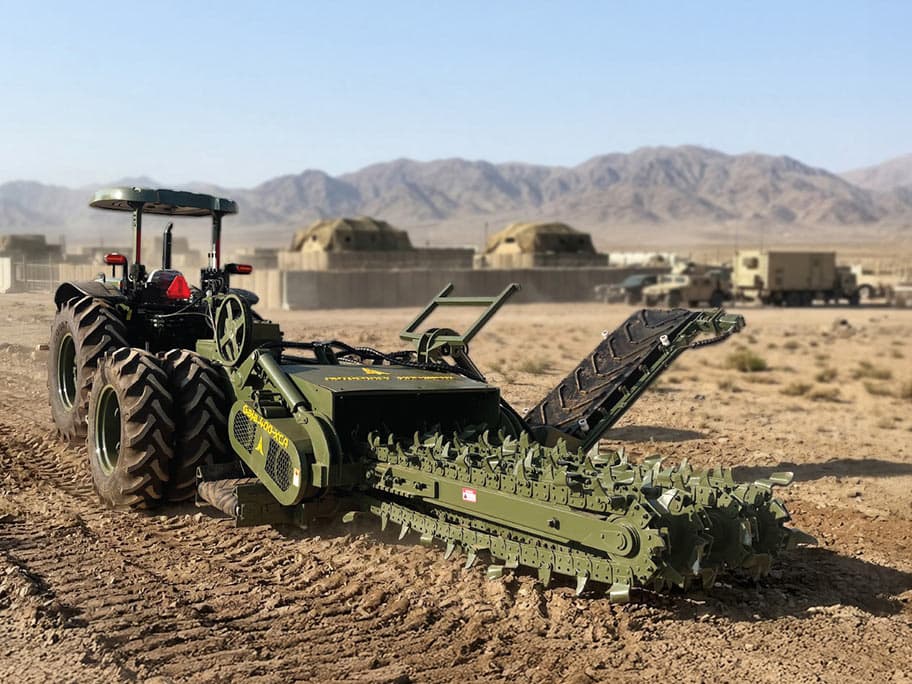
- | Equipment
Tractor
Above 100 HP
PTO / Hydraulic
1200–1500 mm
Up to 1200 mm
60 m/hr in soft soil, 20–30 m/hr in hard soil
9–10 L/hr during trenching
The expansion of utility-scale solar generation requires robust underground infrastructure capable of supporting high-capacity electrical networks across extensive project footprints. The Gaja 400XC Trencher is designed for projects where broad cable corridors, transmission routes, and integrated utility pathways form a critical part of site development. Its tractor-mounted configuration provides operational flexibility for large renewable energy installations while supporting efficient movement between active work zones.
The Gaja 400XC Solar Energy Trencher is particularly suited for projects involving central inverter systems, collector networks, battery energy storage integration, and substation connectivity. By enabling controlled trench formation for major underground infrastructure packages, the machine supports construction teams in maintaining installation quality while accommodating evolving project requirements. This makes it relevant for solar developments where infrastructure planning, accessibility, and long-term asset management are important considerations.
PROJECT EXECUTION
Solar Energy
Modern solar facilities rely on interconnected underground systems that carry power, communications, monitoring data, and control signals across large operational areas. Developing these networks requires trenching equipment capable of supporting organized infrastructure deployment while maintaining construction efficiency. The Gaja 400XC Trencher assists project teams by facilitating the creation of structured cable corridors and utility pathways that support future accessibility.
The Gaja 400XC Solar Cable Network Trenching Equipment is suitable for collector circuits, transmission interconnections, battery storage connections, and utility corridor construction. It also supports last-mile connectivity projects where renewable energy assets must be integrated into regional grid infrastructure. Efficient spoil handling and continuous trenching operations help maintain workflow continuity, allowing contractors to coordinate cable installation activities more effectively throughout the construction process.
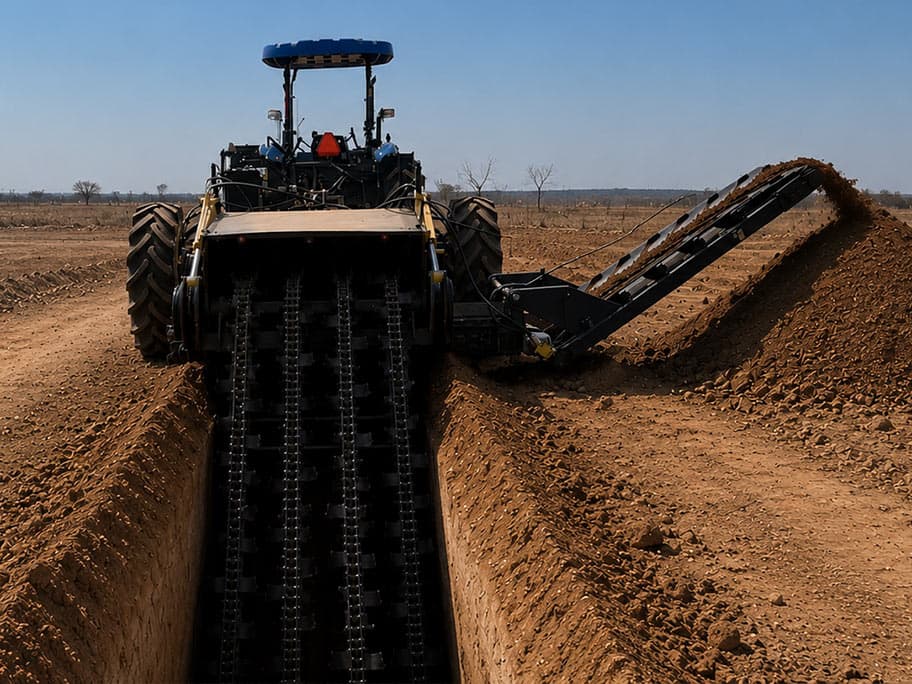
Solar Energy
Solar construction programs often involve complex sequencing between civil works, electrical infrastructure installation, testing activities, and commissioning schedules. Trenching operations must therefore support predictable project execution while enabling efficient deployment of underground assets. Maintaining corridor accessibility, minimizing material handling disruptions, and ensuring installation readiness are key priorities during infrastructure development.
The Gaja 400XC Cable Corridor Trenching Equipment supports these objectives by assisting contractors in establishing organized underground routes for electrical and communication systems. Its conveyor-based spoil management approach helps maintain cleaner working environments and reduces interruptions that can affect downstream construction activities. For EPC contractors, utility operators, and infrastructure planners, this contributes to improved construction coordination and supports the reliable delivery of underground infrastructure required for large-scale solar energy projects.
WORKFLOW
Map route requirements, trench depth, and site access before deploying Gaja 400XC.
Use the attachment setup to keep trench output consistent across solar park rows, inverter blocks, and power evacuation corridors.
Cleaner trench profiles help cable laying, earthing, backfilling, and commissioning teams proceed with less rework.
Autocracy Machinery can help match machine configuration, brochure details, and application guidance to the project.
APPLICATION SUPPORT
Share your site conditions, output goals, and timeline so the Autocracy team can guide model fit, brochure details, and next steps for your project.
Built for performance. Trusted by contractors, municipalities, and EPC teams across sectors.
| Feature | Value |
|---|---|
| Aux Hydraulic Oil Flow (Min) | > 50 LPM |
| Machine Overall Length | 5300 mm |
| Machine Overall Width | 3500 mm |
| Machine Overall Height | 2900 mm |
| Gross Weight | 3850 Kg |
Common questions about using Gaja 400XC in this application.
Industry model fit in Saudi Arabia
Gaja 400XC is listed here for project teams in Saudi Arabia planning solar energy work with trenchers. Selection should come down to carrier fit, operating method, array layout, cable depth, tracker clearance, soil profile, and commissioning milestones, and whether the machine supports repeatable output, cable-route accuracy, panel-field access, and EPC schedule control.
For Solar Energy work, compare Gaja 400XC against array layout, cable depth, tracker clearance, soil profile, and commissioning milestones before finalising equipment deployment, because these details decide whether the machine fits the route, access, and daily output target.
Gaja 400XC may suit DC cable trenches, earthing routes, tracker support works, inverter corridors, and solar EPC utilities when access, output goals, support arrangements, and follow-on crews line up with the job.
Use the page to move from specification review into a clearer discussion about solar energy suitability, brochure details, field support, and quotation requirements.
For trenchers, check trench depth, trench width, spoil handling, route crossings, surface reinstatement, and carrier fit together with solar parks, cable corridors, pile rows, open sites, and long internal utility runs; this helps separate a suitable solar energy setup from a generic model match.


