Digging Reach
5300 mm
5300 mm
3150 mm
5500 mm
Barges / Floating Pontoon
Equipment
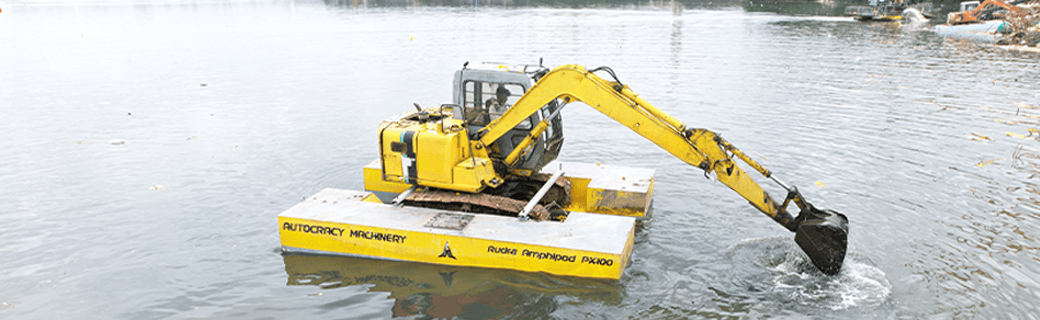
The Rudra Amphipod PX100 Floating Pontoon Excavator is an advanced water-based excavation solution designed for dredging, desilting, canal maintenance, and aquatic restoration projects across rivers, lakes, and shallow water bodies. Built with corrosion-protected dual pontoons and a reinforced structural frame, the machine delivers exceptional stability and reliable excavation performance on both land and water surfaces. Its modular design allows flexible deployment while supporting safe and efficient excavator operation in difficult aquatic environments.
The Rudra Amphipod PX100 River Desilting Machine plays a critical role in maintaining water flow, removing accumulated silt, clearing aquatic vegetation, and restoring blocked waterways. Unmaintained rivers and waterbodies often lead to flooding, water stagnation, reduced drainage efficiency, foul odor, mosquito breeding, and environmental degradation that affect nearby communities and infrastructure. Compared to traditional excavation methods that struggle in marshy and waterlogged conditions, the Amphipod provides safer access, improved operational stability, and higher efficiency in shallow and unstable terrain.
Designed for contractors, environmental agencies, and water management authorities, the Rudra Amphipod PX100 Canal Cleaning Excavator supports eco-friendly dredging operations with reduced environmental disturbance, smoother project execution, and dependable performance for long-duration water restoration and flood mitigation projects globally.
Built for performance. Trusted by contractors, municipalities, and EPC teams across sectors.
5300 mm
3150 mm
5500 mm
7800 mm
6070 mm
3.7 ton
5530 mm
3500 mm
1250 mm
4300*2300-2550*3300
Discover what makes the Rudra Amphipod PX100 stand out from the competition
The 5300 mm digging reach enables the Rudra Amphipod PX100 to perform efficient excavation and dredging operations across wider aquatic working areas.
With a working depth of 3150 mm, the machine supports effective desilting and underwater excavation in shallow to medium-depth water bodies.
The 5500 mm swing radius allows smooth material handling and improved operational flexibility during canal, river, and lake maintenance activities.
The 7800 mm working height supports efficient loading, lifting, and excavation performance while maintaining stable operation in challenging site conditions.
The 6070 mm dumping height enables convenient material discharge during dredging and excavation operations, improving overall workflow efficiency on-site.
The 3.7-ton gross weight contributes to balanced flotation, operational stability, and dependable performance across waterlogged and unstable terrain environments.
BEST SUITED FOR INDUSTRIES
Match Rudra Amphipod PX100 with industry use cases where equipment reliability, field output, and site readiness matter most.
Rudra Amphipod PX100 is suited for environmental sustainability teams that need dependable barges / floating pontoon performance, cleaner site execution, and faster project handoff.
Rudra Amphipod PX100 is suited for ofc telecommunications teams that need dependable barges / floating pontoon performance, cleaner site execution, and faster project handoff.
Rudra Amphipod PX100 is suited for water management teams that need dependable barges / floating pontoon performance, cleaner site execution, and faster project handoff.
Rudra Amphipod PX100 is suited for agriculture teams that need dependable barges / floating pontoon performance, cleaner site execution, and faster project handoff.
Rudra Amphipod PX100 is suited for construction teams that need dependable barges / floating pontoon performance, cleaner site execution, and faster project handoff.
Rudra Amphipod PX100 is suited for solar energy teams that need dependable barges / floating pontoon performance, cleaner site execution, and faster project handoff.
PRODUCT FIT
Understand how Rudra Amphipod PX100 fits project planning, field deployment, and daily operating priorities.
Rudra Amphipod PX100 supports barges / floating pontoon work across utility routes, rural sites, and practical field conditions where consistent machine output matters.
5300 mm digging reach helps teams plan equipment fit, route preparation, and day-to-day execution before deployment.
Rudra Amphipod PX100 is configured as a equipment, helping contractors and operators understand how it fits with existing fleet resources and site workflows.
3150 mm working depth supports controlled operation, while 5500 mm swing radius helps improve project predictability.
| Equipment

Self Propelled Multi Utility Machine | Equipment

Rudra Prime Pro | Equipment
Common questions about Rudra Amphipod PX100 specifications, applications, and project fit.

Model details in Qatar
Rudra Amphipod PX100 is listed for Qatar buyers who need to compare machine capability, applications, specifications, and quote readiness for practical field deployment.
can be evaluated by working capability, brochure information, media, and site suitability.
Use this page to review Rudra Amphipod PX100 around compact project corridors, service routes, heat, spoil handling, access control, and daily output planning.
model comparison, export coordination, brochure requests, and quotation support for Qatar buyers