


Route Planning
Map route requirements, trench depth, and site access before deploying Mayura TL.
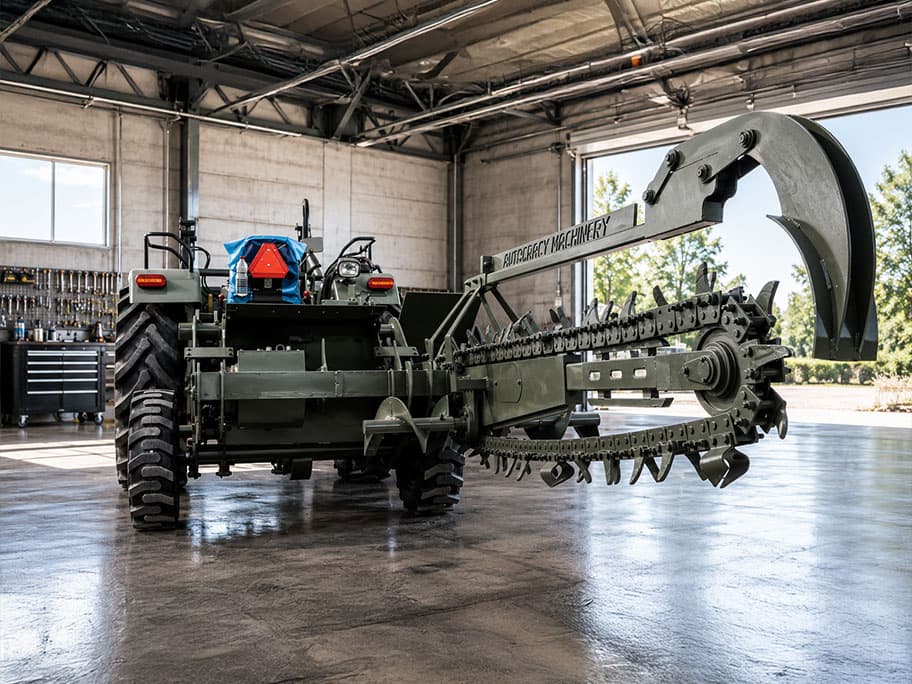
- | Equipment
Tractor
Up to 1800 mm
110-900 mm
>90 HP
PTO / Hydraulic
300 m/hr soft, 200 m/hr hard; 1800 mm × 180 mm: 150 m/hr soft, 90 m/hr hard
5 – 6 litres
Construction projects involving underground utilities, structural services, and site preparation often require both excavation and material handling capabilities within constrained project schedules. The Mayura TL Construction Trencher is suited for infrastructure developments where trench excavation and spoil management must be performed efficiently using limited equipment resources.
Its integrated loading capability enables contractors to manage excavated material directly at the workfront, reducing reliance on separate loading equipment and simplifying site logistics. The machine is applicable across industrial developments, energy infrastructure projects, transport facilities, and large-scale commercial construction sites. By combining trenching and material handling functions on a single platform, project teams can improve equipment utilization, reduce site congestion, and maintain continuous progress throughout different phases of underground infrastructure installation.
PROJECT EXECUTION
Construction
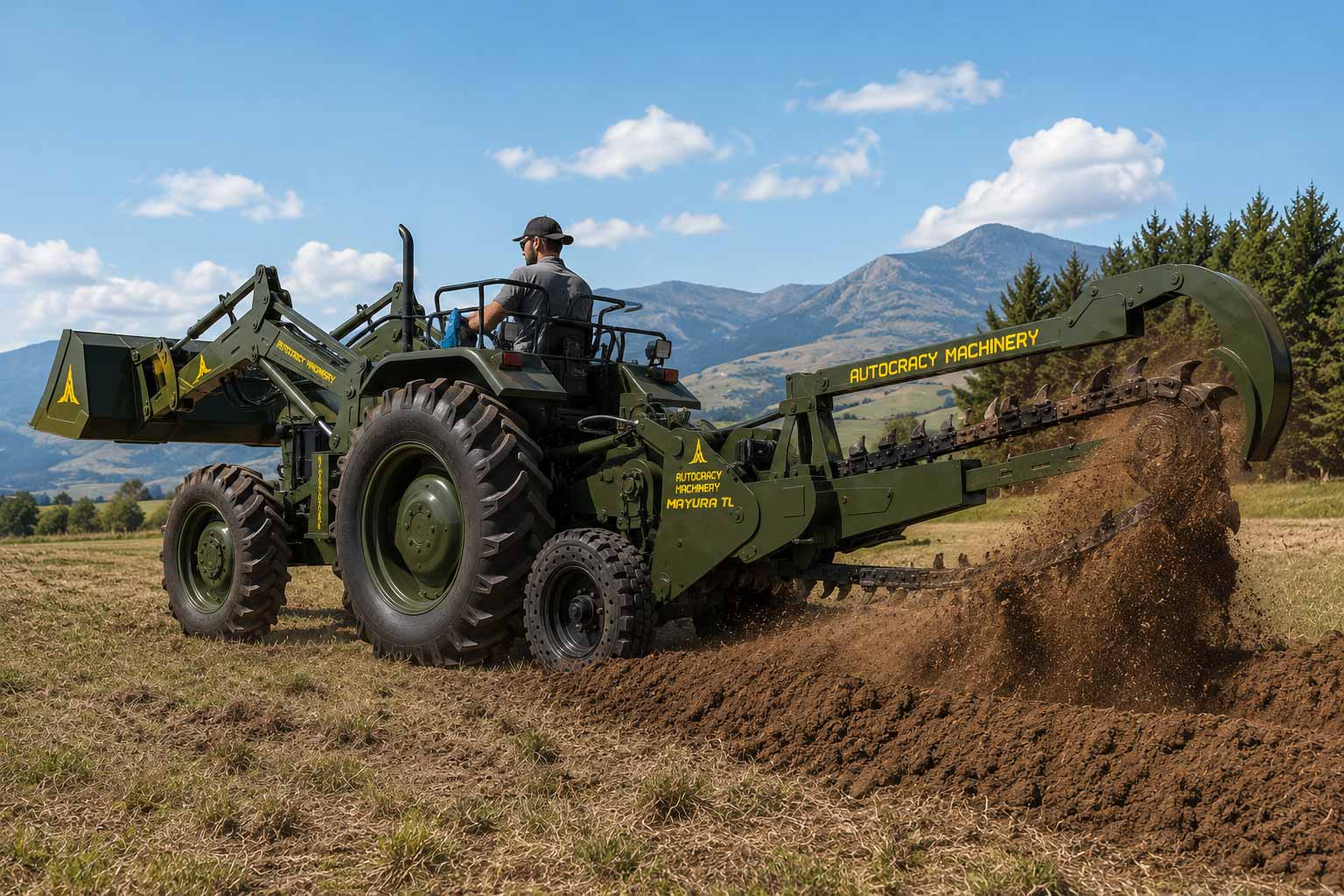
Modern construction programs increasingly require coordinated installation of underground utility systems serving buildings, industrial facilities, and infrastructure assets. The Mayura TL Building Services Excavation Machine supports the excavation of service corridors for electrical networks, communication systems, water distribution pipelines, and drainage infrastructure. Its trenching and loading capabilities are particularly valuable in utility corridor developments where excavated material must be managed efficiently to maintain access and productivity.
The machine is also suitable for last-mile utility extensions connecting substations, renewable energy facilities, operational buildings, and remote infrastructure assets. In construction environments where multiple service installations occur simultaneously, integrated spoil handling supports better worksite organization and facilitates uninterrupted progress across adjacent activities.
Construction
Effective construction trenching operations require comprehensive planning of excavation sequences, spoil management, equipment access, and interface coordination. The Mayura TL Footing Excavation Machine supports projects where underground utility installation, foundation-related works, and material handling activities must be integrated within a unified construction workflow. Prior to execution, project teams should undertake geotechnical investigations, identify buried services, and define excavation tolerances aligned with engineering specifications.
Planning should also address temporary stockpile locations, haul routes, and reinstatement procedures to minimize operational disruptions. Coordinating trenching and loading activities within the overall construction schedule can reduce equipment conflicts, improve site productivity, and support timely completion of underground infrastructure and associated civil works.
WORKFLOW
Map route requirements, trench depth, and site access before deploying Mayura TL.
Use the attachment setup to keep trench output consistent across project sites, road edges, smart-city corridors, and underground utility zones.
Cleaner trench profiles help utility laying, inspection, backfill, and civil finishing teams proceed with less rework.
Autocracy Machinery can help match machine configuration, brochure details, and application guidance to the project.
APPLICATION SUPPORT
Share your site conditions, output goals, and timeline so the Autocracy team can guide model fit, brochure details, and next steps for your project.
Built for performance. Trusted by contractors, municipalities, and EPC teams across sectors.
| Feature | Value |
|---|---|
| Lift Height: | 2.0 – 3.5 m |
| Lifting Capacity | 1500 kg |
| Bucket Capacity | 0.12 – 0.15 cubic metre |
| Breaker Chisel Diameter | 45 mm |
| Operating Weight | 130 kg |
| Working Speed | 250 – 600 BPM |
| Blade Width | 2400 mm |
| Blade Height | 850 mm |
| Blade Thickness | 10 mm |
| Overall Length | 13000 mm |
| Overall Width | 2800 mm |
| Overall Height | 3000 mm |
| Gross Weight | 8100 kg |
Common questions about using Mayura TL in this application.
| Attachment

Industry model fit in Saudi Arabia
For Construction deployment on Saudi Arabia project sites, Mayura TL is considered when a equipment must handle active jobsites, compacted ground, access-controlled work fronts, and staged civil activity. The model should be reviewed against route cutting, trench preparation, and utility corridor work where line accuracy matters, site productivity, crew coordination, depth control, and fast mobilisation, and the way crews hand work over after each pass.
The first comparison for Mayura TL should be route clearance, equipment movement, working width, daily output, and safety coordination, because those factors usually decide field fit before horsepower, headline capacity, or attachment choice.
Mayura TL can support building services, drainage, foundations, road-edge utilities, and site preparation, depending on route condition, access, output target, operator workflow, and site support availability.
This model page is meant to support a more practical conversation about construction fit, brochure review, transport planning, deployment timing, and quote needs.
A better construction shortlist connects trench depth, trench width, spoil handling, route crossings, surface reinstatement, and carrier fit with active jobsites, compacted ground, access-controlled work fronts, and staged civil activity, so Mayura TL is reviewed against the actual job sequence.


