


Route Planning
Map route requirements, trench depth, and site access before deploying Rudra 150XT.
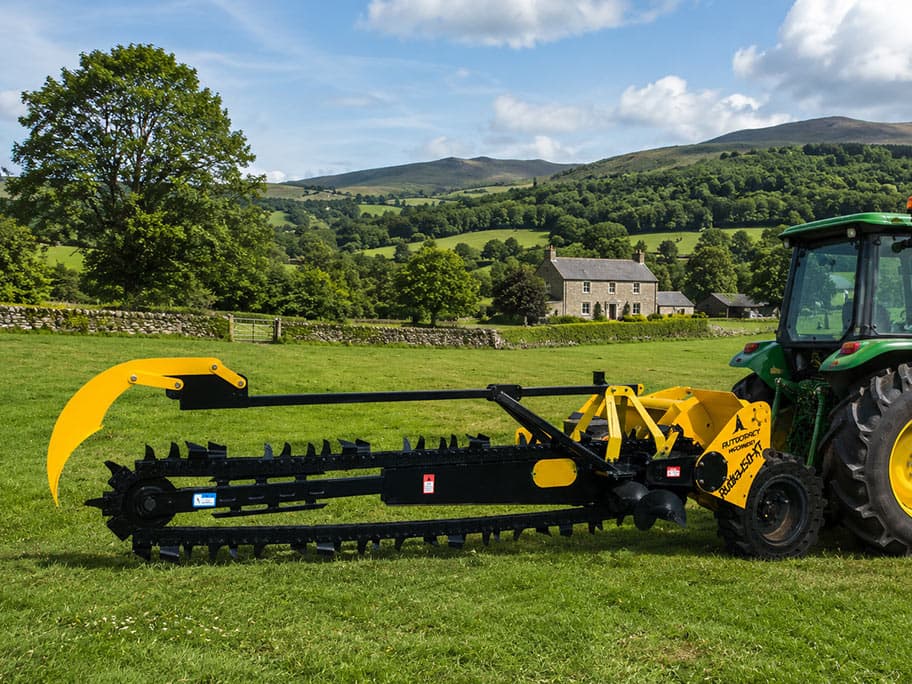
- | Attachment
Tractor
>60 HP
PTO / Hydraulic
40 - 300m/hr (according to trench depth and soil condition)
110–280 mm
Up to 1800 mm
5–6 L/hr
Large-scale construction programs require trenching equipment capable of supporting underground utility installation while adapting to changing site conditions and phased project schedules. The Rudra 150XT construction trencher is suitable for projects involving industrial facilities, transport infrastructure, renewable energy developments, and urban expansion works where precise trench geometry is essential. Its ability to excavate deeper trenches enables construction teams to install utilities at specified design depths while minimizing unnecessary excavation.
The machine is particularly relevant for projects requiring controlled trench formation in areas with restricted access or parallel construction activities. Supporting consistent trench profiles and efficient field operations, it assists project owners, EPC contractors, and engineering consultants in maintaining installation quality, optimizing resource allocation, and improving coordination between civil and utility work packages.
PROJECT EXECUTION
Construction
Construction projects increasingly depend on integrated utility networks that require accurate and repeatable trench excavation. The Rudra 150XT ground utility installation trencher is suitable for installing underground electrical systems, communication networks, water transmission lines, and utility connections associated with industrial and infrastructure developments. It can support utility corridor construction where multiple services must be installed within designated rights-of-way while maintaining specified separation distances.
In last-mile connectivity programs, the machine facilitates extension of essential services to commercial facilities, renewable energy assets, and remote infrastructure sites. Its deep trenching capability enables planners to accommodate future utility expansion requirements while maintaining compliance with engineering specifications. This supports long-term infrastructure reliability and simplifies subsequent maintenance activities.
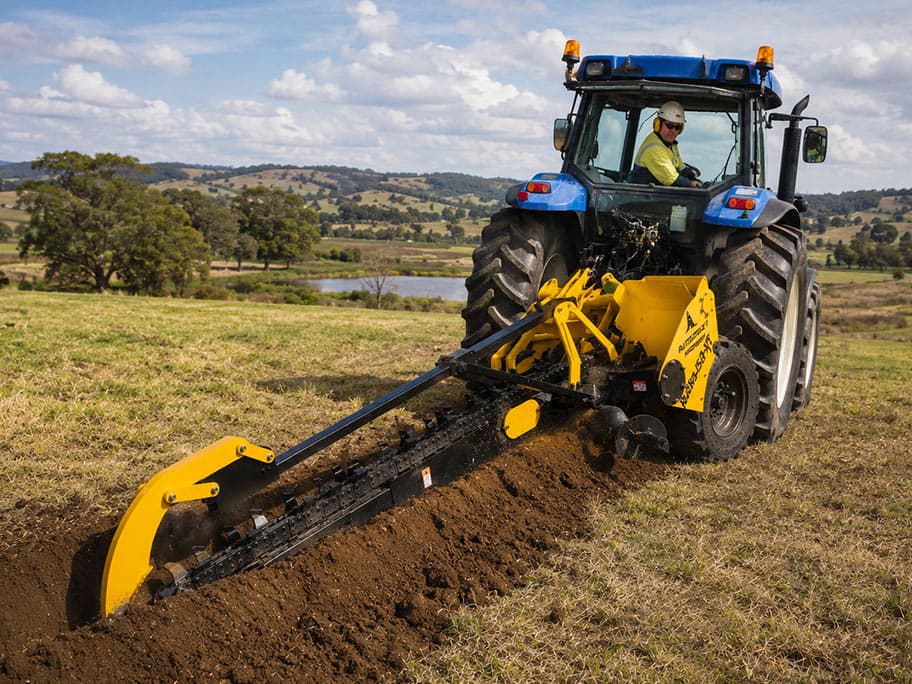
Construction
Successful trenching execution within construction environments requires comprehensive planning, interface management, and strict adherence to project specifications. Priorities typically include subsurface utility investigations, geotechnical assessments, excavation sequencing, and coordination with ongoing site activities. The Rudra 150XT infrastructure planning machine supports construction teams requiring standardized trench dimensions for complex utility installations and phased infrastructure delivery.
Project stakeholders should establish clear procedures for spoil handling, access management, and trench safety before commencing operations. Continuous monitoring of trench alignment, depth tolerances, and soil conditions helps reduce rework and supports quality assurance objectives. Effective communication between contractors, utility operators, and engineering consultants further ensures that trenching activities remain aligned with broader construction schedules and commissioning milestones.
WORKFLOW
Map route requirements, trench depth, and site access before deploying Rudra 150XT.
Use the attachment setup to keep trench output consistent across project sites, road edges, smart-city corridors, and underground utility zones.
Cleaner trench profiles help utility laying, inspection, backfill, and civil finishing teams proceed with less rework.
Autocracy Machinery can help match machine configuration, brochure details, and application guidance to the project.
APPLICATION SUPPORT
Share your site conditions, output goals, and timeline so the Autocracy team can guide model fit, brochure details, and next steps for your project.
Built for performance. Trusted by contractors, municipalities, and EPC teams across sectors.
| Feature | Value |
|---|---|
| Gross weight | 2100 kg |
| Overall length | 5.63 m |
| Overall width | 2.3 m |
| Overall height | 1.52 m |
Common questions about using Rudra 150XT in this application.
| Attachment

Industry model fit in Saudi Arabia
Rudra 150XT is presented for Construction applications on Saudi Arabia project sites, where a attachment has to work around active jobsites, compacted ground, access-controlled work fronts, and staged civil activity. This page adds saudi arabia-focused context for trenchers, so teams can judge whether the model supports site productivity, crew coordination, depth control, and fast mobilisation.
Start by checking Rudra 150XT against route clearance, equipment movement, working width, daily output, and safety coordination; that route-specific review is more useful than treating every trenchers page as the same model brochure.
Common construction use cases for Rudra 150XT include building services, drainage, foundations, road-edge utilities, and site preparation, provided the site setup supports the machine, crew movement, and next work stage properly.
Use this model page to discuss Construction fit, specification limits, transport readiness, brochure details, and quote requirements with Autocracy Machinery.
project teams in Saudi Arabia should confirm soil condition, daily metres, trench profile, access width, and downstream installation speed before shortlisting Rudra 150XT, especially when active jobsites, compacted ground, access-controlled work fronts, and staged civil activity affect access or productivity.


