Horsepower
>50 HP
110 - 280 mm
upto 1200 mm
40 - 300 m/hr as per soil
Trenchers
Attachment
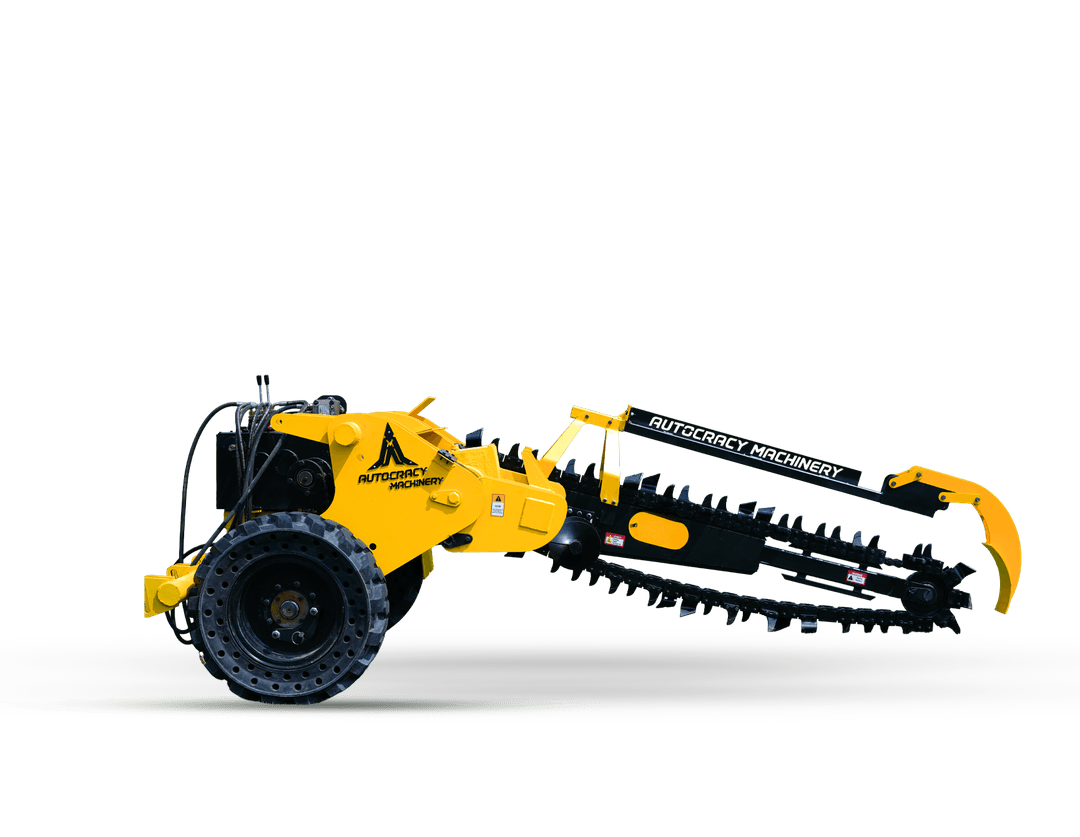
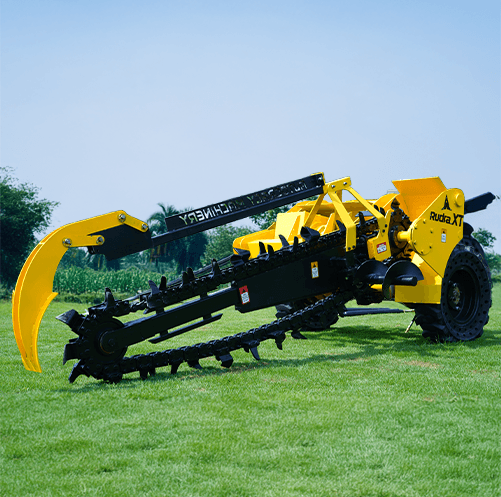
The Rudra 100T Trencher is a compact and efficient tractor-mounted trenching attachment engineered for agriculture, irrigation, water management, and underground utility projects. Designed for tractors above 50 HP, this machine delivers reliable field performance through a PTO / hydraulic transmission system, ensuring smooth power delivery and controlled trenching operations across varied soil conditions.
Built for precision trenching, the machine supports trench depths up to 1200 mm and trench widths ranging from 110–280 mm, making it suitable for irrigation pipelines, drainage systems, utility cables, and infrastructure installations. The Rudra 100T Chain Trencher achieves trenching speeds of 280–300 m/hr in soft soil and 200–220 m/hr in hard soil while maintaining fuel efficiency at 5–6 L/hr.
Rudra 100T Trenching Machine’s hydraulic depth control system with a double-acting cylinder enables accurate trench formation and consistent operational output. With a compact structure measuring 4950 mm in length and a gross weight of 1400 kgs, the machine performs efficiently in farms, rural roads, and narrow work areas. Rudra 100T is widely used by farmers, contractors, utility installation teams, irrigation developers, and infrastructure project operators seeking faster trenching, reduced manual effort, improved productivity, and dependable field execution.
Built for performance. Trusted by contractors, municipalities, and EPC teams across sectors.
>50 HP
PTO / Hydraulic
280 - 300m/hr in soft soil, 200 - 220m/hr in hard soil.
110 - 280 mm
upto 1200 mm
5–6 L/hr
1400 kg
4.95 m
2.195 m
1.35 m
Discover what makes the Rudra 100T stand out from the competition
Compatible with tractors above 50 HP for stable trenching performance in agriculture, irrigation, and utility installation projects.
PTO / Hydraulic transmission ensures smooth power delivery, controlled trenching operation, and reliable field performance across varying soil conditions.
Supports trenching speeds 280 - 300m/hr in soft soil, 200 - 220m/hr in hard soil for faster project execution and improved operational productivity in field applications.
Supports trench widths from 110–280 mm for irrigation pipelines and underground utility installation requirements.
Provides trenching depth up to 1200 mm for deep pipeline installation, drainage systems, and underground infrastructure trenching operations.
Operates with fuel consumption of 5–6 L/hr, helping improve operational efficiency and reduce running costs during trenching work.
BEST SUITED FOR INDUSTRIES
Match Rudra 100T with industry use cases where equipment reliability, field output, and site readiness matter most.
Rudra 100T supports efficient trenching for irrigation pipelines, drainage channels, and underground water distribution systems across varied field conditions.
Rudra 100T enables precise trenching for drip irrigation lines, farm utilities, and agricultural water management applications.
PRODUCT FIT
Understand how Rudra 100T fits project planning, field deployment, and daily operating priorities.
Rudra 100T supports trenching operations for irrigation pipelines, drainage networks, utility cables, water management systems, and infrastructure projects across agricultural fields and rural development sites.
Compatible with tractors above 50 HP, the machine helps contractors and operators plan trench routes, installation work, equipment utilization, and daily project execution efficiently.
The tractor-mounted attachment integrates easily with existing tractor fleets, allowing users to perform trenching operations without relying on dedicated excavation equipment or larger machines.
The PTO and hydraulic transmission system, combined with hydraulic depth control, delivers consistent trench quality, improved productivity, reduced manual effort, and reliable field performance.
| Equipment

Self Propelled Multi Utility Machine | Equipment

Rudra Prime Pro | Equipment
Common questions about Rudra 100T specifications, applications, and project fit.
Model details in Saudi Arabia
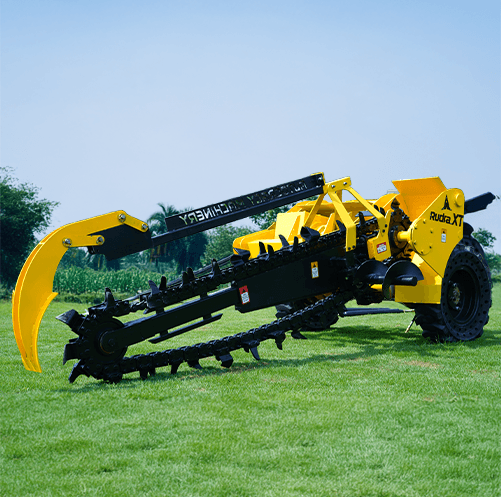
Rudra 100T is listed for Saudi Arabia buyers who need to compare machine capability, applications, specifications, and quote readiness for practical field deployment.
Rudra 100T
Use this page to review Rudra 100T around long route lengths, dry ground, logistics windows, trench profile, contractor output, and support planning.
export discussions, model fit checks, brochure review, and quote planning for Saudi project teams