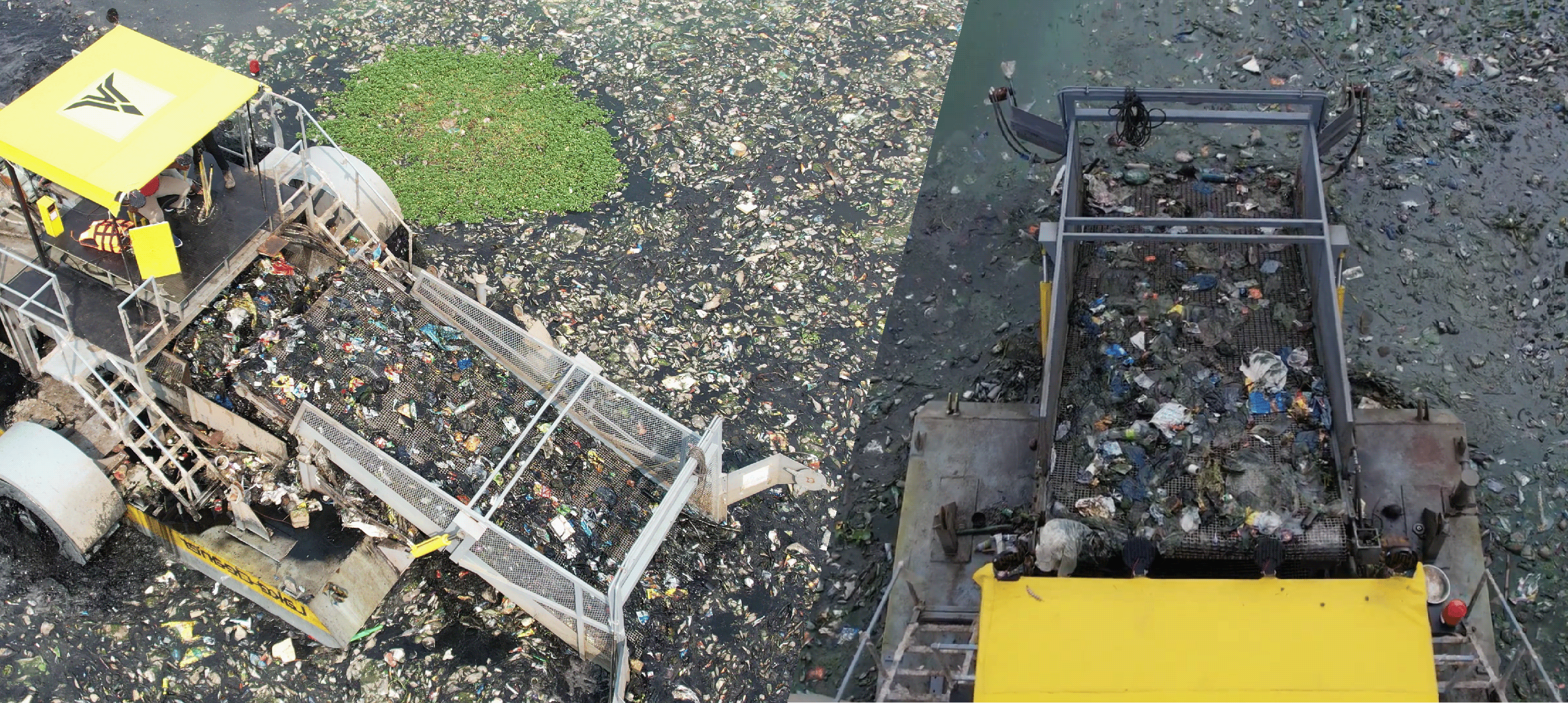
For decades, the story of our urban lakes has followed a predictable and unfortunate path. What were once thriving reservoirs have slowly turned into strained water bodies, quietly filling up with silt, debris, and years of neglect. While these lakes still reflect the city lights on the surface, the reality underneath is different. Their capacity is shrinking, which leads to problems that are impossible to ignore, such as higher flood risks during the monsoon and a steady drop in water quality.
Hussain Sagar is currently facing these exact challenges. Like many historic lakes, it carries a heavy burden of sediment that has built up over generations. Fixing this isn't about quick patches; it requires a real shift from temporary fixes to a strategy of planned, long term restoration.
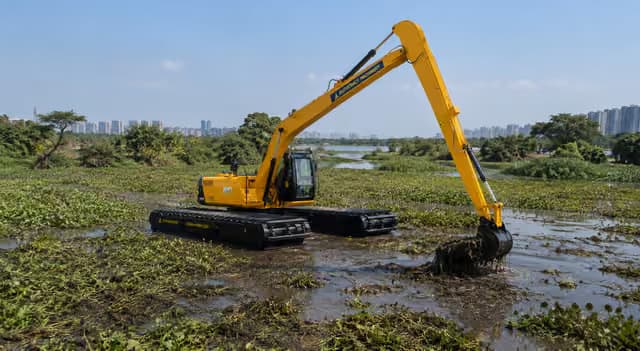
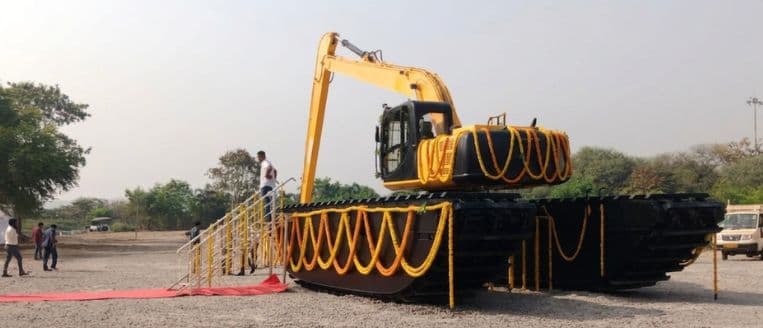
The recent arrival of the Rudra Amphimax 2530T at Tank Bund is a significant milestone in this journey. As a specialized amphibious excavator, this machine is part of a deliberate effort to clean the lake using high end technology. Since it is built to work on both land and water, it eliminates the logistical struggles that usually stall large scale lake cleaning projects.
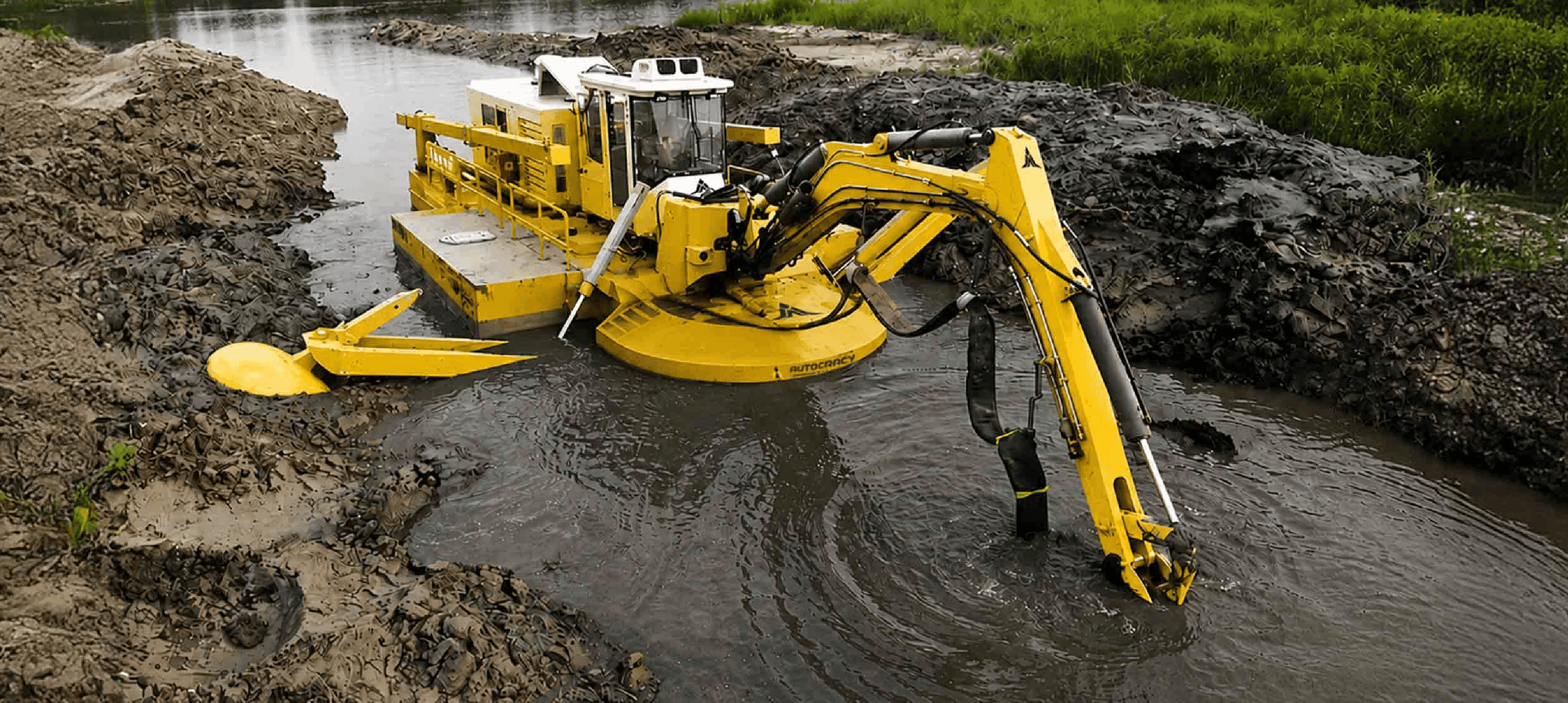
This amphibious dredging machine can reach deeper, tougher sections of the lake that were previously impossible to access. Its ability to clear out thick layers of old silt allows for a much more thorough cleanup than traditional methods ever could. The official launch involved key leaders, including Shri Ponnam Prabhakar, Minister of Transport and BC Welfare, and Shri Danam Nagender, MLA of Khairatabad. Their involvement, alongside the project engineers, shows that this is a serious commitment to the city's future infrastructure rather than just a symbolic gesture.
The use of this floating excavator brings a new level of pace and efficiency to the site. Supported by dual pontoons for balance, it can crawl over marshy ground or float in deep water without getting stuck. In the industry, this type of gear is often called a swamp excavator because of its unique ability to navigate the kind of soft, muddy terrain where standard machinery would simply sink.
By putting a dedicated dredging excavator to work, the city is moving toward a more proactive maintenance model. This change is vital because it ensures the work stays consistent in areas where manual labor cannot reach, improves safety by keeping workers out of hazardous environments, and vastly increases the overall speed of the project.
Restoring a massive lake like Hussain Sagar happens one layer at a time. Every ton of silt removed helps improve the water capacity and the overall ecological balance of the area. The rollout of this amphibious excavator India initiative highlights a growing understanding that our urban health depends on the health of our natural water systems.
By sticking with the right technology and committed planning, there is a clear way forward to make Hussain Sagar a clean, functional asset for the city once again.