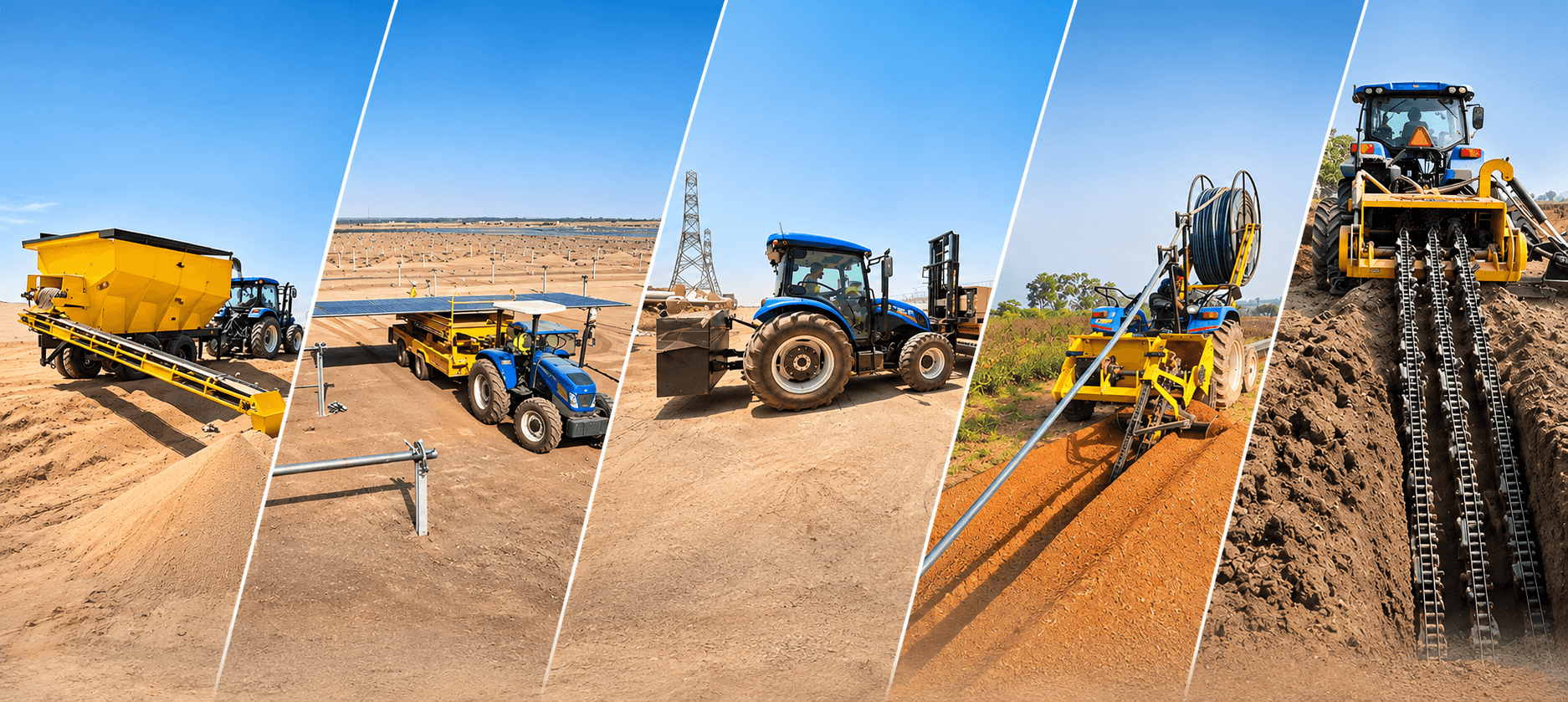
The installation of solar panels is not enough to ensure the success of a large solar farm. Every finished installation involves a sequence of tasks such as material transportation, storage, location, and site coordination. Among these, moving massive solar mounting systems throughout a large project area can be a considerable operational problem.
Solar mounting materials are frequently long, heavy, and difficult to transport manually. As construction progresses across a solar farm's various components, these supplies must be transferred from storage areas to installation locations. When this movement is not properly organized, it may result in additional handling, increased workforce requirements, and interruption of installation activity coordination.
For solar EPC businesses operating large-scale projects, efficient material movement is an essential component of construction planning. Using appropriate solar material handling equipment can assist streamline these procedures and increasing material accessibility for installation teams.
Understanding Material Handling Challenges in Solar Farms
A solar farm often covers a considerable area, with many teams working on foundation preparation, mounting structure assembly, panel installation, and electrical infrastructure. Materials must be available at the appropriate time and location at each stage.
However, relocating mounting structures over such large areas is not always easy. Materials may arrive in bulk and be kept in a central location before being dispersed to specific installation zones. This results in additional handling requirements, especially when the components are lengthy or heavy.
In some projects, traditional transportation techniques may not be appropriate for all types of materials. Repeated lifting, shifting, and repositioning can make material distribution more difficult for site personnel.
This is where a well-planned material handling strategy comes in handy. Instead of relying solely on physical transportation, solar project crews can employ specialized equipment to handle appropriate supplies and distribute them over the site.
Why Is Efficient Material Handling Important for Solar Installation?
Material handling has a direct impact on how efficiently different building tasks are coordinated. Even when foundation construction and panel installation are proceeding as expected, material supply delays might have an impact on the following stage of the project.
Consider a huge solar project in which mounting structures are kept in one portion and installation teams work across multiple zones. If materials cannot be moved efficiently, personnel may spend more time preparing and carrying components rather than concentrating on installation tasks.
Properly chosen solar farm material handling equipment contributes to these needs by facilitating the movement and positioning of materials across defined work areas.
It also helps with site organization. When mounting structures and other components are positioned according to the installation schedule, teams have easier access to the supplies they need. This minimizes unnecessary movement and improves coordination between storage and installation tasks.
Exploring Equipment for Solar Material Handling
Equipment requirements vary depending on the stage of solar development. While forklifts are routinely used to transport compatible items, specialized gear may be better suited to moving long mounting structures across huge project sites.
Pole Stacker: Supporting the Movement of Long Materials
Long mounting systems necessitate equipment that can withstand their size and intended motion. When components must be moved and positioned often throughout a solar farm, traditional material handling methods may become inefficient.
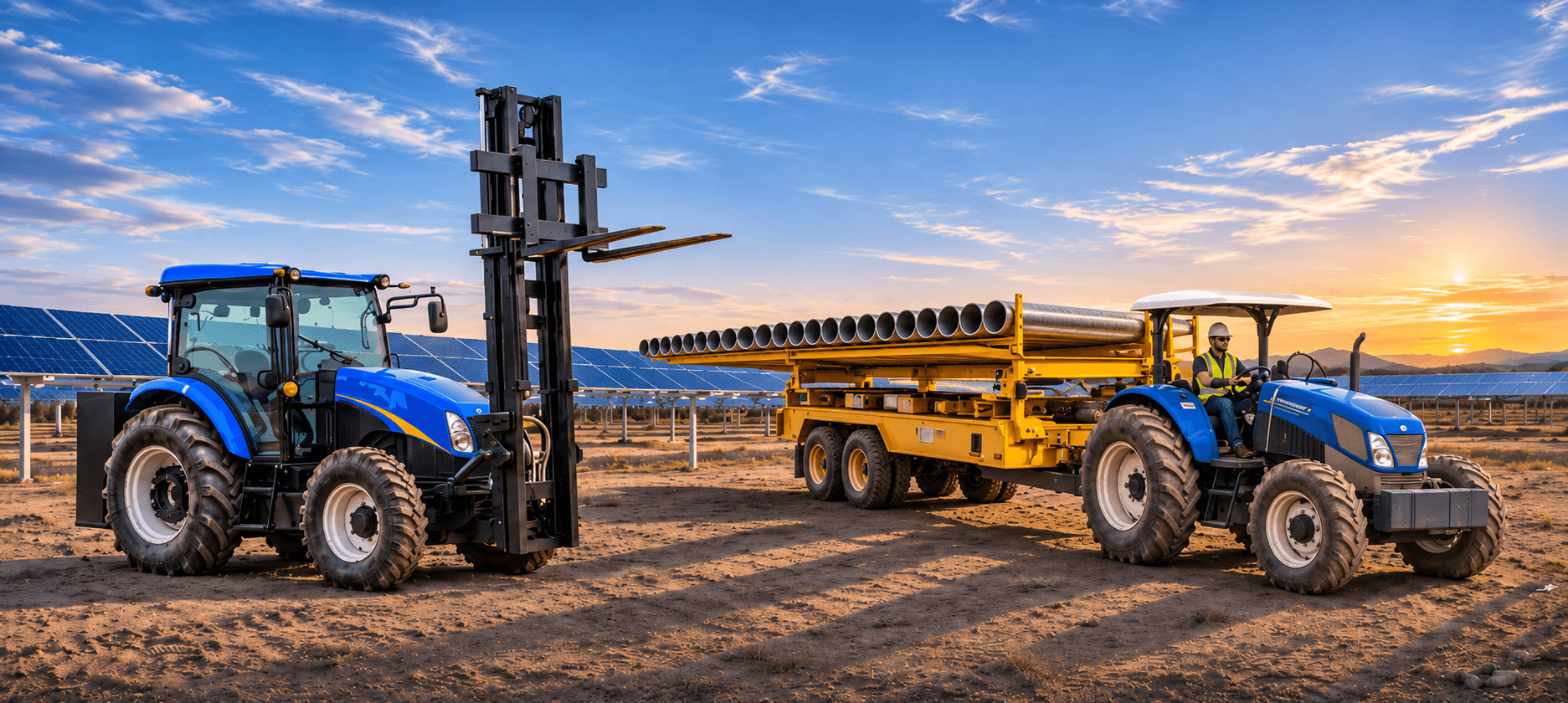
The Pole Stacker from Autocracy Machinery is designed to convey long materials throughout infrastructure project sites. It can help with the movement and installation of suitable mounting structures in solar applications, depending on the material size and project parameters.
By incorporating a specialised handling solution, solar EPC teams can organise material distribution between storage areas and installation zones more effectively. The pole lifting machine is particularly relevant for projects where mounting components need to be moved across multiple sections of the site.
Forklifts: Handling Compatible Solar Installation Materials
The Forklift Machines are widely used in industrial material handling for transporting palletised materials, packaged components, and other compatible loads.
Across solar project sites, they can assist with moving installation supplies and materials that are suitable for their rated capacity and handling configuration.
However, handling long mounting structures requires additional consideration. Their length, weight distribution, and lifting requirements may make conventional forklift operations unsuitable in certain situations. Therefore, equipment selection should always depend on the material being handled and the conditions at the project site.
How to Organise Material Movement Across Large Solar Sites
Choosing appropriate machinery is only one step toward optimizing material handling. The manner in which materials are stored, transported, and dispersed also effects overall site efficiency.
Solar EPC teams might begin by determining the project's key storage regions and installation zones. Understanding the distance between these locations helps establish the necessary equipment and transportation arrangements.
Material distribution should also adhere to the building sequence. For example, mounting structures for a certain installation portion should be organized and available before the crew begins construction. This prevents repetitive transit and unnecessary travel between work sites.
Another crucial factor to consider is site accessibility. The equipment must be appropriate for the terrain conditions and the available moving space. Proper transportation route planning can also help to keep material handling activities from interfering with other construction processes.
When these factors are examined together, material mobility becomes a planned component of the solar installation workflow, rather than an activity controlled just when materials are required.
What Should Solar EPCs Consider When Choosing Material Handling Equipment?
Not all solar projects have the same material handling requirements. The dimensions of mounting structures, site architecture, ground conditions, and transit distances can all vary significantly.
Before selecting industrial material handling equipment, project managers should determine the type and weight of the materials to be carried. This helps establish if a standard forklift or a specialized solution, such as an electric pole lifting machine, is more suited.
The available space on the location should also be examined. Equipment must be able to reach storage and installation zones without interfering with other existing activities.
Another important factor is the overall construction workflow. Material handling equipment should complement the installation schedule and support the movement of components according to project requirements.
Choosing equipment based on these considerations helps solar EPC teams avoid unsuitable handling arrangements and establish a more organised approach to site operations.
Conclusion
As solar farms spread across huge project areas, controlling the movement of mounting structures and installation supplies becomes a critical component of construction planning. Materials must be delivered, positioned, and organized in a way that facilitates installation activities while avoiding needless handling issues.
Using appropriate solar material handling equipment can help EPC teams manage these requirements more effectively. From standard forklifts for compatible loads to specialized Pole Stackers for lengthy materials, the appropriate equipment is determined by the application and site conditions.
Autocracy Machinery offers specialized material handling solutions, including hydraulic pole lifting machines, to support the requirements of solar infrastructure projects.
Planning material movement for a large solar installation? Explore Autocracy Machinery's equipment solutions and find the right material handling support for your project.
FAQs:
1. Why is material handling important in large-scale solar projects?
It ensures mounting structures and installation materials reach the required locations efficiently, supporting better site coordination.
2. What equipment is used for material handling in solar farms?
Forklifts and specialized Pole Stacker Machines are commonly used, depending on material dimensions and handling requirements.
3. How does a Pole Stacker help in solar panel installation projects?
It supports the transportation and positioning of long solar mounting structures across project sites.
4. What is the difference between a Pole Stacker and a forklift?
Forklifts handle compatible palletized loads, while Pole Stackers are designed for handling long materials.
5. Why do solar EPC companies need specialized material handling equipment?
It helps manage heavy materials across large project areas and supports organized installation workflows.
6. What factors should be considered when selecting solar material handling equipment?
Consider material length, weight, load capacity, site conditions, accessibility, and transportation distance.
7. Can a pole lifting machine handle solar mounting structures?
Yes, they can handle suitable mounting structures depending on their dimensions and the machine's rated capacity.
8. Are forklift machines suitable for moving long solar mounting structures?
Not always. Material length, weight distribution, and lifting requirements must be evaluated before selection.