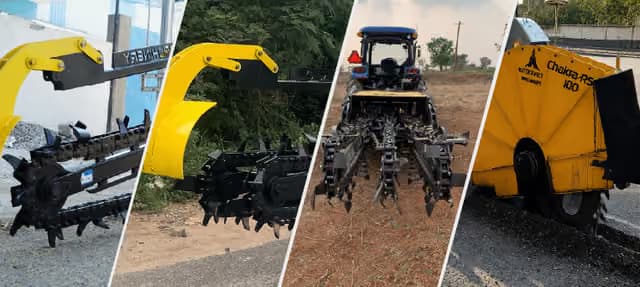
Solar and energy infrastructure projects generate kilometres of open trenches that need to be restored quickly, safely, and to a high standard. A poorly backfilled trench can damage underground cables, compromise structural stability, and create costly rework down the line.
This is where choosing the right sand backfill machine becomes a critical project decision — not just an equipment choice. The ability to place clean, compacted sand around buried cables and ducts with speed and precision directly determines the long-term integrity of any solar or energy installation. 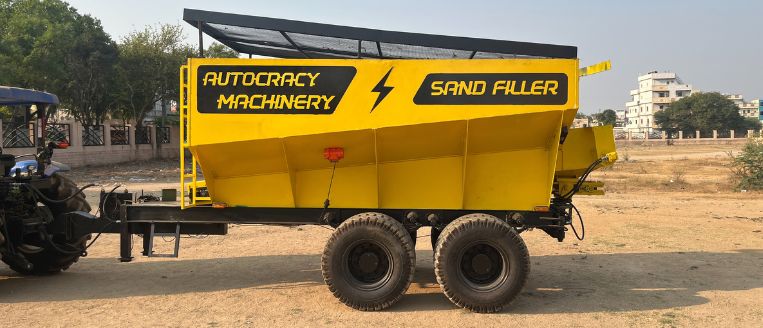
Traditional trench backfilling methods rely heavily on manual labour, front loaders, or excavator buckets — all of which lack the fine control needed for sensitive underground installations. A hydraulic sand filler machine changes this entirely by automating the delivery of clean, screened sand directly into the trench at an adjustable height and flow rate.
Remote operation capability means operators can maintain safe distances while controlling placement with precision, reducing the risk of cable damage and ensuring consistent fill depth on every pass. The result is a backfilling process that is faster, safer, and significantly more controlled than conventional approaches.
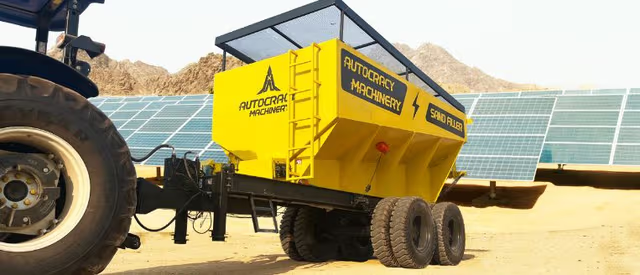
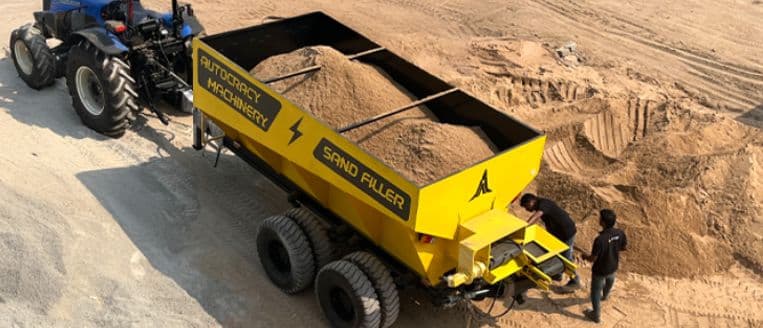
The Sand Filler is engineered around one core principle: delivering clean sand exactly where it needs to go, without impurities or manual intervention. An integrated screening system filters out stones, debris, and clumps before the sand reaches the trench, protecting buried cables and pipe surfaces from abrasion or point-load damage.
With a conveyor system that adjusts between 1.4 and 3 metres in height, it accommodates varying trench depths without requiring additional equipment. Its tractor-mounted design, combined with a large-capacity hopper, allows continuous operation over long trench runs — making it particularly effective on solar and energy sites where trench lengths can extend over several kilometres.
When solar panel mounting structures are set into the ground, the quality of sand padding around the foundation base directly affects long-term stability and load distribution. Uneven or contaminated fill can cause differential settlement, misalignment of panel arrays, and structural stress over time.
Controlled sand padding using a dedicated machine ensures the foundation zone receives uniform, compacted material free of coarse aggregates. On large utility-scale solar farms where hundreds or thousands of mounting points need to be treated, this level of consistency is simply not achievable through manual methods — making mechanised padding an operational necessity rather than a convenience.
Underground utility corridors on solar and wind energy projects carry a mix of high-voltage DC cables, earthing conductors, communication lines, and in some cases water or gas service lines — all running in close proximity. Protecting this infrastructure begins with quality trench bedding. A pipeline padding machine ensures that each layer of sand placed around and above the buried services meets the required density and cleanliness standard. Contaminated or improperly placed fill material can create hot spots around cables, accelerate corrosion on metallic pipes, and create voids that lead to trench collapse over time. Mechanised padding eliminates these risks by delivering pre-screened sand in a controlled, repeatable manner across the entire corridor length.
Wind energy installations present some of the most demanding trench backfilling conditions in the energy sector. Cables connecting individual turbines to the substation run through terrain that includes rocky outcrops, waterlogged ground, sandy coastal zones, and steep gradients — often on the same project. A trench backfilling machine that can operate reliably across all these conditions, without requiring terrain-specific attachments or configuration changes, delivers enormous value to EPC contractors on wind farm projects. Consistent sand placement around medium-voltage cables in these environments protects insulation integrity, reduces thermal resistance, and ensures the installation meets grid connection standards without costly remediation work.
On a utility-scale solar farm, the cable network running between inverters, combiner boxes, transformers, and the main substation can span tens of kilometres of buried trenches. Each section of this network requires clean, stone-free sand fill placed carefully around the cable before topsoil reinstatement. Deploying a purpose-built sand backfill machine on solar farm projects eliminates the variability that comes with using excavators or manual teams for this task. It also significantly reduces project timelines — a machine that can process 15 tonnes of sand per load and operate continuously across large open sites keeps cable laying crews moving forward without backfilling bottlenecks slowing overall progress.
Energy projects — whether solar, wind, or hybrid — operate on strict commissioning deadlines where every day of delay carries financial consequences. Equipment deployed on these sites needs to perform consistently in open field conditions, handle large daily output volumes, and require minimal downtime for maintenance. The Sand Filler is designed specifically for this reality, with a robust steel frame, easy-access service points, and a stable suspension system that keeps operation smooth on uneven terrain. Its remote-controlled hydraulic system means fewer personnel are needed in the immediate trench zone, improving site safety compliance — a growing requirement on large energy EPC contracts.
As a dedicated sand filler machine manufacturer, Autocracy Machinery is focused on real-world infrastructure performance. We design and build equipment that solves the actual challenges faced by EPC contractors, project managers, and site engineers on energy projects. Whether you are planning a utility-scale solar installation, a wind farm cable network, or a multi-utility energy corridor, our team can help you identify the right backfilling solution for your project scale, terrain, and output requirements. Reach out to us to discuss your project — we are ready to support your team from specification through to site deployment.