The Foundation of Underground Infrastructure
Infrastructure development at the national and regional levels often involves an important but overlooked task, which is digging long, narrow channels in the ground. The starting point for water distribution networks, fibre optic corridors, electrical lines, drainage systems, and irrigation channels is a trench. Accurate trench cutting plays an important role in how long the installed asset lasts and how well it works. Trenchers have become the standard mechanical response to this requirement, replacing manual excavation methods that were slower, less consistent, and increasingly unsuitable for the scale of modern civil works.
Why Specialisation Matters in Excavation
The distinction between a trencher and a general-purpose excavator is important and often underappreciated in project planning discussions. An excavator is a versatile machine built for a wide range of earthmoving tasks. A trencher machine, by contrast, is engineered for a single purpose: to cut a dimensionally accurate, straight-sided channel to a defined depth along a specified alignment. That focus produces results that general-purpose equipment simply cannot replicate with the same consistency. Trench profiles that meet specifications from the first pass reduce bedding preparation time, support accurate asset placement, and lower the probability of post-installation complications that require costly intervention.
Adapting to Challenging Terrain Conditions
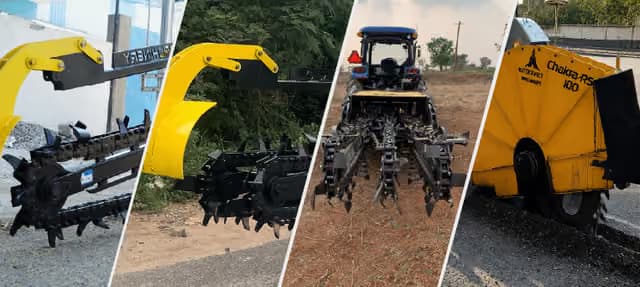
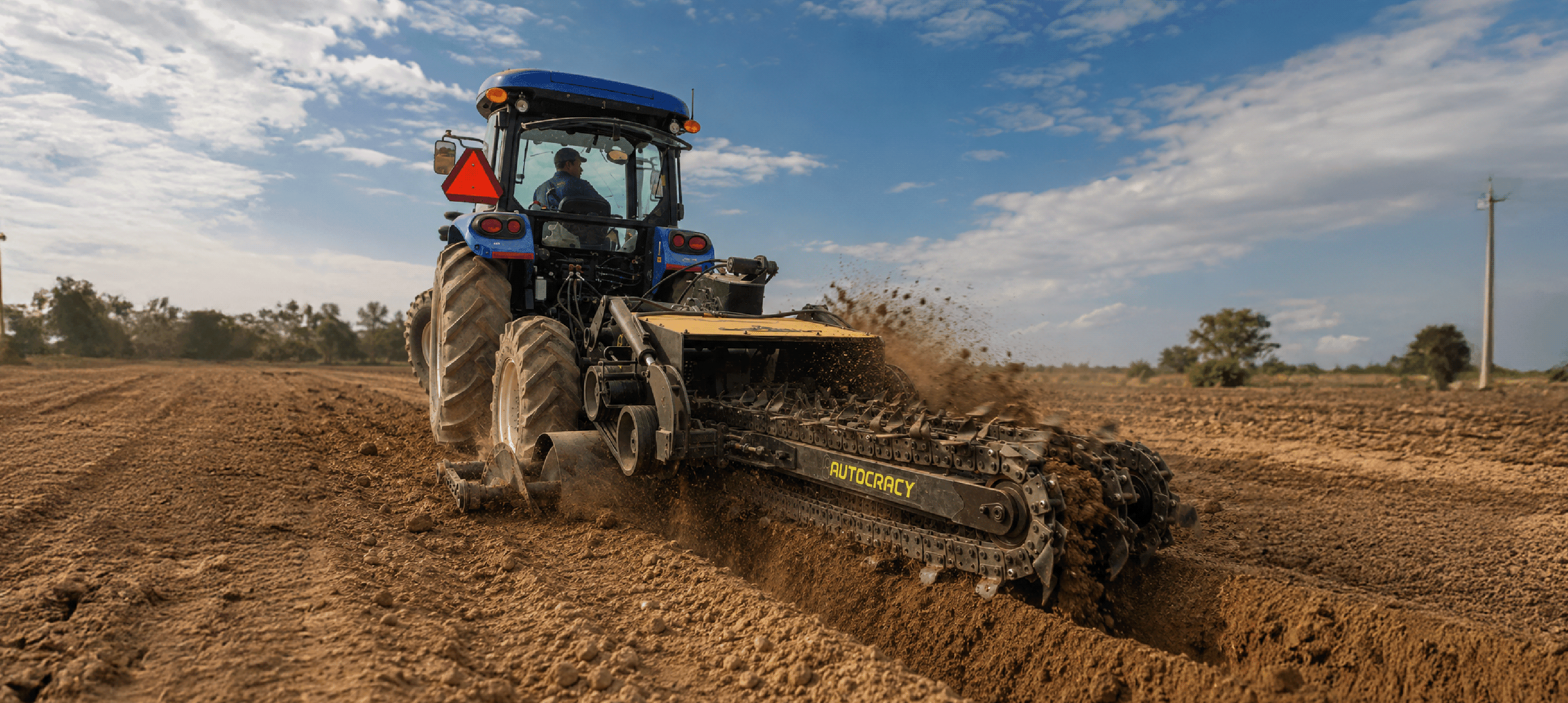
Among the available variants, chain trenchers are the most widely deployed on large-scale civil and infrastructure projects. The cutting mechanism consists of a hardened chain rotating at a controlled speed along a boom arm, penetrating the ground progressively as the machine advances. This design is particularly effective in difficult ground conditions, including compacted subsoil, clay-heavy terrain, and mixed earth profiles where resistance varies along the route. For government-led projects involving long linear installations, such as trunk water mains, high-voltage cable routes, or national fibre optic rollouts, chain trenchers provide the combination of output volume and trench quality that programme schedules demand.
Precision in Sensitive and Controlled Environments
Not all project environments allow for an aggressive approach to excavation, and authorities overseeing works in occupied urban areas will recognise this challenge immediately. Where trenches run in close proximity to existing buried services, through established streetscapes, or across sites where surface disruption carries regulatory or community consequences, cutting force alone is not the answer. The Utility Trencher is the appropriate tool in these conditions. Its hydraulic drive system allows operators to regulate cutting speed and depth with a sensitivity that mechanical systems cannot match, producing consistent trench geometry through variable ground with a significantly reduced risk of over-excavation or collateral disturbance. For infrastructure authorities managing works alongside critical existing assets, this level of operational control is not a technical preference; it is a project requirement that should be specified accordingly.
Delivering Quality in Constrained Site Conditions
Access constraints are a recurring challenge in infrastructure delivery, particularly within established communities, heritage zones, and sites with restricted working envelopes. The compact trencher was made to operate in these situations without affecting trenching quality. Lighter in frame, more manoeuvrable in confined areas, and straightforward to transport between locations, compact trenchers are suited to smaller-scale installations, including service connections, last-mile cable routing, and site drainage works where a full-size machine would be operationally impractical. A smaller size does not mean they are less important; in the right situations, they are actually the most suitable tool to use.
Specifying the Right Equipment for the Project
Selecting the correct trenching equipment for a given project is a technical decision that should be made on the basis of documented ground conditions, trench specification requirements, site access parameters, and programme constraints. Soil classification is particularly important. Equipment suited to one soil profile may produce poor results or excessive wear in another. Trench depth and width requirements vary between asset types and must be matched to machine capability. For public sector procurement and contract management, these variables should be clearly established in project specifications to ensure that the equipment deployed is appropriate for the work being carried out, not simply the most readily available option.
The Operational and Financial Case for Mechanised Trenching
The operational case for mechanised trenching is well established. Programme timelines are shorter, labour demands are lower, and the consistency of the finished trench reduces the risk of installation defects that create long-term maintenance liability. For government authorities responsible for delivering infrastructure that is expected to perform reliably across extended service periods, these factors carry direct financial and operational consequences. Underground assets are expensive to access once installed. The standard of the trench they sit in influences how often that access becomes necessary.
Smart Trenching Solutions for Sustainable Infrastructure Projects
Trenching is not complicated, but it must be carried out very accurately. Autocracy Machinery's trenching solutions are built around this understanding, with equipment developed specifically for OFC installation, water management, solar energy, environmental sustainability, landscaping, defence, construction, agriculture, and railways. Each machine is designed to meet the precise demands of these sectors, delivering consistent trench dimensions, reliable performance, and the operational durability that serious infrastructure work requires.