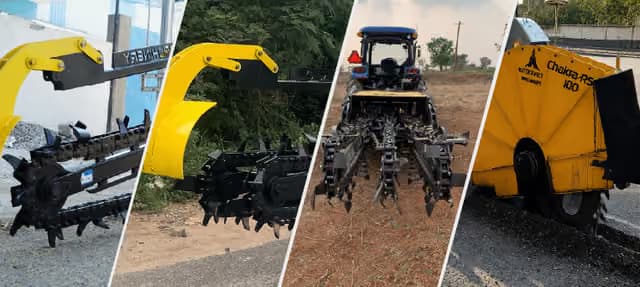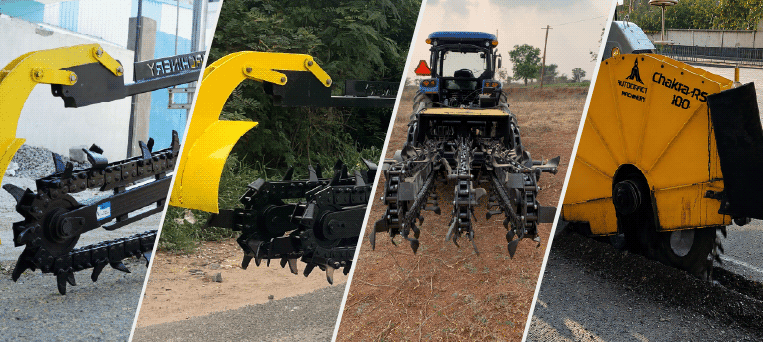
In underground OFC projects, choosing between a chain trencher and a wheel trencher plays a key role in modern telecom infrastructure. Whether the work runs through city roads, village stretches, or mixed terrain, trench quality directly affects cable safety, restoration speed, and overall project timelines.
Both machines are widely used for OFC cable laying, but they function differently and suit different site conditions. Understanding how each trenching method performs on the ground helps engineers, planners, and EPC contractors make better decisions on site.
OFC projects demand narrow, uniform trenches with minimal surface damage. Poor trenching can lead to repeated road repairs, cable exposure, and public inconvenience. In urban areas, space constraints and traffic movement add further complexity. In rural stretches, long distances and varying soil conditions become the main challenge.
This is why understanding how different trenching machines perform on ground conditions is more important than simply choosing based on availability. The right approach helps improve productivity, reduce rework, and maintain project quality.
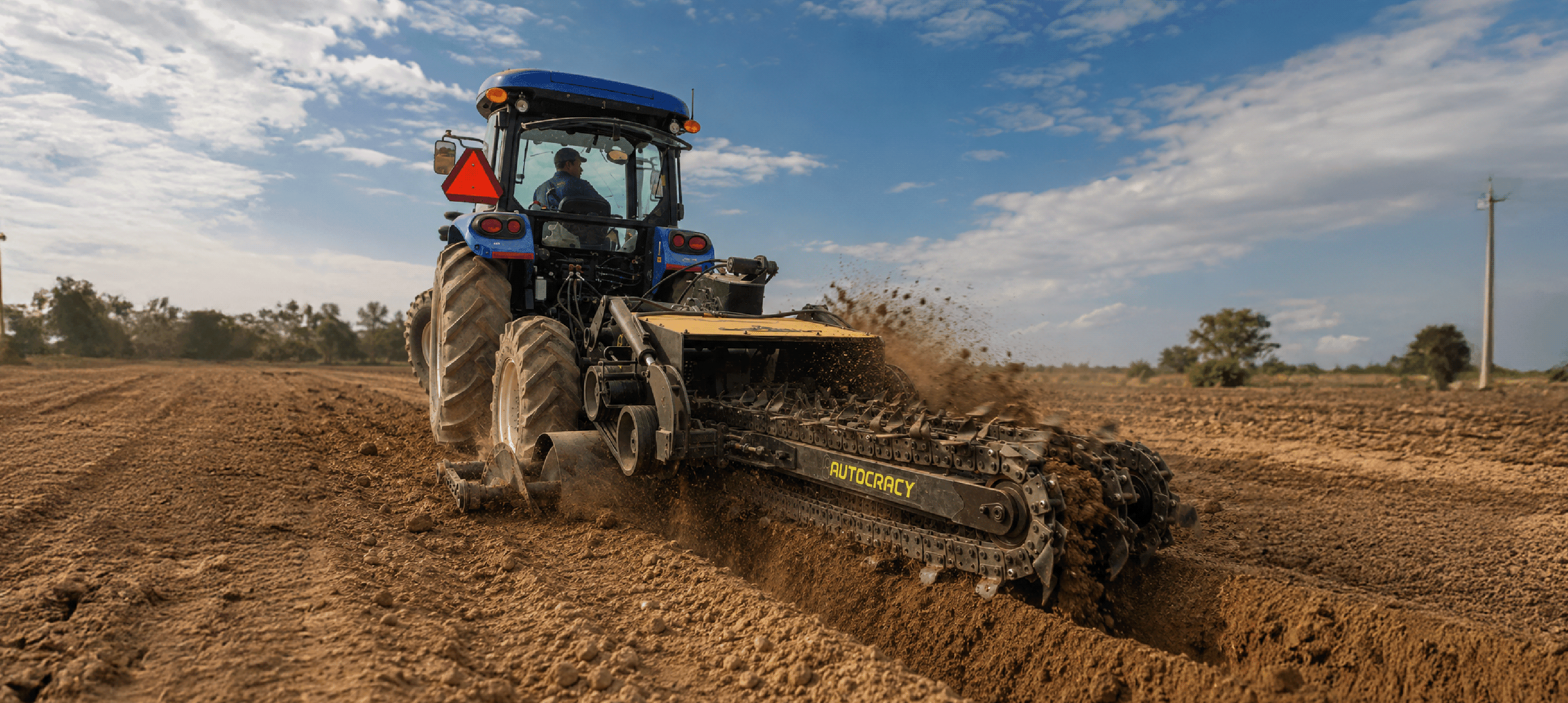
A chain trencher works by cutting soil continuously using a rotating chain fitted with teeth. This method is widely used where deeper and longer trenches are required, especially across open stretches.
The single chain trencher design allows consistent trench formation across soft, mixed, and even compacted soil. It is particularly useful in long-distance OFC corridors where uniform depth and speed are essential. Because the cutting action happens below the surface, it is suitable for non-paved areas or sections where surface restoration is less complex.
In telecom projects that involve rural connectivity or utility corridors, a chain-based approach often provides better reach and continuity.
A wheel trencher uses a rotating cutting wheel or disc to slice through hard surfaces such as asphalt or concrete. This approach is commonly preferred in city roads where surface precision is critical.
Often referred to as a road cutter, this machine produces clean, narrow cuts with sharp edges. The disc trencher method ensures controlled trenching that helps speed up reinstatement work after cable laying. It is especially effective in high-traffic zones, residential layouts, and paved corridors where minimal surface disturbance is expected.
In OFC projects passing through dense urban areas, wheel-based trenching offers better control and finish.
While both machines serve telecom trenching needs, their suitability depends on site conditions rather than machine capability alone.
Chain-based trenching works best where:
Long, continuous trenching is required
Soil conditions vary across the route
Deeper cable placement is needed
Surface restoration is less restrictive
Wheel-based trenching is more suitable where:
Roads are paved or concreted
Trenches need to remain narrow
Traffic movement must be managed
Surface finish is a priority
Both machines form part of modern Trenching Equipment used by telecom contractors, but each solves a different on-ground problem.
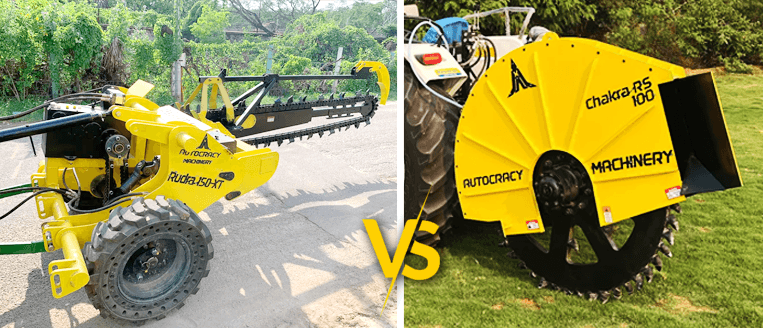
The Rudra 150XT is designed for telecom projects that require continuous trenching across long distances. As a chain-based solution, it supports consistent trench formation in open and semi-urban areas. In OFC projects that involve village roads, utility corridors, or mixed soil conditions, this machine offers practical efficiency without frequent repositioning.
For contractors handling large OFC rollouts, a chain trencher like this helps maintain steady progress while keeping trench quality uniform.
The Chakra RS100 is ideal for precision trenching on paved surfaces. Its wheel-based cutting method supports neat, controlled cuts that are easier to reinstate after cable placement. In city roads, residential streets, and narrow corridors, this approach reduces surface damage and public disruption.
As a road cutting machine, it fits well into urban OFC projects where accuracy and surface restoration timelines are critical.
There is no single “better” option between the two. The decision depends on where the cable is being laid and what the ground conditions demand. Understanding site requirements helps project teams choose between a chain trencher and a wheel trencher more effectively, avoiding delays and unnecessary costs.
Both Rudra 150XT and Chakra RS100 are manufactured by Autocracy Machinery, with a focus on building purpose-built solutions for real site conditions. We believe that choosing the right machine for the right job is key to successful OFC infrastructure projects.
If you would like to learn more about selecting the appropriate trenching solution for your telecom project, feel free to reach out for an enquiry.