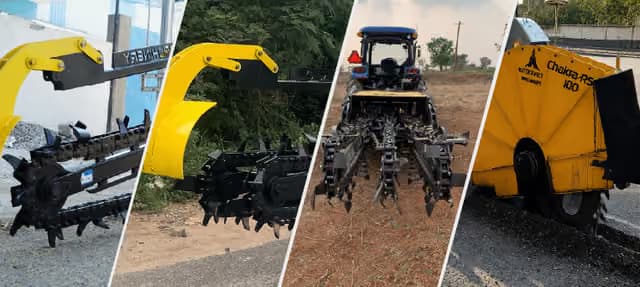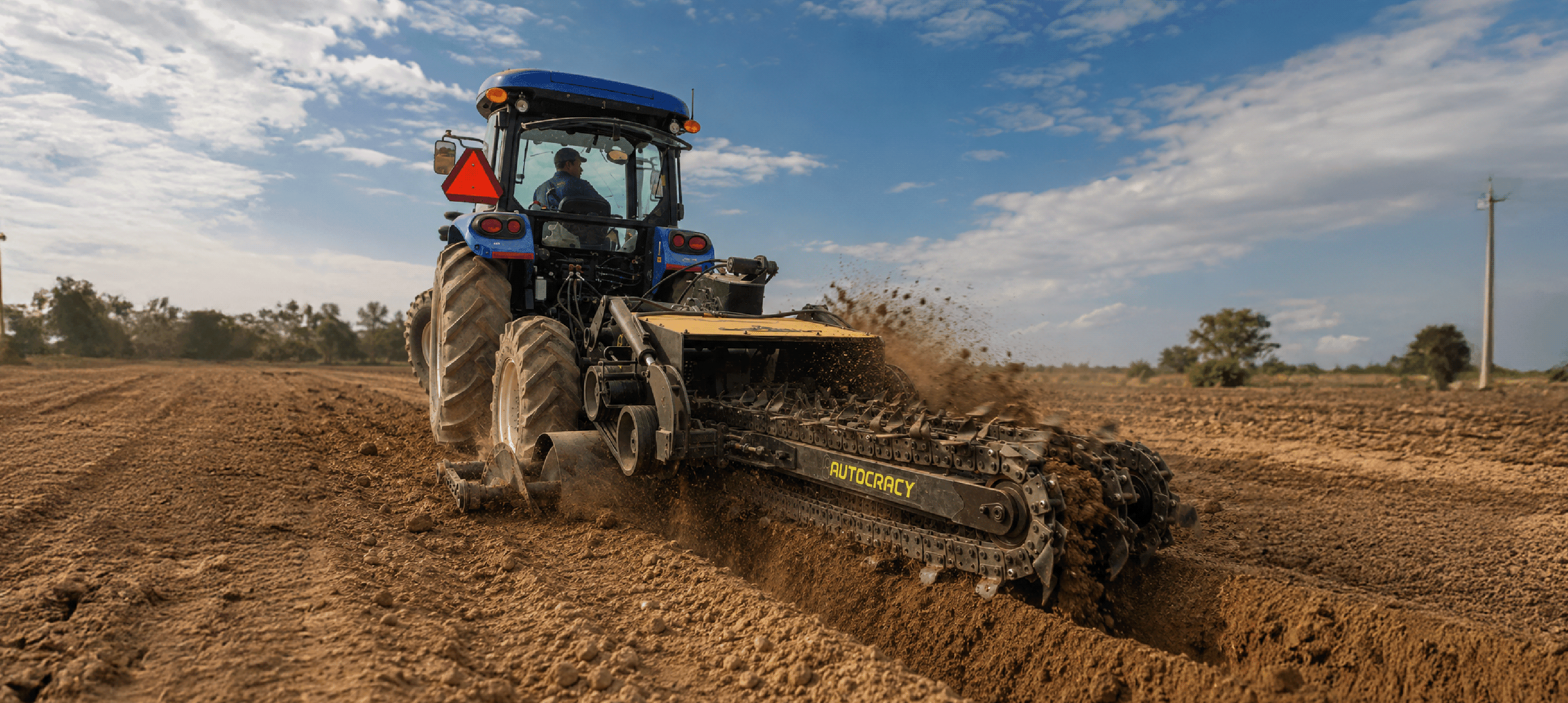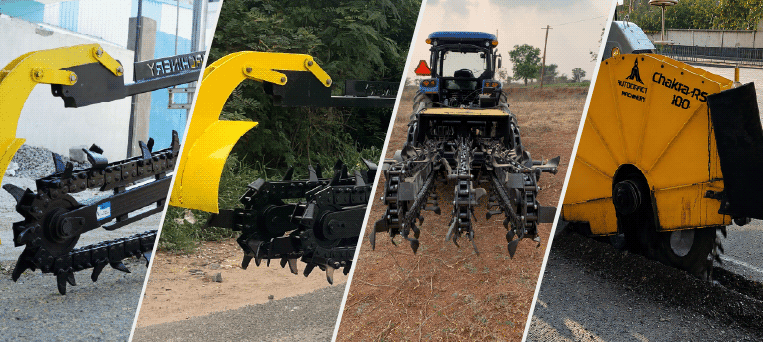
A trencher equipment is one of the most valuable machines used in modern infrastructure and utility projects. It is specifically designed to dig narrow and uniform trenches that help in laying cables, pipelines, or drainage systems. Unlike traditional excavators, a trencher ensures precision, speed, and consistency while minimizing surface damage and manual effort.
Today, trenchers are widely used across multiple sectors such as telecommunications, agriculture, construction, water management, landscaping, and defence. From small walk-behind models to heavy-duty chain trenchers, these machines have transformed how underground work is done efficiently and safely.
A trencher machine works by cutting through the soil using a rotating chain or wheel equipped with hardened steel teeth. The design allows it to dig trenches of different widths and depths depending on the project’s requirements. These trenches are then used to install fiber optic cables, irrigation lines, power cables, or gas pipelines.
The machine’s precision ensures that the trench size remains consistent, which is extremely important for projects that require specific installation measurements. By automating the digging process, a trencher saves time, reduces human fatigue, and lowers overall project costs.
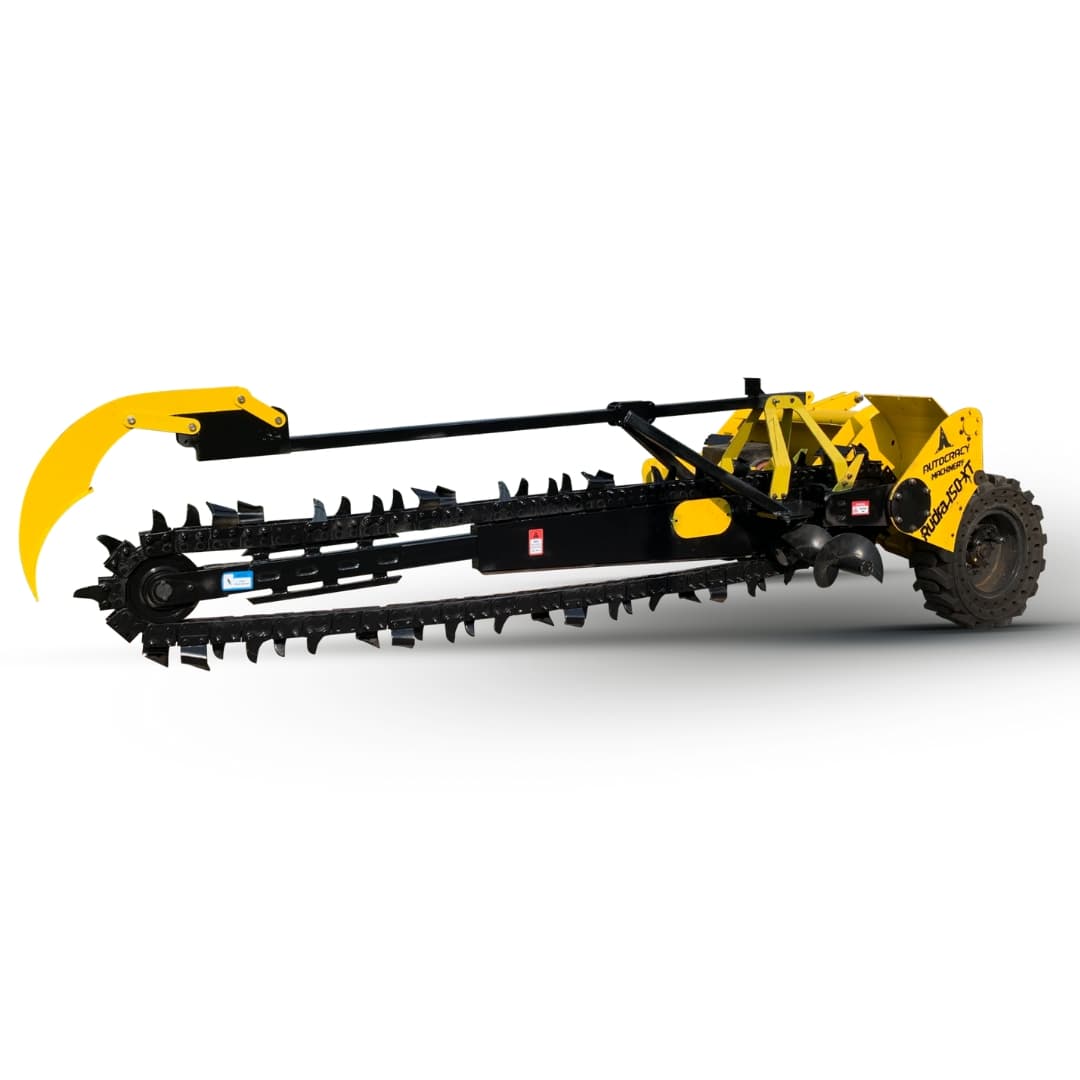
A chain trencher uses a continuous chain equipped with cutting teeth to dig deep, narrow trenches. It is commonly mounted on tractors or compact carriers and is suitable for hard or rocky soils. Chain trenchers are widely used in telecom and water pipeline projects due to their ability to cut through tough ground conditions.
Examples of chain trenchers include Rudra 150XT and Gaja 100XT, both designed for urban and rural deployment. These machines feature adjustable trench depth, reliable hydraulic systems, and high digging capacity. They provide consistent trench width and depth with minimal surface disruption, making them ideal for a variety of industrial applications.
A wheel trencher, also called a disk trencher, features a large circular blade with embedded teeth. It is primarily used in medium-hard soil and rocky terrains where standard chain trenchers may face resistance. Wheel trenchers are ideal for creating wide, shallow trenches often required in road and utility construction projects.
A popular example is the Chakra RS100, which provides stability and efficiency for long linear cuts. Disk trenchers are frequently chosen for projects involving large pipelines, power distribution networks, and areas where speed and precision are important.
For smaller landscaping or irrigation projects, a walk-behind trencher machine, also known as a mini trencher, is a perfect choice. Compact and easy to maneuver, this machine is designed for areas with limited working space, such as gardens or residential lawns.
The Dhruva HYT is an example of a walk-behind trencher suitable for small-scale projects. It is lightweight but powerful enough to handle tasks such as installing sprinkler systems, underground lighting cables, or water lines. Its simplicity and portability make it highly practical for contractors and maintenance workers.
In telecom and optical fiber cable projects, chain trenchers like Rudra 150XT ensure precise and narrow trenches required for cable ducts. These machines minimize road and surface damage and support fast restoration, which is critical for urban and rural network expansions.
For irrigation pipelines, drainage systems, and farm water management, trenchers that can handle variable widths and depths are used. Machines such as Gaja 100XT ensure proper water flow and irrigation efficiency while reducing soil erosion and manual labor.
Heavy-duty chain trenchers are used in infrastructure projects like roads, power cables, and pipelines. Their high digging depth and wide cutting capacity allow them to perform efficiently in large-scale operations where accuracy and speed are crucial.
Compact or walk-behind trenchers are widely used in landscaping. For tasks like laying irrigation tubing, lighting cables, or drainage systems, mini trenchers like Dhruva HYT work efficiently in tight or confined spaces without damaging surrounding areas.
In defence or energy infrastructure projects, high-performance trenchers are required for secure cable installation, utility protection, and energy corridor development. Heavy-duty chain trenchers are capable of handling challenging soil conditions and providing consistent performance.
Trenchers have significant advantages over traditional excavators or manual digging:
Precision: Uniform trench width and depth for accurate installation of cables or pipes.
Speed: Capable of faster operation, reducing project timelines significantly.
Cost Efficiency: Less manpower is required, lowering labor and operational costs.
Minimal Disruption: Creates clean, narrow trenches without damaging surrounding areas.
Versatility: Available in chain, wheel, and walk-behind models for different soil types and project scales.
Durability: Designed for long-term use with minimal maintenance, providing reliable performance.
Telecom and fiber optic cable laying
Water pipeline and irrigation installation
Power and utility cable trenching
Drainage and sewage line construction
Solar farm and energy corridor trenching
Landscaping projects including garden irrigation and lighting systems
Road cutting and utility repair projects
Trenchers can operate in a wide range of soil types, from soft loam to rocky terrain. This makes them a highly adaptable and essential machine for modern projects across multiple industries.
Trenchers are essential for modern infrastructure, construction, and landscaping projects. They provide precision, speed, and efficiency while reducing labor and minimizing disruption. Choosing the right type of trencher—chain, wheel/disk, or walk-behind—ensures optimal results for telecom, agriculture, water management, landscaping, and energy projects.
Machines such as Rudra 150XT, Gaja 100XT, Chakra RS100, and Dhruva HYT demonstrate how versatile and effective trenchers can be. Their performance, durability, and adaptability make trenchers a critical investment for contractors, engineers, and project managers looking for reliable trenching solutions.