


Route Planning
Map access points, working zones, water levels, sediment locations, material movement paths, and seasonal site constraints before equipment mobilisation begins.
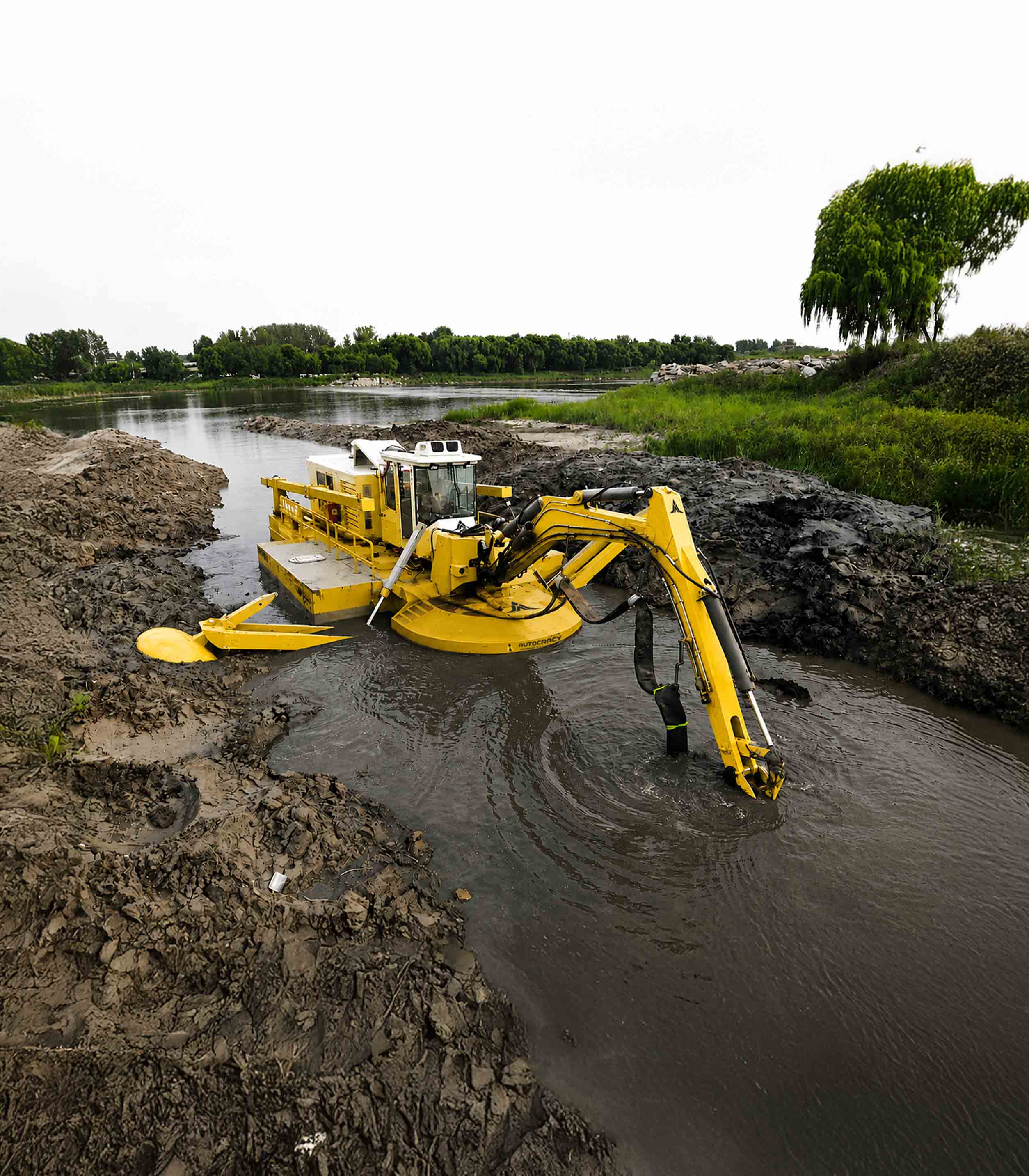
Amphibious Multipurpose Dredger | Equipment
11m x 3.3m x 1.15m
179kw/2200rpm
130 ml
180°
50 kN
7.5m
5.0m
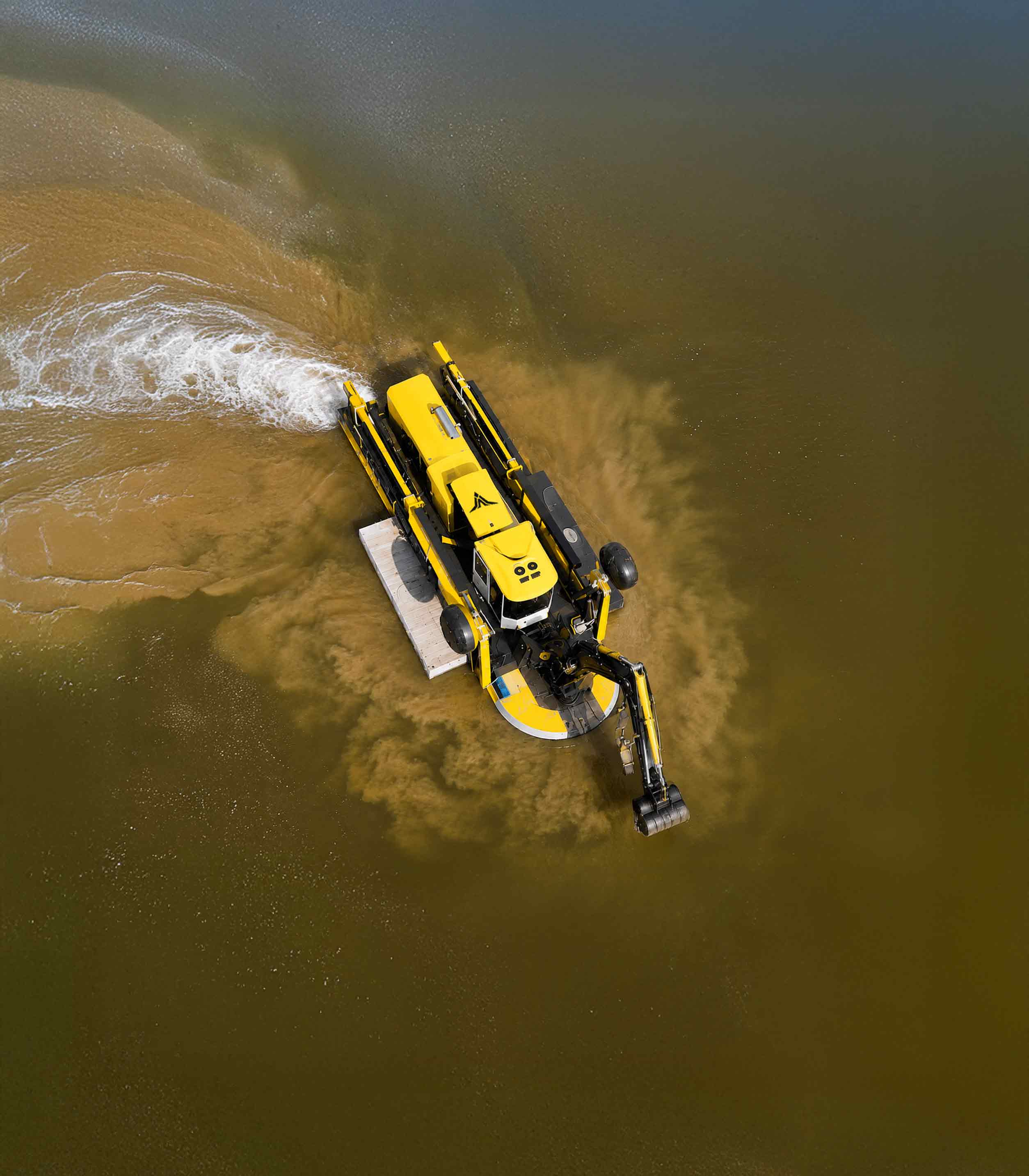
Across India, water bodies face sedimentation, weed growth, sludge accumulation, and reduced storage capacity due to seasonal runoff and urban development. A lake dredger can support restoration and maintenance programmes for lakes, reservoirs, irrigation tanks, canals, and urban water bodies. Project suitability should be evaluated through bathymetric surveys, sediment assessment, access studies, and environmental clearances. An amphibious dredger is useful for locations where shallow water, soft banks, or limited site access restrict conventional machinery. Planning should also address dredged material handling, dewatering, transportation, and approved disposal or reuse. Selecting suitable dredger equipment according to water depth, sediment conditions, work area, and production requirements helps project teams maintain controlled operations while supporting long-term waterbody management and environmental compliance.
PROJECT EXECUTION
Environmental Sustainability
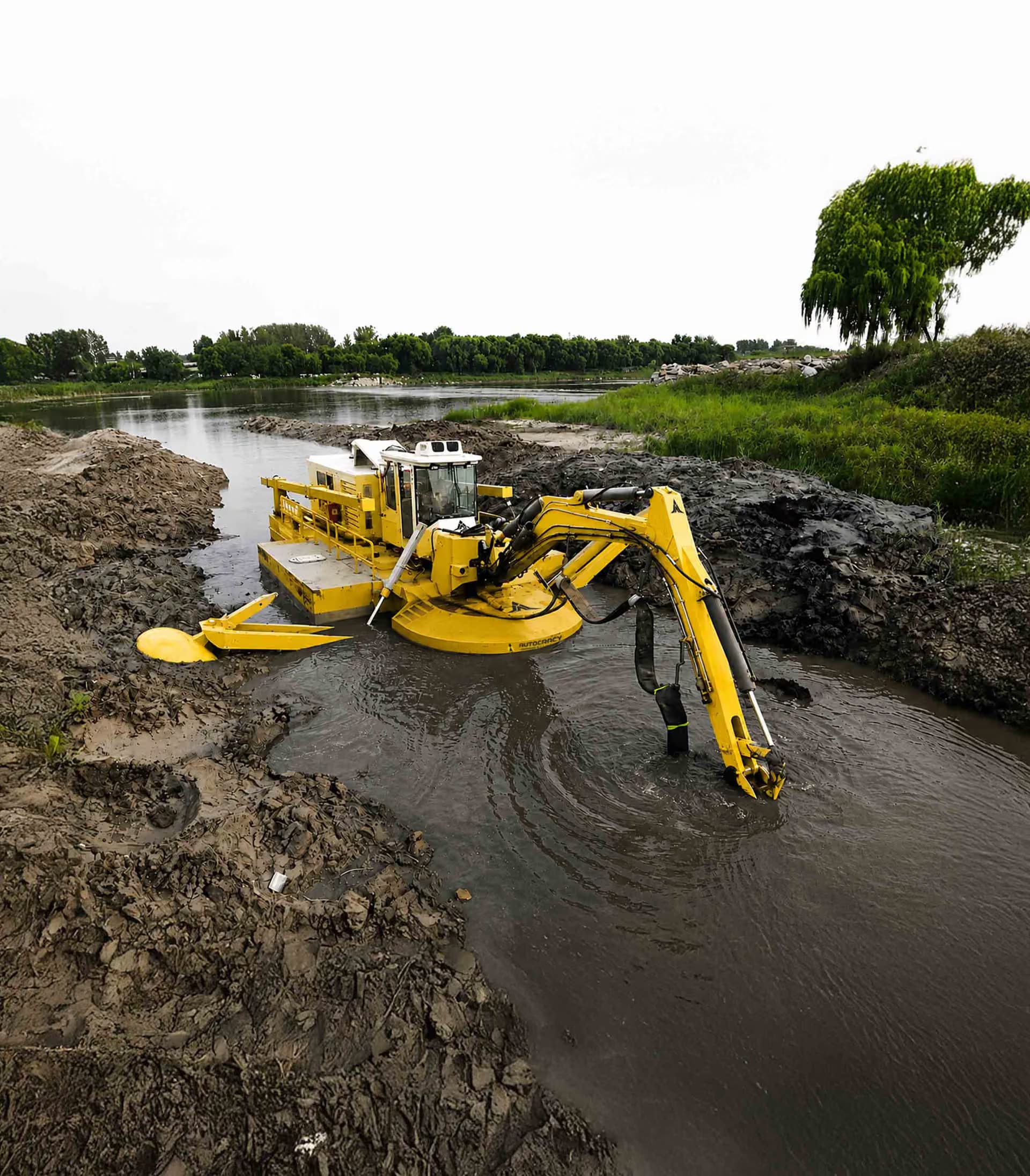
India’s environmental infrastructure programmes increasingly require practical solutions for maintaining water bodies alongside surrounding civic and utility infrastructure. A dredger machine in India can support desilting of urban lakes, irrigation reservoirs, canals, drainage channels, and flood-management structures affected by sediment deposition.
Its application can extend to waterway sections near utility crossings where accumulated material restricts drainage or access. In developing and peri-urban areas, maintaining functional waterways can help protect roads, culverts, embankments, and other last-mile infrastructure from recurring water-related issues.
Project teams should consider seasonal water levels, site access, sediment volume, pumping distance, disposal arrangements, and local environmental requirements. Proper equipment matching allows dredging activities to integrate with broader restoration, municipal maintenance, irrigation management, and infrastructure protection programmes.
Environmental Sustainability
Effective dredging in India requires site-specific planning that considers monsoon cycles, water levels, sediment characteristics, access conditions, and statutory requirements. Before mobilisation, project teams should establish the dredging area, target depth, estimated sediment quantity, material characteristics, and designated handling locations.
The selected dredger equipment in India should provide suitable reach, pumping capability, mobility, and stability for the identified conditions. During operations, teams should monitor excavation profiles, turbidity, equipment positioning, productivity, and material movement to maintain controlled execution.
Dredged material should be managed through approved dewatering, transportation, reuse, or disposal procedures based on applicable environmental requirements. Coordination among government agencies, consultants, EPC contractors, environmental teams, and site operators helps maintain project continuity while supporting measurable improvements in waterbody capacity and functionality.
WORKFLOW
Map access points, working zones, water levels, sediment locations, material movement paths, and seasonal site constraints before equipment mobilisation begins.
Maintain defined excavation profiles while controlling sediment disturbance, equipment positioning, turbidity, and waterbody conditions throughout project execution.
Coordinate material transfer, dewatering, transportation, disposal, and restoration activities to ensure smooth transition between field operations and downstream teams.
Match equipment capacity with water depth, sediment quantity, site accessibility, pumping requirements, production targets, and overall project conditions.
APPLICATION SUPPORT
Share your site conditions, output goals, and timeline so the Autocracy team can guide model fit, brochure details, and next steps for your project.
Use these supplied specifications for initial project planning. Confirm attachment, discharge, transport, and site-specific requirements with Autocracy Machinery before deployment.
| Feature | Value |
|---|---|
| Maximum depth of rear (spud) | 6.0m |
| Suction diameter | 200mm |
| Dredging Depth | 6.5m |
Common questions about using Varuna P in this application.
Industry model fit in India
Varuna P Amphibious Multipurpose Dredger is presented for Environmental Sustainability applications on India project sites, where a equipment has to work around mixed field conditions, access limits, and project deadlines. This page adds india-focused context for dredgers, so teams can judge whether the model supports equipment fit, reliable output, operator workflow, and service support.
Start by checking Varuna P against site access, working depth, carrier compatibility, productivity target, and deployment timing; that route-specific review is more useful than treating every dredgers page as the same model brochure.
Common environmental sustainability use cases for Varuna P include infrastructure, utility, municipal, and contractor-led field work, provided the site setup supports the machine, crew movement, and next work stage properly.
Use this model page to discuss Environmental Sustainability fit, specification limits, transport readiness, brochure details, and quote requirements with Autocracy Machinery.
project teams in India should confirm site constraints, expected output, model specifications, and support requirements before shortlisting Varuna P, especially when mixed field conditions, access limits, and project deadlines affect access or productivity.

