


Route Planning
Map route requirements, trench depth, and site access before deploying Mayura TW.
- | Equipment
Tractor
>90 HP
PTO/Hydraulic
Up to 1800 mm
110–900 mm
Up to 300 m/hr
5–6 litres/hr
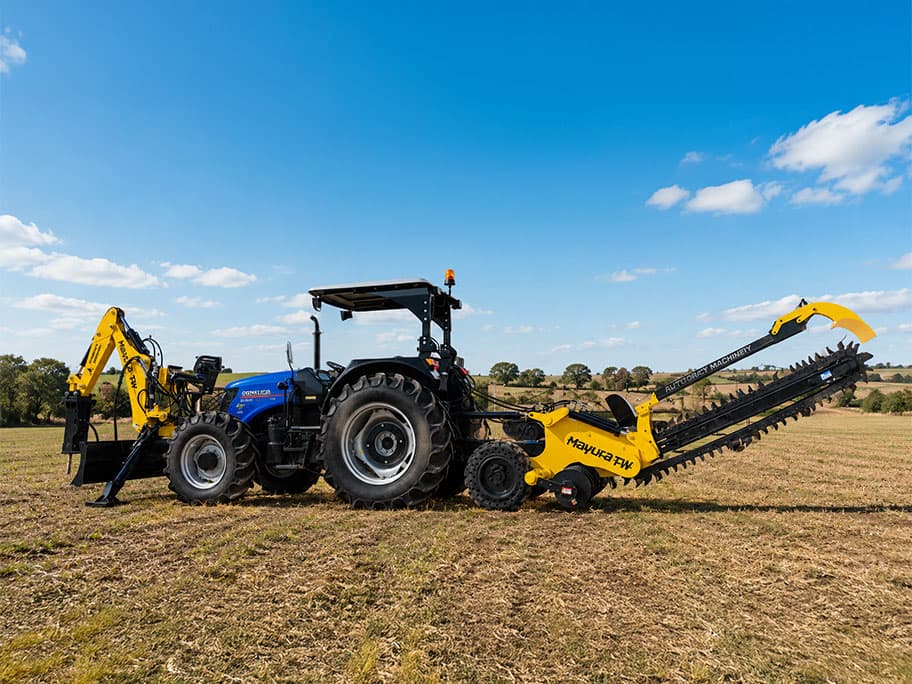
Modern landscape development projects require more than surface beautification. They often involve the installation of irrigation systems, drainage infrastructure, utility connections, retaining structures, and site preparation works that demand accurate subsurface excavation. The Mayura TW combines a chain trencher, backhoe, dozer, and hydraulic breaker on a single platform, enabling multiple ground-engagement activities without frequent equipment changes.
This integrated configuration supports efficient workflow management across parks, public spaces, institutional campuses, sports facilities, and commercial landscape developments. As a Mayura TW Landscaping Trencher, it is suited for projects where excavation accuracy, controlled ground disturbance, and coordinated infrastructure installation are critical to achieving design and engineering objectives while maintaining overall site development efficiency.
PROJECT EXECUTION
Landscaping
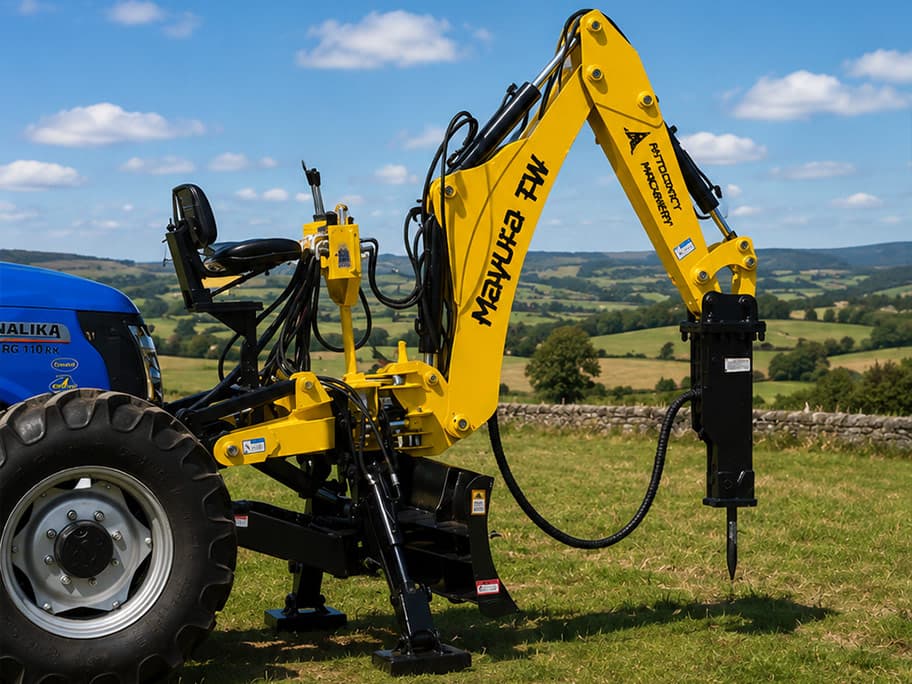
Landscape projects increasingly incorporate underground utility networks that support irrigation, lighting, communication systems, drainage infrastructure, and service distribution. The chain trencher enables continuous trench excavation for utility installation, while the hydraulic breaker addresses hard ground and rock formations encountered along the route. The backhoe assists with localized excavation requirements, and the dozer supports grading and surface preparation activities.
As a Mayura TW Landscape Routing Machine, the equipment is applicable for utility corridors, greenway developments, public infrastructure projects, recreational facilities, and last-mile service connections where multiple underground systems must be installed within a coordinated construction sequence while minimizing disruption to surrounding landscape elements.
Landscaping
Landscape construction schedules often require underground infrastructure to be completed before planting, paving, and final surface treatments commence. Effective execution therefore depends on excavation precision, route planning, soil management, surface restoration, and coordination among multiple project disciplines.
The Mayura TW supports these priorities through its integrated chain trencher, backhoe, hydraulic breaker, and dozer configuration, allowing excavation, grading, rock breaking, and restoration activities to be performed within a unified workflow. As a Mayura TW Outdoor Landscape Installation Machine, it helps project teams maintain construction sequencing, reduce operational interruptions, and support consistent infrastructure installation standards across complex landscape development and utility integration projects.
WORKFLOW
Map route requirements, trench depth, and site access before deploying Mayura TW.
Use the attachment setup to keep trench output consistent across farm lanes, park areas, plantation rows, and narrow landscaped spaces.
Cleaner trench profiles help pipe placement, sprinkler installation, drainage, and landscape reinstatement teams proceed with less rework.
Autocracy Machinery can help match machine configuration, brochure details, and application guidance to the project.
APPLICATION SUPPORT
Share your site conditions, output goals, and timeline so the Autocracy team can guide model fit, brochure details, and next steps for your project.
Built for performance. Trusted by contractors, municipalities, and EPC teams across sectors.
| Feature | Value |
|---|---|
| Lift Height | 2.0 – 3.5 m |
| Lifting Capacity: | 1500 kg |
| Bucket Capacity | 0.12 – 0.15 cubic metre |
| Overall Length | 1300mm |
| Overall Width | 2800 mm |
| Overall Height | 3000 mm |
| Gross Weight | 8100 kg |
Common questions about using Mayura TW in this application.
Industry model fit in India
For Landscaping deployment on India project sites, Mayura TW is considered when a equipment must handle finished landscapes, turf surfaces, garden edges, pathways, and tight urban access. The model should be reviewed against route cutting, trench preparation, and utility corridor work where line accuracy matters, surface protection, clean finishing, manoeuvrability, and controlled excavation, and the way crews hand work over after each pass.
The first comparison for Mayura TW should be turf condition, access width, turning radius, restoration needs, and visible finish quality, because those factors usually decide field fit before horsepower, headline capacity, or attachment choice.
Mayura TW can support irrigation, turf work, lighting routes, garden utilities, nursery operations, and estate maintenance, depending on route condition, access, output target, operator workflow, and site support availability.
This model page is meant to support a more practical conversation about landscaping fit, brochure review, transport planning, deployment timing, and quote needs.
A better landscaping shortlist connects trench depth, trench width, spoil handling, route crossings, surface reinstatement, and carrier fit with finished landscapes, turf surfaces, garden edges, pathways, and tight urban access, so Mayura TW is reviewed against the actual job sequence.