


Route Planning
Map route requirements, trench depth, and site access before deploying Rudra Prime mini.
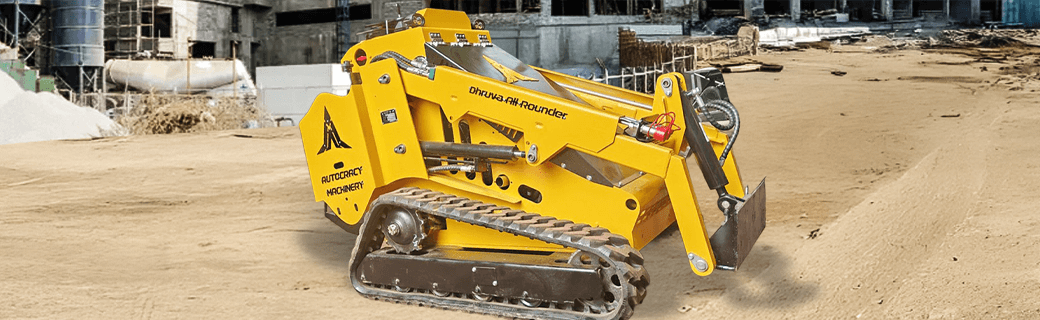
Self Propelled Multi Utility Machine | Equipment
2500mm x 1000mm x 1400mm
40 L
40 L
1300 Kgs
"800mm(on soft soil) and 500mm(on Hard soil)"
100mm
0.5 m³
In India’s fast-growing solar EPC landscape, trenching is a critical activity for enabling safe and efficient underground cable routing across solar plants. From module interconnections to inverter and substation connectivity, trench quality directly impacts electrical safety, system reliability, and long-term plant performance. The Rudra Mini self-propelled trencher is engineered to meet these requirements in compact and space-constrained solar project environments. Unlike heavy tractor-mounted equipment, it offers high maneuverability, precision trenching, and independent mobility, making it ideal for distributed solar layouts, rooftop solar clusters, and smaller ground-mounted installations. With its low-speed, high-torque hydraulic drive system, the machine ensures controlled and uniform trenching even in medium hard soil conditions commonly found across Indian solar sites. Its rubber track system with high traction grip allows stable operation across loose soil, semi-arid land, and uneven terrain without slippage. Designed for single-operator use, minimal setup time, and easy transport, the Rudra Mini helps EPC contractors execute trenching work efficiently while reducing dependency on manual labour and large equipment.
PROJECT EXECUTION
Solar Energy
In Indian solar installations, underground cable networks form the backbone of power evacuation and internal connectivity. The Rudra Mini is well-suited for DC cable trenching between solar modules and combiner boxes, AC cable trenching from inverters to substations, internal plant electrical cable routing, small-scale solar farms and distributed solar installations, rooftop solar projects requiring controlled trenching in tight spaces, and auxiliary electrical and control cable trenching.
Its compact width and easy turning radius allow trenching in narrow rows between solar panel structures where larger machines cannot operate efficiently.
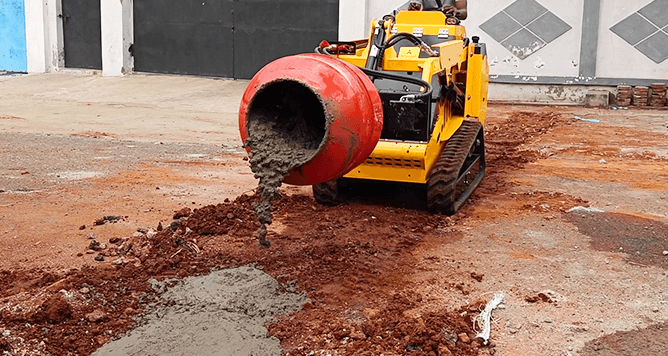
Solar Energy
Maintaining consistent trench depth is essential for protecting cables and ensuring proper installation. The hydraulic trench depth adjustment system allows operators to maintain uniform trench profiles, reducing cable exposure risks and improving system reliability.
With a compact design (2500 mm length) and self-propelled drive, the machine can easily move across project sites, access tight spaces, and operate in areas where tractors or excavators are not feasible.
The machine is designed for single-operator operation, significantly reducing labour requirements compared to manual trenching.
WORKFLOW
Map route requirements, trench depth, and site access before deploying Rudra Prime mini.
Use the attachment setup to keep trench output consistent across solar park rows, inverter blocks, and power evacuation corridors.
Cleaner trench profiles help cable laying, earthing, backfilling, and commissioning teams proceed with less rework.
Autocracy Machinery can help match machine configuration, brochure details, and application guidance to the project.
APPLICATION SUPPORT
Share your site conditions, output goals, and timeline so the Autocracy team can guide model fit, brochure details, and next steps for your project.
Built for performance. Trusted by contractors, municipalities, and EPC teams across sectors.
| Feature | Value |
|---|---|
| Width (Post Hole Digger) | Dig Dia 250mm |
| Depth (Post Hole Digger) | 1000 mm |
| Speed (Post Hole Digger) | 2 holes for 3 minutes |
| Sweep Cover Width (Sweeper) | 1200 mm |
| Capacity (Loading and Unloading Bucket) | 0.5m³ |
| Working width (Loading and Unloading Bucket) | 1200 mm |
| Total width (Loading and Unloading Bucket) | 1200 mm |
| Capacity (Dozer Split bucket) | 0.5m³ |
| Working width at max angle (Dozer Split bucket) | 0.5m³ |
| Working width at max angle (Dozer Split bucket) | 1200 mm |
| Total width (Dozer Split bucket) | 1200 mm |
| Impact Rate (Breaker) | 400 - 600 BPM |
| Chisel Diameter (Breaker) | 1.5 inch |
| Dozer Capacity | 0.5m³ |
| Working width at max angle (Dozer) | 1000 mm |
| Total width | 1200 mm |
Common questions about using Rudra Prime mini in this application.
Industry model fit in India
Rudra Prime mini Self Propelled Multi Utility Machine is listed here for project teams in India planning solar energy work with self-propelled multi attachments machine. Selection should come down to carrier fit, operating method, array layout, cable depth, tracker clearance, soil profile, and commissioning milestones, and whether the machine supports repeatable output, cable-route accuracy, panel-field access, and EPC schedule control.
For Solar Energy work, compare Rudra Prime mini against array layout, cable depth, tracker clearance, soil profile, and commissioning milestones before finalising equipment deployment, because these details decide whether the machine fits the route, access, and daily output target.
Rudra Prime mini may suit DC cable trenches, earthing routes, tracker support works, inverter corridors, and solar EPC utilities when access, output goals, support arrangements, and follow-on crews line up with the job.
Use the page to move from specification review into a clearer discussion about solar energy suitability, brochure details, field support, and quotation requirements.
For self-propelled multi attachments machine, check attachment changeover, access limits, fuel support, operator workflow, and daily task mix together with solar parks, cable corridors, pile rows, open sites, and long internal utility runs; this helps separate a suitable solar energy setup from a generic model match.