


Route Planning
Map route requirements, trench depth, and site access before deploying Rudra Amphipod PX100.
| | |
|---|---|
| | |
| | |
| | |
| | |
| | |
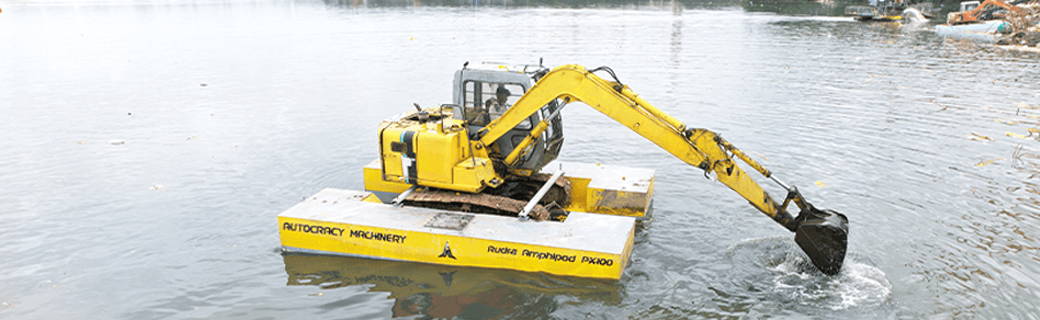
- | Equipment
5300 mm
3150 mm
5500 mm
7800 mm
6070 mm
3.7 ton
5530 mm
Rudra Amphipod PX100 is configured for telecom duct and optical-fiber deployment where controlled output and reliable site performance are essential.
Rudra Amphipod PX100 helps teams working across rural, semi-urban, and last-mile utility corridors improve route productivity, trench consistency, and faster duct restoration.
PROJECT EXECUTION
OFC Telecommunications
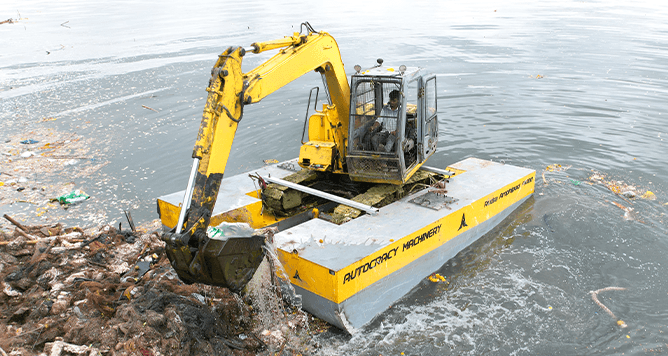
Barges / Floating Pontoon is used for telecom duct and optical-fiber deployment where route consistency and execution speed directly impact rollout schedules.
Teams deploy it across rural, semi-urban, and last-mile utility corridors with planning around route length, trench depth, right-of-way access, soil variability, and restoration timelines.
The machine helps maintain cleaner worksite output for duct laying, cable pulling, jointing, and surface restoration teams.
OFC Telecommunications
Maintain consistent trench depth and alignment to reduce rework during telecom duct and optical-fiber deployment and site reinstatement.
Plan route productivity based on route length, trench depth, right-of-way access, soil variability, and restoration timelines.
Use predictable trench output to improve handoff quality between duct laying, cable pulling, jointing, and surface restoration teams.
WORKFLOW
Map route requirements, trench depth, and site access before deploying Rudra Amphipod PX100.
Use the attachment setup to keep trench output consistent across rural, semi-urban, and last-mile utility corridors.
Cleaner trench profiles help duct laying, cable pulling, jointing, and surface restoration teams proceed with less rework.
Autocracy Machinery can help match machine configuration, brochure details, and application guidance to the project.
APPLICATION SUPPORT
Share your site conditions, output goals, and timeline so the Autocracy team can guide model fit, brochure details, and next steps for your project.
Built for performance. Trusted by contractors, municipalities, and EPC teams across sectors.
| Feature | Value |
|---|---|
| Overall Width | 3500 mm |
| Overall Height | 1250 mm |
| Overall Dimensions | 4300*2300-2550*3300 |
Common questions about using Rudra Amphipod PX100 in this application.
| Attachment

Industry model fit
For OFC Telecommunications deployment in field projects, Rudra Amphipod PX100 is considered when a equipment must handle road shoulders, urban corridors, utility crossings, and long linear cable routes. The model should be reviewed against planned field execution, equipment fit, and dependable daily output, route accuracy, cable protection, trench consistency, and kilometre-level productivity, and the way crews hand work over after each pass.
The first comparison for Rudra Amphipod PX100 should be right-of-way, duct depth, spoil handling, traffic interface, and crew sequencing, because those factors usually decide field fit before horsepower, headline capacity, or attachment choice.
Rudra Amphipod PX100 can support OFC cable laying, telecom ducts, utility corridors, broadband rollout, and city network expansion, depending on route condition, access, output target, operator workflow, and site support availability.
This model page is meant to support a more practical conversation about ofc telecommunications fit, brochure review, transport planning, deployment timing, and quote needs.
A better ofc telecommunications shortlist connects working range, support equipment, transport access, operator availability, and service readiness with road shoulders, urban corridors, utility crossings, and long linear cable routes, so Rudra Amphipod PX100 is reviewed against the actual job sequence.


