whatsapp

+91 87904 73345

Search

FIND A DEALER

industry

arrow for industry

product

arrow for product

resources

arrow for resources

About us

Contact us

Phone number+91 87904 73345
logo

Industries

DropDownArrow

Products

DropDownArrow

Resources

DropDownArrow
About usContact us

Built for Tough Sites. Ready for Your Project.

From trencher machines and solar EPC attachments to aquatic weed harvesters and utility equipment, Autocracy Machinery delivers rugged solutions for infrastructure, telecom, water, and agriculture projects.

autocracy

Autocracy Machinery Private Limited manufactures trenchers, attachments, aquatic cleaning machines, forklifts, and utility equipment for India and global project sites.

Plot No.72/A, I.D.A. Phase-1, Lane-3, B N Reddy Nagar, Cherlapalli, Hyderabad, Telangana - 500051, India

+91 87904 73345
linkedinyoutubetwitterfacebook
Privacy PolicySitemapTerms & Conditions
About usCareersFAQsContact usHire on rentFind a dealer
ProductsBrochureBlogVideos
Email sales team+91 87904 73345

Project Planning Support

Autocracy Machinery supports equipment selection for trenching, pole installation, solar EPC work, OFC and telecom routes, water management, agriculture, landscaping, aquatic weed removal, floating excavation, material handling, and construction site preparation. Buyers can use the website to compare product categories, model specifications, media, brochures, application notes, and quote requirements before finalising a machine for field deployment.

Every project has a different combination of soil condition, access width, route length, carrier availability, operating depth, crew size, safety requirements, and delivery timeline. The right equipment decision should consider practical site movement, maintenance access, operator workflow, service support, and the handoff between machine output and downstream installation or finishing work.

Contractors, EPC teams, municipalities, utilities, farmers, landscape teams, environmental departments, and infrastructure developers can share site details with Autocracy Machinery to confirm model fit, attachment configuration, brochure information, transport readiness, productivity expectations, and quotation options. This helps project teams move from browsing to a clearer purchase or rental discussion.

For faster support, prepare the industry, application, expected output, working depth or lifting requirement, available tractor or carrier, ground condition, location, and deployment schedule before contacting the sales team. These details help match the correct trencher, post hole digger, pole handling machine, forklift, aquatic machine, attachment, or utility equipment to the project. Teams can also include route drawings, site photos, access limits, soil notes, waterbody details, pole dimensions, material weights, or rental dates when they are available.

Equipment planning guide

Project teams often begin with a product category, but the final machine choice depends on how the equipment will perform on the actual site. A trenching project may need consistent depth, narrow access, controlled spoil handling, and a clean route for cable, pipe, irrigation, drainage, or earthing work. A pole installation project may need hole accuracy, lifting reach, pole handling support, and a practical sequence for drilling, positioning, alignment, and backfilling. A waterbody cleaning or floating excavation project may need buoyancy, debris handling, cutting capacity, operator visibility, and reliable unloading arrangements. Reviewing these details before purchase helps teams avoid delays after mobilisation.

Autocracy Machinery pages are structured so buyers can compare trenchers, wheel trenchers, walk behind trenchers, post hole diggers, sand fillers, pole stackers, tractor attachments, forklifts, aquatic weed harvesters, amphibious excavators, floating pontoons, work boats, dredging equipment, landscaping machines, agricultural attachments, and self-propelled utility machines in one place. Product pages explain the equipment category, model pages show specifications and applications, and industry pages connect machines with common field requirements in OFC and telecom, solar energy, water management, environmental sustainability, agriculture, landscaping, construction, and defence infrastructure.

For trenching and underground utility work, buyers should check route length, target depth, trench width, ground hardness, turning space, road edge conditions, existing utilities, and the expected daily progress. Chain trenchers, wheel trenchers, and compact trenching machines solve different site problems. Some projects need speed across long open routes, while others need careful cutting in restricted areas. Matching the machine to soil, route condition, and installation method protects the cable or pipe and reduces rework after the trench is completed.

Solar EPC teams usually evaluate machines by foundation work, cable trenching, sand padding, module handling, torque tube movement, site levelling, and repetitive operation across large project areas. A good equipment plan considers how each machine moves between rows, how the crew loads material, how operators maintain output through the day, and how installation teams follow the machine without waiting. This is why solar projects often compare trenchers, sand fillers, pole handling machines, forklifts, and tractor attachments together rather than as separate purchases.

Water management and environmental projects need a different review. Drainage, irrigation, canal, sewer, lake, pond, and river work can involve soft soil, unstable banks, changing water levels, weeds, floating waste, silt, restricted access, and public safety requirements. Aquatic weed harvesters, amphibious excavators, floating pontoons, dredgers, and utility trenchers should be evaluated by water depth, working reach, debris volume, unloading location, transport method, and the maintenance schedule expected by the project owner.

Agriculture and landscaping teams usually focus on practical productivity, easy movement, serviceability, and tractor or carrier compatibility. Machines used for farm trenching, crop loading, turf work, irrigation lines, fencing, planting, pole holes, and site shaping must be simple to deploy and strong enough for repeated seasonal work. Buyers can use Autocracy Machinery product information to discuss attachment fit, hydraulic needs, operating width, lifting requirement, and the number of workers needed around the machine.

Contractors and procurement teams can make the quote process faster by sharing a clear application note. Useful information includes the project location, industry, machine category, preferred model if known, working depth, lifting height, expected output, available tractor or carrier, soil or water condition, access limits, route drawings, photos, rental or purchase preference, and required delivery window. When these details are available early, the sales and technical team can suggest a better model fit and highlight any configuration points that should be checked before dispatch.

The best equipment decision balances specification, site readiness, service support, operator comfort, spare availability, transport planning, and the workflow after the machine finishes its task. Autocracy Machinery supports this decision process with product pages, industry pages, model details, brochures, media, application notes, and direct consultation so project teams can move from research to a practical deployment plan.

A clear comparison also helps teams decide whether they need a dedicated machine, a tractor-mounted attachment, a compact machine for restricted access, or a heavier system for longer continuous work. The same product family can include models for different output targets, carrier sizes, trench dimensions, working depths, lifting capacities, or site conditions. Reviewing these differences early helps buyers avoid selecting equipment that looks suitable on paper but is difficult to operate on the actual route, farm, road edge, waterbody, solar block, or municipal work location.

For cable, pipe, and utility installation, the trench is only one part of the job. Teams also need to think about marking, survey clearance, traffic movement, spoil placement, bedding material, cable or pipe handling, inspection, backfill, surface restoration, and handover. A machine that produces a consistent trench reduces downstream corrections and helps the installation crew maintain a steady pace. This is especially important for OFC routes, water pipelines, drainage lines, electrical ducts, irrigation channels, and solar cable corridors where long lengths must be completed without losing alignment.

Model selection should include service and operating questions, not only headline capacity. Buyers can confirm how operators access controls, how daily maintenance is performed, how the machine is transported, which wearing parts are expected during abrasive work, how attachments are changed, and what support is available after dispatch. These points matter on projects where downtime affects multiple teams, including civil crews, electrical installers, municipal staff, farmers, environmental contractors, and site supervisors.

In urban and public infrastructure work, equipment planning must account for safety barricading, pedestrian movement, utilities already below ground, road width, working hours, noise limits, and restoration expectations. Compact trenchers, wheel trenchers, post hole diggers, tractor attachments, and handling equipment may be selected differently for city work than for open rural routes. A site note with access width, obstruction details, and working time restrictions helps the team recommend equipment that can finish the work with less disruption.

For rental discussions, project duration and usage pattern are especially important. A short job may need a machine that is easy to mobilise and simple for the crew to integrate into the existing workflow. A longer job may need stronger emphasis on fuel use, operator comfort, service intervals, spare planning, and predictable daily output. Sharing rental dates, work fronts, crew readiness, transport access, and expected operating hours helps Autocracy Machinery align availability with the actual deployment schedule.

For purchase discussions, the decision usually extends beyond a single site. Buyers may compare whether the machine can serve future OFC routes, solar parks, farm work, drainage upgrades, waterbody maintenance, landscaping projects, construction sites, or municipal contracts. A product with the right attachment options and model fit can support more than one project type, but the final choice should still be grounded in the most common application, expected workload, and service environment.

Autocracy Machinery keeps product and industry information organised so visitors can move between broad categories and specific models without losing context. A buyer can begin with trenchers, post hole diggers, aquatic equipment, material handling machines, or solar EPC equipment, then review related models and industry applications. This structure helps technical teams, procurement managers, site engineers, and business owners prepare better questions before contacting the sales team.

Before finalising a requirement, teams should identify the success measure for the job. Some projects prioritise faster completion, some need accuracy, some need lower labour dependency, some need safer work near water or roads, and others need a flexible machine that can move between several tasks. Once that priority is clear, the product pages, model details, brochures, and consultation process can be used together to narrow the selection and plan a more reliable deployment.

Trenching pages deserve special review because they support many different applications across telecom, solar, water, agriculture, defence, landscaping, and construction. Buyers should compare chain type, cutting method, trench profile, route condition, carrier compatibility, operating depth, job length, and finishing requirements before choosing a model. A small change in trench size or ground condition can affect productivity, cable protection, pipe bedding, crew planning, and total project cost, so the trencher category should be evaluated with both technical specifications and field execution in mind.

Copyright 2026 Autocracy Machinery. All rights reserved.

‌
‌
‌
‌
‌
‌
‌
‌
‌
‌
‌
‌
‌
‌
‌
‌
‌
‌
‌
‌
‌
‌
‌
‌
‌
‌
‌
‌
‌
‌
‌
‌
‌
‌
‌
‌
‌
‌
‌
‌
‌
‌
‌
‌
‌
‌
‌
‌
‌
‌
‌
‌
‌
‌
‌
‌
‌
‌
‌
‌
‌
‌
‌
‌
‌
‌
‌
‌
‌
‌
‌
‌
‌
‌
‌
‌
‌
‌
‌
‌
‌
‌
‌
‌
‌
‌
‌
‌
‌
‌
‌
‌
‌
‌
‌
‌
‌
‌
‌
‌
‌
‌
‌
‌

Specifications and Applications

ForkliftForklift 3T Utility Support Equipment
Support Vehicle

Tractor

Lifting Capacity

3000 kgs

Lift Height

up to 3000 mm

Tractor Attachments

Forklift 3T

Attachment

Overview

Forklift 3T Attachment

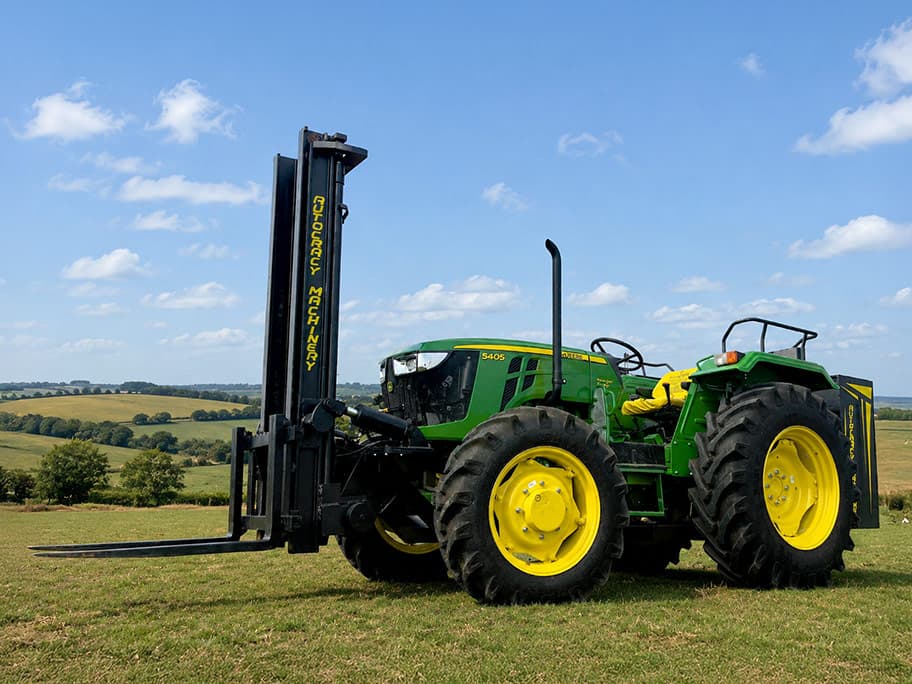
The Forklift 3T is a versatile tractor-mounted material handling solution engineered for demanding lifting and transportation applications. With a lifting capacity of up to 3 tonnes and a maximum lift height of 3,000 mm, it is ideal for handling cable drums, HDPE duct coils, utility components, solar equipment, construction materials, and agricultural supplies across varied project environments.

Built with a duplex mast, adjustable heavy-duty forks, and a fully hydraulic operating system, the attachment delivers precise load control, reliable lifting performance, and enhanced safety. The adjustable fork width accommodates different pallet sizes and material dimensions, while its tractor-mounted design provides excellent mobility across rough terrain and confined working areas. As a reliable Forklift 3T Outdoor Material Handling Attachment, it supports efficient operations in remote infrastructure and field-based projects.

The machine is extensively used across OFC, renewable energy, agriculture, defence, construction, and landscaping sectors. Acting as dependable Forklift 3T Grounds Utility Support Equipment, it enables efficient material movement while minimizing manpower requirements. It also serves as a practical Forklift 3T Lawn Operations Handling Machine, supporting the transportation of landscape supplies, irrigation materials, plants, and outdoor infrastructure components.

Precision Machines. Project-Ready.

Built for performance. Trusted by contractors, municipalities, and EPC teams across sectors.

Support Vehicle

Tractor

Lifting Capacity

3000 kgs

Lift Height

up to 3000 mm

Horsepower

>90 HP

Fork Length

1220 mm

Fork Width

125 mm

Overall Width

1500 mm

Overall length

1200 mm

Attachment Total Weight

850 – 1100 kg

Key Features

Discover what makes the Forklift 3T stand out from the competition

Customisable Lift Height

Offering a lifting height of up to 3,000 mm, the Forklift 3T supports efficient loading, unloading, stacking, and material placement across construction sites, warehouses, infrastructure projects, and industrial operations.

Stable Mast Design

The duplex mast with forward and backward tilt enhances load stability and handling safety. It provides greater operator control, enabling accurate lifting, transportation, and placement of materials.

Heavy-Duty Forks

Constructed from forged high-tensile steel, the adjustable forks are designed to accommodate various pallet sizes, agricultural inputs, utility components, cable drums, and industrial materials efficiently.

High Lifting Capacity

With a lifting capacity of up to 3 tonnes, the attachment enables reliable handling of palletised goods, construction materials, utility equipment, cable drums, and other heavy loads.

Adjustable Fork Width

The adjustable fork width ranging from 300 mm to 900 mm allows operators to handle different material sizes, improving flexibility for pallets, pipes, utility products, and bulk materials.

Tractor Compatibility

Designed for tractors above 90 HP, the attachment converts existing tractors into capable material handling machines, reducing the requirement for standalone forklifts and additional lifting equipment.

BEST SUITED FOR INDUSTRIES

Forklift 3T fits demanding tractor attachments applications

Match Forklift 3T with industry use cases where equipment reliability, field output, and site readiness matter most.

01

OFC

The Forklift 3T is used for handling cable drums, HDPE duct coils, trenching accessories, utility materials, and equipment required for optical fibre network installation and maintenance projects.

02

Solar

The machine supports loading, unloading, and transportation of solar panels, mounting structures, cable drums, inverters, and electrical equipment across renewable energy project sites.

03

Agriculture

The tractor-mounted forklift is used for moving fertilizer bags, seed pallets, irrigation materials, harvested produce, feed bags, and agricultural supplies across farms and storage facilities.

04

Defence

The machine assists in handling defence supplies, engineering materials, equipment pallets, field logistics cargo, utility components, and operational support materials in deployment areas.

05

Construction

The Forklift 3T is used for transporting cement blocks, steel sections, pipes, bricks, palletised equipment, and other construction materials across active project sites.

06

Landscape

The attachment helps move plants, paving blocks, irrigation systems, soil bags, landscape supplies, and outdoor infrastructure materials efficiently across landscaping and horticulture projects.

PRODUCT FIT

Forklift 3T for practical tractor attachments work

Understand how Forklift 3T fits project planning, field deployment, and daily operating priorities.

Project Applications

Forklift 3T is designed for material handling across OFC, solar, agriculture, defence, construction, and landscaping projects. It efficiently lifts, transports, loads, and unloads materials in diverse working environments.

Site Planning

Compatible with tractors above 90 HP, the attachment helps contractors plan equipment utilization, material movement, site logistics, and daily operations for improved project execution.

Fleet Fit

The Forklift 3T integrates seamlessly with existing tractor fleets, enabling operators to add lifting and material handling capabilities without investing in dedicated forklift equipment.

Operational Value

With a lifting capacity of up to 3 tonnes and a lift height of 3,000 mm, the attachment supports efficient material handling, improved productivity, and reliable field performance.

More Models in Tractor Attachments

Forklift 5T

| Attachment

Forklift 5T Attachment for Defence
Support VehicleTractor
Lifting Capacity5000 kgs
Lift Height3000–4000 mm

Dozer Single Blade

| Attachment

Dozer Single Blade
Support VehicleTractor
Blade Width2400 mm
Blade Height850 mm

Dozer 2 Blade

| Attachment

Dozer 2 Blade
Support VehicleTractor
Horsepower40 – 90 HP
Maximum Backfilling Depth2000 mm

Back hoe

| Attachment

Back Hoe
Support VehicleTractor
Horsepower25 – 90 HP
Lift Height2.0 – 3.5 m

Decoiler

| Attachment

Decoiler Machine for OFC
Support VehicleTractor
Duct Diameter60 mm
Horsepower60-120 HP

Breaker

| Attachment

Tractor Rock Breaker
Support VehicleTractor
Chisel Diameter45 mm
Horsepower60 – 150 HP

Front Loader Bucket

| Attachment

Front End Loader Bucket
Support VehicleTractor
Horsepower40 – 90 HP
Lift Height3-3.5m

Stone Picker

| Attachment

Stone Picker Machine
Support VehicleTractor
Horsepower> 50
Stone Picking Capacity1 MT

Frequently Asked Questions

Common questions about Forklift 3T specifications, applications, and project fit.
Tractor Attachments

Need Assistance with Tractor Attachments?

Model details

Forklift 3T for planned field deployment

Forklift 3T is a attachment in the Tractor Attachments range, designed to help project teams understand equipment fit, specifications, applications, and support options before work begins.

can be reviewed for working capability, media, brochure details, and project suitability.

Use the specifications and feature sections to compare Forklift 3T with related models in the same product category.

The model page helps buyers discuss site conditions, output requirements, carrier compatibility, timeline, and quotation needs with Autocracy Machinery.

Planning Guidance

Forklift 3T for planned field deployment should be reviewed as part of the full site workflow, not only as a standalone equipment listing. Buyers usually need to compare the required output, route length, working width, access condition, operator availability, and delivery timeline before selecting a machine for field deployment.

Forklift 3T is a attachment in the Tractor Attachments range, designed to help project teams understand equipment fit, specifications, applications, and support options before work begins. This makes the page useful for early project planning, tender comparison, contractor discussions, and internal equipment shortlisting where teams need clear information before speaking with a supplier.

can be reviewed for working capability, media, brochure details, and project suitability. The same review should also include soil or surface condition, transport access, available carrier or tractor capacity, daily productivity expectation, service support, and the practical handoff between excavation, installation, backfilling, lifting, or finishing work.

Use the specifications and feature sections to compare Forklift 3T with related models in the same product category. For infrastructure and utility projects, the equipment decision often affects crew size, fuel use, rework, route consistency, safety planning, and the number of machines required on site. A structured comparison helps avoid choosing a model only by headline specification.

The model page helps buyers discuss site conditions, output requirements, carrier compatibility, timeline, and quotation needs with Autocracy Machinery. Autocracy Machinery pages are organised to help project owners, EPC teams, contractors, municipalities, utilities, agriculture teams, and site managers connect product capability with real operating conditions before requesting a quote or brochure.

When evaluating Forklift 3T for planned field deployment, teams can use the model information, media, specifications, application notes, and quote conversation together. This gives procurement and site teams a clearer basis for confirming fit, planning mobilisation, and preparing the next step with Autocracy Machinery.

A practical selection process also considers how the machine will move between work fronts, how operators will maintain output through the day, and how the surrounding crew will manage material handling, marking, inspection, and finishing work after the equipment completes its pass.

For many field projects, the right equipment choice is the one that balances specification, availability, maintenance access, and predictable output. Forklift 3T for planned field deployment should therefore be discussed with both procurement teams and site supervisors before finalising the requirement.

Project teams can prepare a stronger quote request by sharing route length, expected depth or working range, ground condition, preferred carrier, transport limits, daily target, and any special constraints such as narrow access, road-edge work, finished surfaces, utilities, or active public areas.

The content on this page is intended to support that discussion with enough context to compare options, understand the application fit, and decide whether a standard model, attachment configuration, brochure review, or direct consultation is the right next step.

Autocracy Machinery supports buyers who need equipment for trenching, pole installation, material handling, aquatic work, agricultural operations, landscaping, water management, solar EPC activity, telecom routes, defence infrastructure, and general construction requirements.

Before mobilisation, teams should confirm safety practices, operator familiarity, service support, spare availability, site preparation, and the handoff between machine output and downstream work. That final check helps keep deployment practical once the equipment reaches the project site.