Introduction
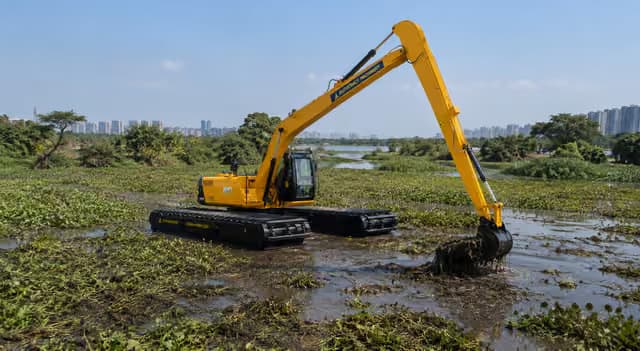
It's not always easy to keep a lake or canal clean. Water hyacinth can create thick floating layers, aquatic weeds can spread across the water, and plastic debris frequently becomes entangled in the flora. Maintaining the waterbody gets more difficult as this expansion continues, particularly when big areas require frequent care. Removing the weeds is not the only issue for maintenance staff. The vegetation still needs to be gathered, removed from the water, and handled carefully after it has been chopped.Autocracy Machinery's Rudra Aquamax series is designed for these requirements, with the Aquamax 100X, 150X, and 160X offering different configurations for waterbody cleaning operations. Understanding how these machines work and what distinguishes them can help contractors and water management authorities choose equipment suited to their projects.
Understanding the Work Behind Aquatic Weed Removal
When people think about cleaning a waterbody, they often picture weeds being cut and removed from the surface. In practice, there is considerably more to the process. Before it spreads to other locations or necessitates more cleaning, cut vegetation must be gathered. It is also necessary to collect and eliminate floating garbage that has been mixed with the plants. Coordinating cutting and collection tasks might increase the amount of effort involved if they are done independently.
A river cleaning machine is made to handle all of these phases at once. Vegetation within its operating range is removed by its cutting mechanism, and the material is then moved into onboard storage by a conveyor. The gathered stuff is emptied for proper handling whenever the storage space is full or the allowed load limit is reached.
How smoothly this process runs depends on the conditions at the site. The machine will be subject to different demands in a body of water with dense water hyacinth than in one with scattered weeds and little floating trash. How often the equipment has to unload also depends on how much vegetation is collected after each pass.
For this reason, choosing a lake cleaning machine involves more considerations than just its engine power or storage capacity. The machine must be appropriate for the kind of vegetation, the area's size, the depth of the water, and the practical arrangements for clearing the site of the gathered material.
Why Waterbody Maintenance Needs a Consistent Approach
Although aquatic vegetation is a normal component of freshwater habitats, overgrowth can be challenging to control. Under the right circumstances, water hyacinth in particular can spread swiftly and cover a significant area of the water's surface.
How effectively this procedure works depends on the site's characteristics. A body of water with extensive water hyacinth will have different conditions for the equipment than one with intermittent weeds and little floating debris. The amount of vegetation collected after each pass also affects how frequently the machine needs to unload.
Because of this, there are other factors to take into account when selecting a harvester than only its engine power or storage capacity. When developing the machine, it is necessary to take into account the kind of vegetation, the size of the area, the water level, and the practical preparations for moving the collected material from the site.
Because of this, it is better to think about mechanical harvesting as a component of a continuous maintenance strategy. It aids in the actual removal and gathering of vegetation, and ongoing observation enables teams to determine when and where additional work could be required.
How the Right Harvester Makes a Difference
The requirements of a small lake are very different from those of a large reservoir. The size of the waterbody, the density of vegetation, and the quantity of material to be removed all influence the type of equipment needed.
One crucial factor is cutting width. When there is enough space to work, a broader cutting system can cover more ground in each pass. Because the equipment must be appropriate for the plants being targeted, working depth is also important.
The planning of harvesting cycles is influenced by storage capacity. Before unloading, a machine with a larger capacity might be able to collect for a longer period of time. The real advantage, however, is contingent upon the speed at which the storage space fills and the distance it must travel to empty.
Because it moves the chopped plants into storage, the conveyor system is equally crucial. Together, these components help create a continuous process for removing and collecting aquatic growth.
Looking at these features as part of one working system gives a clearer understanding of a machine's suitability. The aim is not simply to select the model with the largest specifications but to find equipment that matches the site's conditions and the amount of work involved.
Exploring Autocracy Machinery's Rudra Aquamax Series
Autocracy Machinery offers three models in its Rudra Aquamax weed harvester machine range: the Aquamax 100X, 150X, and 160X. While all three are intended for aquatic vegetation and floating waste removal, their working configurations and capacities differ.
These differences become important when planning a cleaning operation, as the equipment required for routine maintenance may not be the same as that needed for extensive harvesting work.
Aquamax 100X: Designed for Routine Cleaning Operations
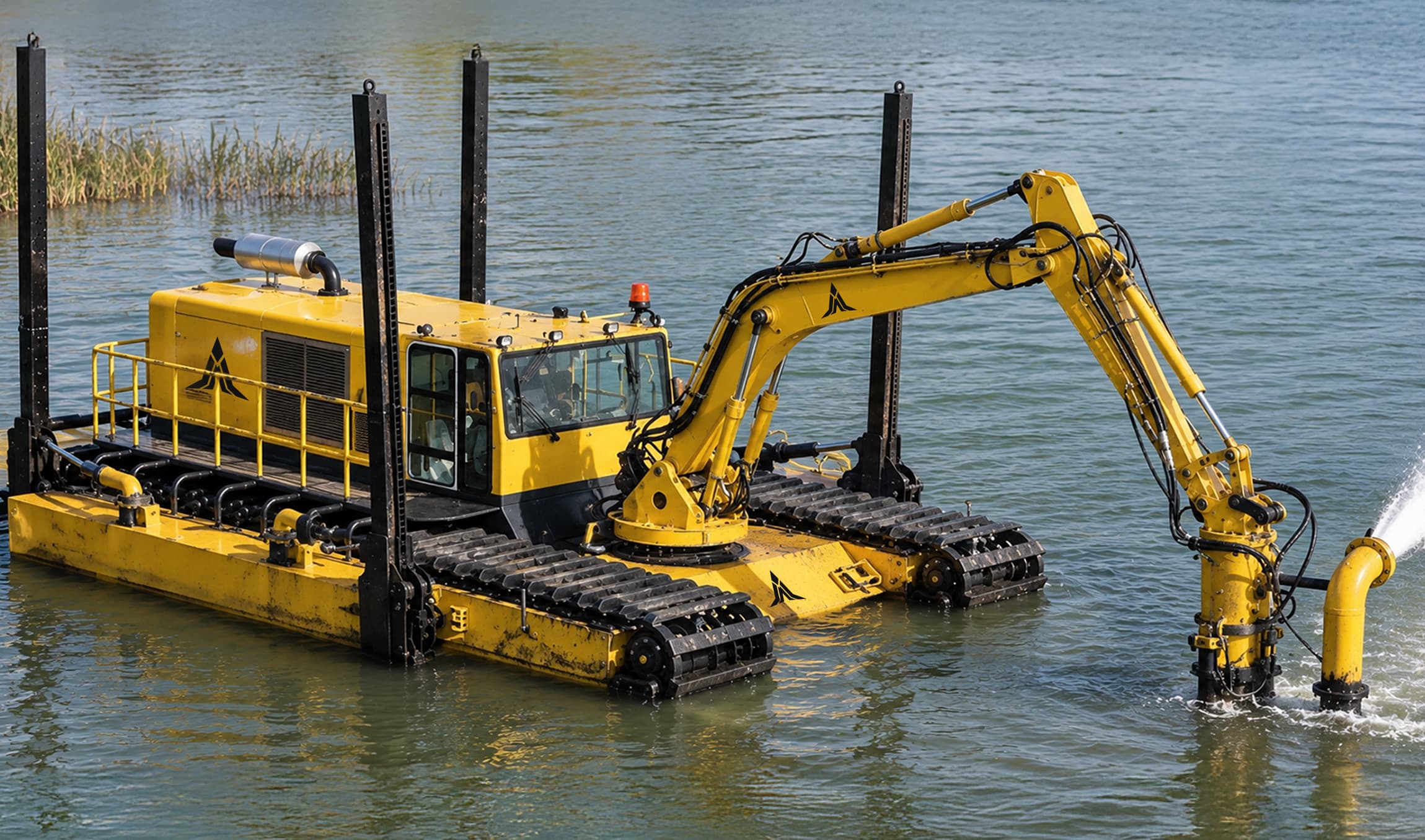
The Rudra Aquamax 100X Water weed removal machine is made to remove aquatic weeds from lakes, ponds, canals, and urban water bodies. The cutting and conveyor systems assist in removing and gathering vegetation, while the dual-pontoon catamaran hull offers a floating platform.
The equipment can operate up to 1.5 meters below the water's surface and has a cutting width of two meters. It can hold up to 3 tons of cargo and has an 8 m³ onboard storage capacity.
For maintenance teams organizing routine cleaning procedures, these requirements are crucial. The cutting width helps establish the area covered during each pass, while the storage capacity provides a basis for planning collection and unloading.
Autocracy Machinery lists productivity of 0.07-0.10 hectares per hour, equivalent to an indicative output of 1.36-2 acres over an eight-hour operating day.
Actual productivity will depend on the density of the vegetation, site conditions, and the time required to unload the collected material. The Aquamax 100X can be considered when its working width and storage capacity match the requirements of the waterbody.
Aquamax 150X: For Operations Requiring Greater Collection Capacity
The amount of material gathered throughout each working cycle becomes crucial when there is more vegetation. Increased onboard storage and broader cutting coverage can aid teams in planning these activities.
Paddle-wheel propulsion, hydraulic operation, a catamaran hull, and an integrated cutting and conveyor system are all features of the Rudra Aquamax 150X. Its cutting breadth is 4.5 meters, and it can operate up to 1.5 meters below the water's surface.
With a load capacity of up to 5 tons and an engine rated at more than 100 horsepower, the machine has about 14 m³ of onboard storage.
Powered by an engine rated above 100 HP, the machine offers approximately 14 m³ of onboard storage and a load capacity of up to 5 tonnes.
The 150X offers a larger cutting system and more storage space than the Aquamax 100X. When harvesting operations involve significant vegetation coverage or higher amounts of biomass gathered, these characteristics may be helpful.
The working conditions will determine the benefits. While a far-off unloading location may lengthen the time needed to move gathered material, dense growth may quickly fill the storage space. The Aquamax 150X's suitability for the project can be ascertained by taking these considerations into account.
When working coverage and collection volume are important factors, it provides a design worth considering for bigger lakes, reservoirs, and other appropriate waterbodies.
Aquamax 160X: Built for Demanding Harvesting Requirements
Another choice for difficult waterbody management tasks and aquatic weed harvesting is the Rudra Aquamax 160X. It is similar to the 150X in that it has a catamaran hull, paddle-wheel drive, hydraulic operation, and conveyor-based collecting.
According to its published specifications, it has an engine with more than 100 horsepower, a cutting breadth of 4.5 meters, and a working depth of up to 1.5 meters below the water's surface. Additionally, the device has a load capability of up to 5 tons and about 14 m³ of storage.
Operating widths of up to 6 meters and productivity of more than 0.18 hectares per hour are listed by Autocracy Machinery. Operating width and cutting width refer to different aspects of the machine's configuration, so the relevant specifications should be confirmed when estimating coverage for a particular site.
Buyers should take into account both the job requirements and the intended configuration when comparing the Aquamax 150X and 160X. The decision is influenced by the waterbody's size, the density of vegetation, the amount of workspace that is available, and the unloading arrangements.
For projects where significant harvesting coverage and collection capacity are crucial to the overall maintenance plan, the Aquamax 160X could be considered.
Where Aquatic Weed Harvesters Fit into Waterbody Management
Depending on the site and equipment compatibility, aquatic weed harvesters are employed for a variety of waterbody maintenance tasks.
As part of routine cleaning, they can assist in eliminating excessive water hyacinth, aquatic weeds, and floating debris from lakes and urban waterbodies. Harvesting can help remove vegetation from canals and irrigation waterways in areas where the water level, channel size, and flow conditions permit it.
When vegetation develops over wide areas, reservoirs may need a more comprehensive strategy. When deciding how much material to gather and how often to discharge, cutting width and storage capacity become crucial.
In appropriate river segments, harvesters can also help remove floating plants and debris. However, before the equipment is deployed, it is necessary to evaluate water currents, navigation, submerged impediments, and environmental requirements.
The goal is the same for all of these applications: clear the area of vegetation, gather the materials, and plan their removal. The particular strategy will change depending on the size of the maintenance task and the waterbody.
Choosing Equipment that Suits the Site
It is important to carefully consider the tasks that an aquatic weed harvester will be expected to complete before making an investment.
Cutting and collecting requirements are influenced by the kind and density of vegetation. The size of the impacted region, the depth of the water, and the amount of operating space that is available all affect the best configuration.
Planning for collection and offloading should be given equal consideration. A viable place for offloading and a means of moving the harvested material away from the body of water are necessary even for machines with large onboard storage.
It's important to take productivity figures into context. Published output provides a useful reference, but actual results depend on the vegetation present, operating conditions, collection cycles, and unloading time.
Taking these factors into account helps maintenance teams select equipment based on the complete operation rather than individual specifications.
Conclusion
A waterbody requires constant maintenance, especially when floating debris and aquatic vegetation keep growing. The task entails more than just removing the obvious growth, it also calls for a workable method of gathering the material that has been removed and maintaining the site over time.
Cutting and collecting are combined by aquatic weed harvesters, which makes it easier for maintenance teams to plan this task. Depending on the necessary cutting width, storage capacity, and operation scale, Autocracy Machinery's Rudra Aquamax 100X, 150X, and 160X offer many configurations to take into consideration.
The right machine is ultimately the one that fits the waterbody and the work involved. Explore the Rudra Aquamax aquatic weed harvester range from Autocracy Machinery to compare the available models and find an option suited to your waterbody cleaning requirements.