If you manage a lake, river, canal, or reservoir, you’ve probably seen it happen. The surface is cleaned up, and a few weeks later the trash and weeds are back. It’s frustrating, but it isn’t a sign that the cleanup failed. It’s how waterbodies work.
Waste reaches the water all the time, through drains, surface runoff, and everyday human activity. Stormwater washes debris and pollutants off the land and into ponds and lakes. Once the material is in the water, wind and currents carry plastic, organic debris, and aquatic weeds right back into areas you just cleared. A single cleanup deals with what’s there today, not with what arrives tomorrow.
That’s why regular cleaning and monitoring matter so much for local authorities, environmental groups, and facility managers.
Keeping Floating Waste Under Control
Thick mats of weeds and floating garbage do more than spoil the view. They can slow water flow, make the waterbody harder to use and maintain, and add to your workload over time.
For a small pond, manual collection may be enough. Larger lakes, rivers, canals, and reservoirs need something more organised and repeatable. A practical maintenance plan usually covers:
Regular checks of the water surface and shoreline
Scheduled removal of floating waste and invasive vegetation
Quick clearance after heavy rain or seasonal weed growth
Safe collection, storage, and disposal of everything removed
Ongoing monitoring of spots where waste tends to pile up
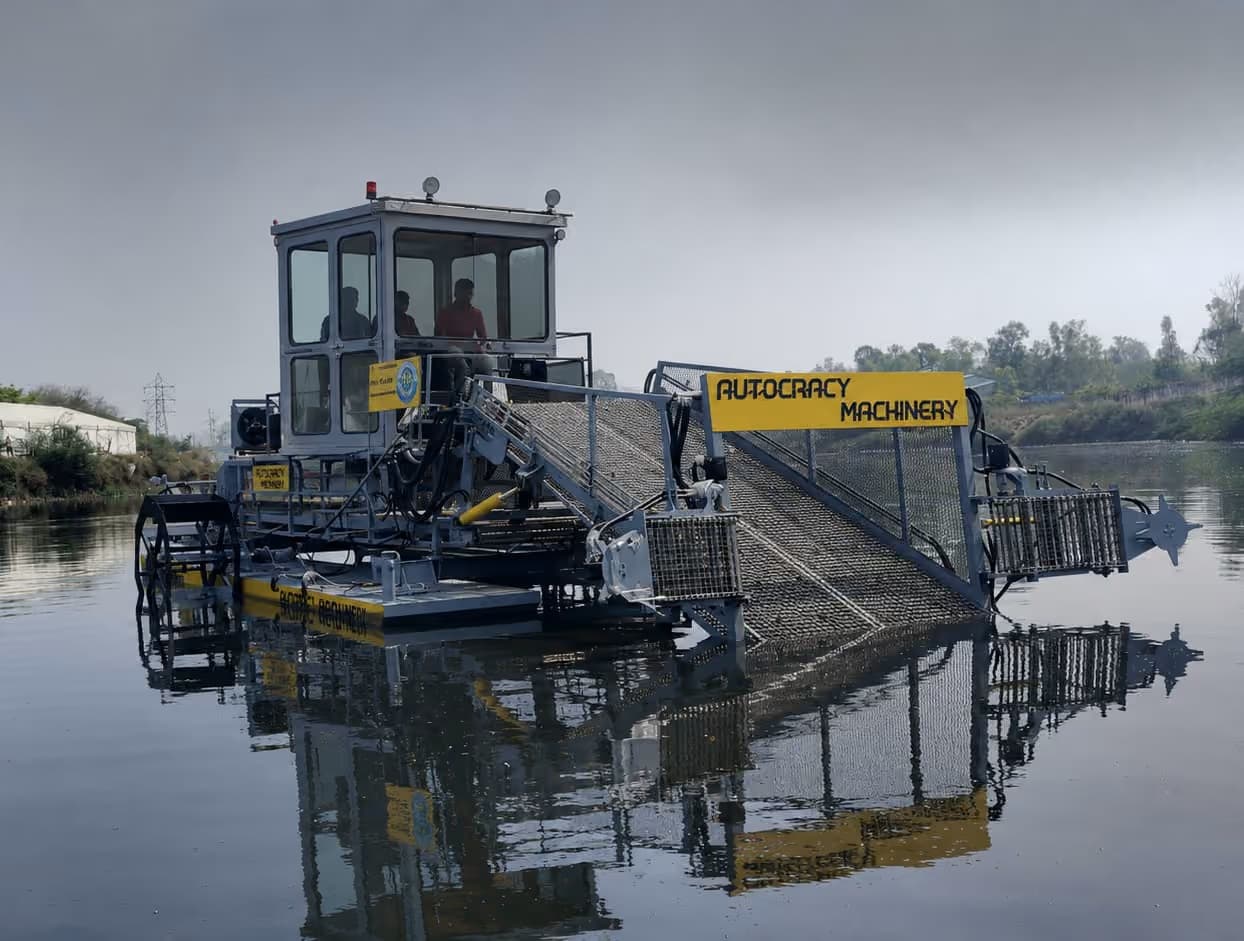
Mechanical harvesting is a common way to handle the plant side of this. Harvesters cut aquatic plants and carry them by conveyor into onboard storage, ready for disposal on shore.
Its precision cutting system and hydraulic conveyor work together to cut, gather, and store water hyacinth, invasive weeds, plastic waste, and organic debris.
Because the machine does the heavy lifting, routine cleaning depends far less on slow, labour-intensive manual collection. Crews can cover more water in less time and keep up with the problem instead of constantly catching up.
Choosing the Right Equipment
There’s no single right machine for every site. The best choice depends on:
The size of the waterbody
The type of waste you’re dealing with
Water depth
Access to the water and shoreline
How often cleaning is needed
Where waste builds up again and again, a planned collection schedule combined with regular monitoring will almost always do more than a one-off cleanup drive.
If you’d like to talk through your site’s requirements, explore the Autocracy Machinery Aquatic Weed Harvester range and get in touch to find the right fit.
FAQs
1. Why does floating waste return after cleaning?
Waste keeps entering waterbodies through runoff, drains, and daily human activity. Once it’s in the water, wind and currents can push it back into areas that were just cleaned.
2. What is a floating trash collection machine?
It’s equipment designed to pick up floating debris and waste from the surface of a waterbody.
3. Where can Autocracy Machinery’s aquatic weed harvesters be used?
They’re designed for cleaning lakes, rivers, canals, and reservoirs.
4. What can the harvester collect?
It can collect aquatic weeds, water hyacinth, plastic waste, and organic debris. The cut or gathered material is carried by conveyor into an onboard storage bin.