The first stage in constructing subterranean infrastructure is appropriate ground preparation. Trenching to meet specific installation requirements is an important part of the construction process, whether it's installing optical fiber cables, installing water pipelines, or developing solar power plants.
Traditional excavation methods may result in wasted soil removal, greater labor, and additional coordination between excavation and installation crews for contractors working on lengthy routes or projects with varying trench dimensions. Choosing equipment appropriate for the intended trench profile can help alleviate these concerns.
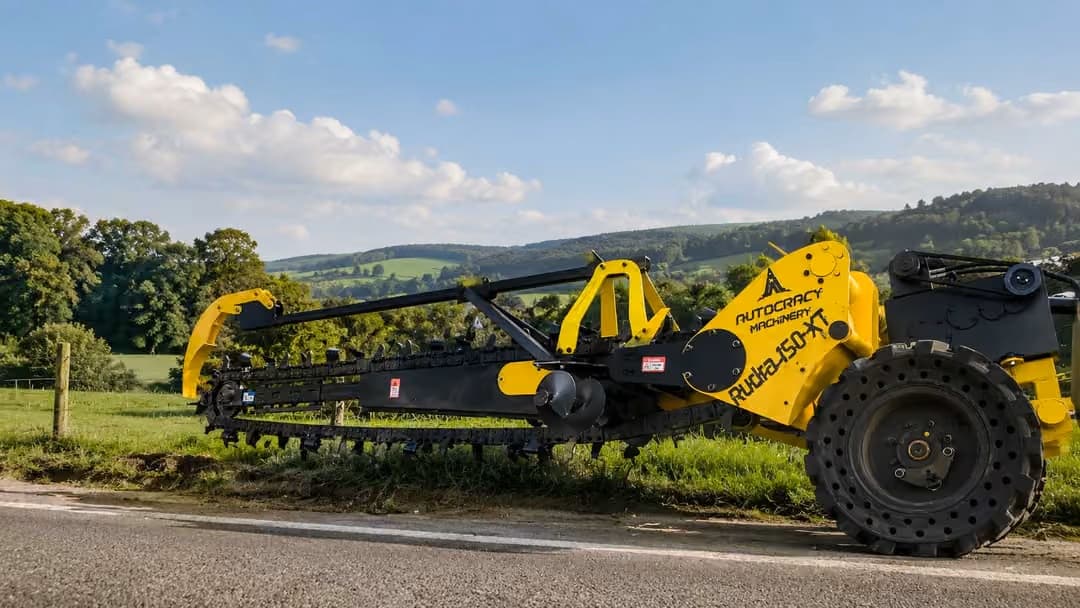
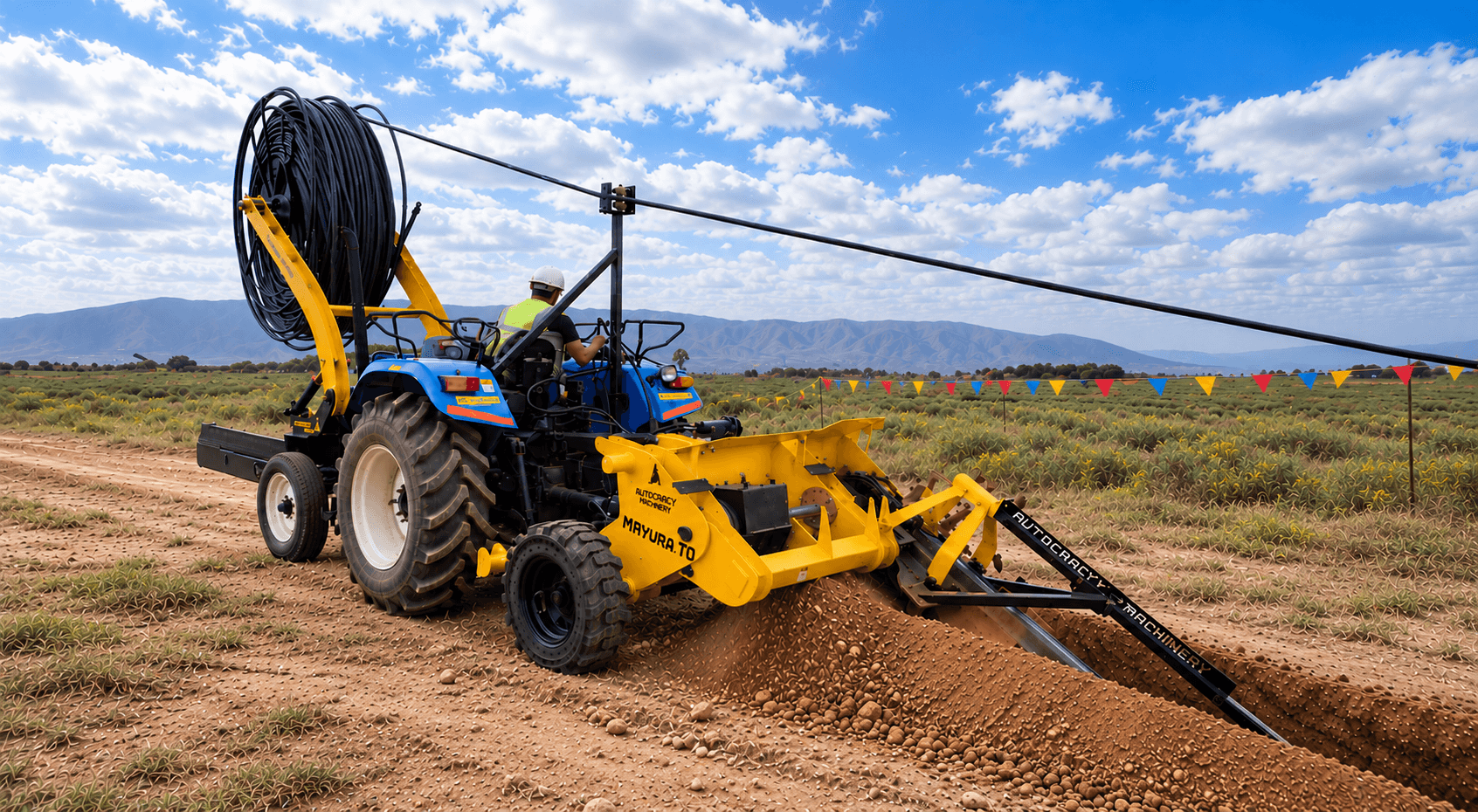
Autocracy Machinery’s Gaja Series tractor-mounted chain trenchers offer mechanized excavation solutions for a range of infrastructure requirements. With multiple models designed for different trench widths and project demands, the series supports applications across renewable energy, telecommunications, irrigation, pipelines, and underground utilities.
How the Gaja Series Supports Efficient Trenching
Trenching specifications might vary greatly from one project to another. A solar installation may have lengthy cable paths, but pipeline and utility installations may want bigger trenches to meet installation criteria. Using the same excavating technique for each application may not be appropriate.
The Gaja Series addresses these various needs with a number of trenching choices. Its tractor-mounted design enables compatible tractors to power the trenching attachment, making it ideal for contractors evaluating equipment for planned excavation projects.
By automating trench excavation, the series can assist reduce reliance on manual digging while also creating defined routes for subsurface installations. The proper model is determined by the trench dimensions, soil conditions, tractor compatibility, and the project's overall scope.
Exploring the Gaja Models
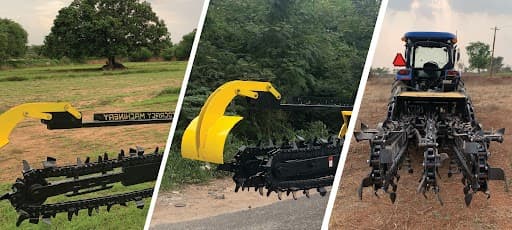
Autocracy Machinery offers five models in its Gaja Series, covering different trenching requirements.
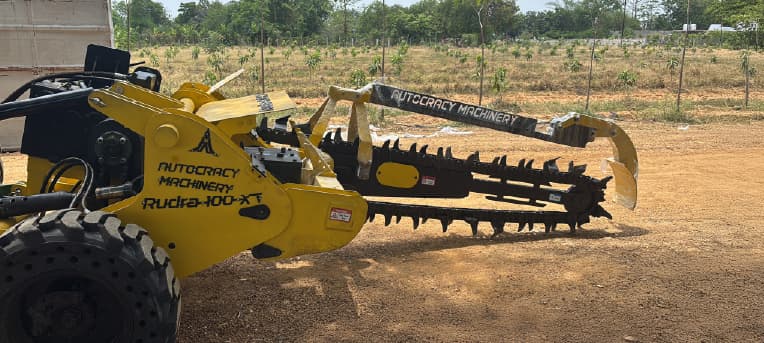
Gaja 100: Suitable for projects requiring relatively narrow trenches, the Gaja 100 can be considered for applications involving irrigation, underground utilities, and cable routes where its trenching configuration meets the project specifications.
Gaja 100XT: Designed for trenching applications such as OFC cable laying, water pipelines, irrigation systems, and renewable energy infrastructure, the Gaja 100XT supports trench widths of 110–280 mm and depths of 1,200–1,500 mm.
Gaja 200XT: For projects requiring wider excavation profiles, the Gaja 200XT offers trench widths of up to 600 mm and depths of 1,200–1,500 mm. It is relevant for underground utility installations and infrastructure work requiring a wider trench.
Gaja 300XC: The Gaja 300XC supports trench widths of up to 900 mm and depths of 1,200-1,500 mm. Its configuration is suited for evaluation in projects requiring wider trenches, including pipeline and utility infrastructure.
Gaja 400XC: Designed for larger trenching requirements, the Gaja 400XC accommodates trench widths of up to 1,200 mm and depths of 1,200–1,500 mm. Its dual-conveyor arrangement supports spoil handling during excavation, making it relevant for projects with demanding trenching requirements.
When comparing these models, contractors should consider the trench profile, soil conditions, required output, available tractor power, and site accessibility before selecting a configuration.
Applications Across Infrastructure Sectors
The Gaja Series can support several types of projects where mechanised trench excavation is required.
Solar energy: Preparing underground routes for electrical cables connecting solar installations and associated infrastructure.
Telecommunications: Excavating pathways for optical fibre cable (OFC) ducts and underground communication networks.
Pipeline installation: Creating trenches for suitable water distribution and other pipeline projects.
Irrigation and agriculture: Preparing routes for irrigation pipelines and underground agricultural utilities.
Construction and utilities: Supporting excavation for electrical services, communication lines, and other subsurface infrastructure.
Across various applications, the proper trenching configuration can aid in maintaining a more organized excavation process. Actual productivity and suitability are determined by ground conditions, trench dimensions, operating procedures, and installation specifications.
Choosing the Right Gaja Trencher for Your Project
Choosing a tractor-mounted trenching machine involves more than just comparing the various models. Contractors should start by identifying the trench's purpose, specified depth and width, route length, and soil properties.
Another important issue to consider is tractor compatibility, which includes the attachment's horsepower and power transmission needs. Larger trenches may involve detailed planning for excavated soil placement, as well as communication with teams in charge of cable or pipeline construction.
Evaluating these parameters before deployment allows contractors to pick a configuration that meets their operating needs. Matching the equipment to the actual worksite is essential for maintaining a consistent excavation process and coordinating subsequent installation activities.
Conclusion
Preparing underground routes is a fundamental part of developing reliable infrastructure. Autocracy Machinery’s Gaja Series provides a range of trench digging machines designed to address different excavation requirements, from narrower cable routes to wider utility and pipeline trenches.
With five models offering varied trenching capabilities, the series allows contractors to evaluate equipment according to project dimensions, site conditions, and operational needs. Choosing the appropriate configuration helps establish a more structured approach to mechanized trench excavation.
Explore the Gaja Series from Autocracy Machinery to compare the available models and identify a suitable trenching solution for your next infrastructure project.