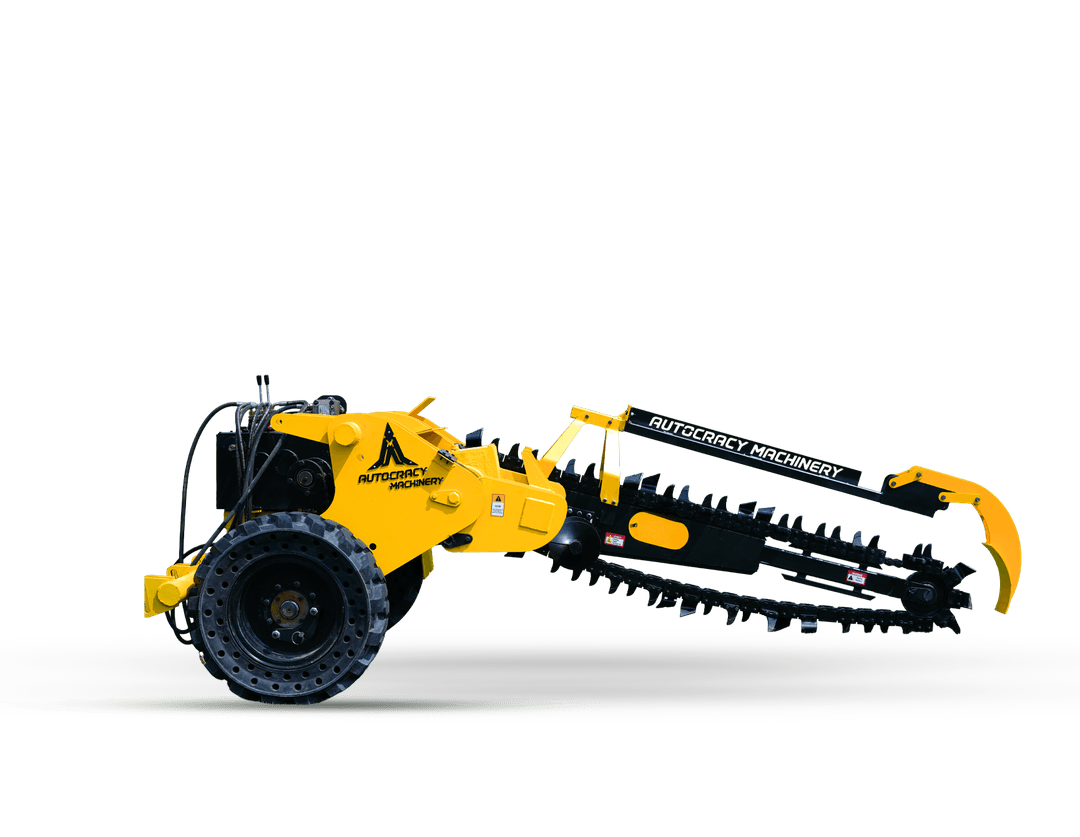
Route Planning
Map route requirements, trench depth, and site access before deploying Rudra Aquamax 200X.
- | Equipment
20M³
4.5 to 5 Tonnes
≤12 Tonnes
≤ 6 m
≥ 80 Litres
0.12 - 0.18 (Depending on the weed density) hectares/hour
6 – 8 L/hr
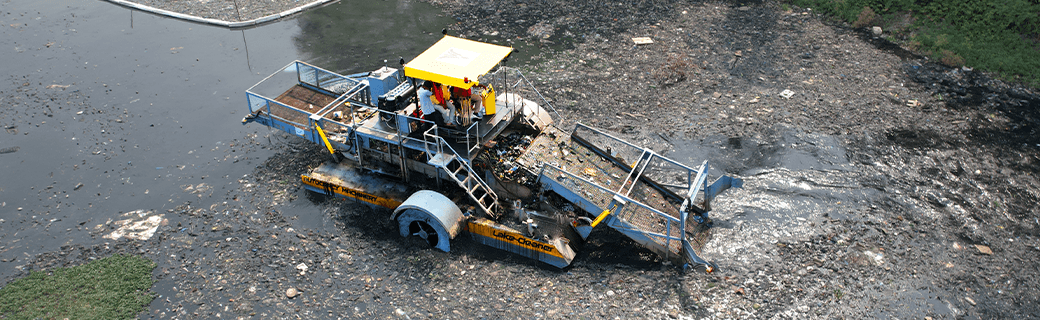
Environmental sustainability programs often involve restoring heavily impacted water bodies where vegetation overgrowth, organic accumulation, and floating waste have developed over extended periods. The Rudra Aquamax 200X environmental Aquatic Weed Harvester is suited for large restoration initiatives requiring continuous collection and high-volume material handling.
Its 20 m³ storage capacity enables extended operation across large reservoirs, industrial lagoons, and river systems without frequent unloading interruptions. The machine supports organizations seeking to improve water circulation, maintain storage efficiency, and rehabilitate aquatic assets affected by long-term vegetation growth. For project owners and environmental authorities, its ability to manage substantial biomass volumes contributes to more structured maintenance planning and improved long-term stewardship of critical water resources.
PROJECT EXECUTION
Environmental Sustainability
Utility infrastructure and transportation networks frequently intersect with waterways that require ongoing environmental management. The Rudra Aquamax 200X environmental Waterbody Weed Removal Machine is designed for applications where vegetation accumulation may affect drainage performance, water conveyance systems, and flood-control assets. Its load handling capacity of up to 5 tonnes allows significant quantities of vegetation and floating material to be removed during a single collection cycle.
This capability is particularly valuable for large canal systems, water transfer networks, and environmentally sensitive corridors. By supporting planned maintenance operations, the machine helps stakeholders maintain operational continuity while preserving the functionality and accessibility of water-dependent infrastructure.
Environmental Sustainability
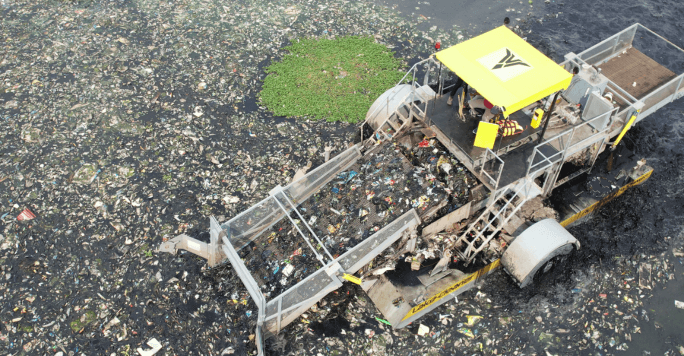
Environmental restoration projects often require balancing operational efficiency with long-term ecological objectives. The Rudra Aquamax 200X environmental Floating Debris Collection Equipment supports this approach through continuous removal of vegetation, organic matter, and floating waste from large water surfaces. Effective project execution typically focuses on prioritizing heavily impacted zones, optimizing collection logistics, and minimizing operational delays during field deployment.
With productivity reaching up to 0.18 hectares per hour and fuel-efficient performance, the machine enables contractors and agencies to manage extensive cleaning programs within defined project schedules. Its high-capacity collection system also helps reduce support vessel requirements and unloading frequency, contributing to more efficient resource utilization and improved outcomes for environmental management initiatives.
WORKFLOW
Map route requirements, trench depth, and site access before deploying Rudra Aquamax 200X.
Use the attachment setup to keep trench output consistent across project corridors, utility routes, and practical site conditions.
Cleaner trench profiles help installation, backfill, inspection, and support teams proceed with less rework.
Autocracy Machinery can help match machine configuration, brochure details, and application guidance to the project.
APPLICATION SUPPORT
Share your site conditions, output goals, and timeline so the Autocracy team can guide model fit, brochure details, and next steps for your project.
Built for performance. Trusted by contractors, municipalities, and EPC teams across sectors.
| Feature | Value |
|---|---|
| Overall Dimensions (L×W×H) | 14.5x6x4.8 (Operating) |
| Draft Height | 0.48 - 0.58 m |
| Cutting Depth | Adjustable 0-1.5 below water surface |
| Cutting Width | 2 meters |
| Pontoon Dimensions (W×L×H) | 3x8x0.7 m |
| Hull Length | 0.7 m |
| Hull Material | High-tensile carbon steel |
| Total Machine Height | ≤ 4.8 m |
Common questions about using Rudra Aquamax 200X in this application.
| Equipment

Self Propelled Multi Utility Machine | Equipment

Amphibious Excavator | Equipment

Industry model fit in India
Rudra Aquamax 200X helps Indian project teams review model capability, field fit, application suitability, and support requirements before deployment.
Floating garbage collector
Use this page to compare Rudra Aquamax 200X for Indian site conditions, access width, carrier compatibility, output goals, and project timelines.
Autocracy Machinery can guide Indian buyers on model fit for industry requirements, site conditions, and procurement discussions.
Rudra Aquamax 200X for Environmental Sustainability projects in India should be reviewed as part of the full site workflow, not only as a standalone equipment listing. Buyers usually need to compare the required output, route length, working width, access condition, operator availability, and delivery timeline before selecting a machine for field deployment.
Rudra Aquamax 200X helps Indian project teams review model capability, field fit, application suitability, and support requirements before deployment. This makes the page useful for early project planning, tender comparison, contractor discussions, and internal equipment shortlisting where teams need clear information before speaking with a supplier.
Floating garbage collector The same review should also include soil or surface condition, transport access, available carrier or tractor capacity, daily productivity expectation, service support, and the practical handoff between excavation, installation, backfilling, lifting, or finishing work.
Use this page to compare Rudra Aquamax 200X for Indian site conditions, access width, carrier compatibility, output goals, and project timelines. For infrastructure and utility projects, the equipment decision often affects crew size, fuel use, rework, route consistency, safety planning, and the number of machines required on site. A structured comparison helps avoid choosing a model only by headline specification.
Autocracy Machinery can guide Indian buyers on model fit for industry requirements, site conditions, and procurement discussions. Autocracy Machinery pages are organised to help project owners, EPC teams, contractors, municipalities, utilities, agriculture teams, and site managers connect product capability with real operating conditions before requesting a quote or brochure.
When evaluating Rudra Aquamax 200X for Environmental Sustainability projects in India, teams can use the model information, media, specifications, application notes, and quote conversation together. This gives procurement and site teams a clearer basis for confirming fit, planning mobilisation, and preparing the next step with Autocracy Machinery.
A practical selection process also considers how the machine will move between work fronts, how operators will maintain output through the day, and how the surrounding crew will manage material handling, marking, inspection, and finishing work after the equipment completes its pass.
For many field projects, the right equipment choice is the one that balances specification, availability, maintenance access, and predictable output. Rudra Aquamax 200X for Environmental Sustainability projects in India should therefore be discussed with both procurement teams and site supervisors before finalising the requirement.
Project teams can prepare a stronger quote request by sharing route length, expected depth or working range, ground condition, preferred carrier, transport limits, daily target, and any special constraints such as narrow access, road-edge work, finished surfaces, utilities, or active public areas.
The content on this page is intended to support that discussion with enough context to compare options, understand the application fit, and decide whether a standard model, attachment configuration, brochure review, or direct consultation is the right next step.
Autocracy Machinery supports buyers who need equipment for trenching, pole installation, material handling, aquatic work, agricultural operations, landscaping, water management, solar EPC activity, telecom routes, defence infrastructure, and general construction requirements.
Before mobilisation, teams should confirm safety practices, operator familiarity, service support, spare availability, site preparation, and the handoff between machine output and downstream work. That final check helps keep deployment practical once the equipment reaches the project site.