


Route Planning
Map route requirements, trench depth, and site access before deploying Mayura TW.
- | Equipment
Tractor
>90 HP
PTO/Hydraulic
Up to 1800 mm
110–900 mm
Up to 300 m/hr
5–6 litres/hr
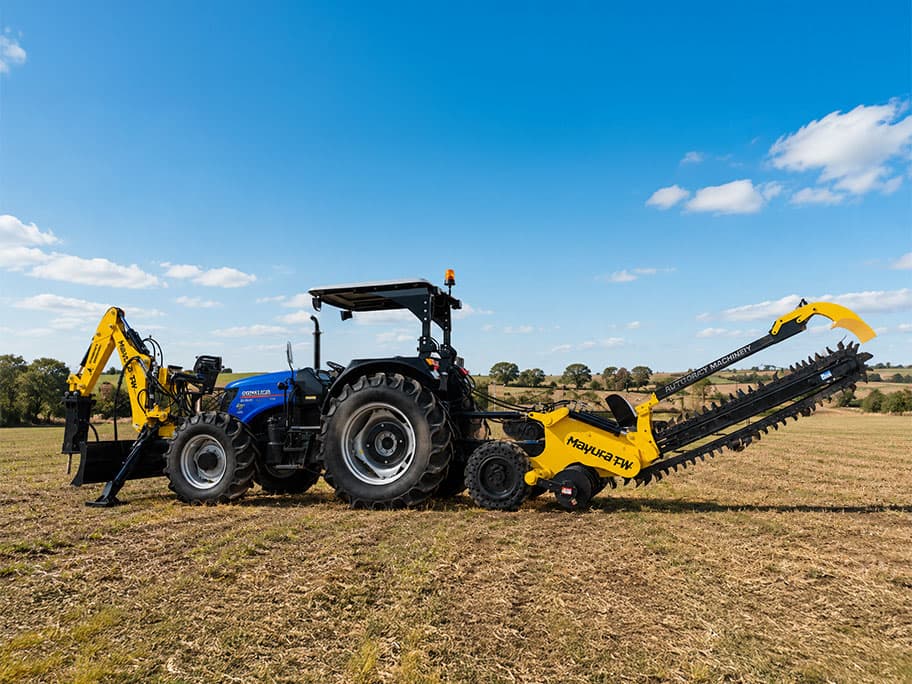
In utility-scale solar projects, underground cable routing often runs through uneven terrain, compact soil zones, and intermittent rock layers, especially in large solar parks spread across semi-arid and undeveloped land. The Mayura TW trench digging machine is engineered to handle these site realities by combining trenching, rock breaking, excavation, and backfilling within a single machine platform. Operating on a tractor above 90 HP, the trenching machine allows solar EPC contractors to execute trenching across long cable routes without deploying multiple machines, even when ground conditions change frequently. This is particularly useful in solar layouts where trench paths extend across module rows, inverter stations, and evacuation corridors. With the ability to cut trenches up to 1800 mm deep and 110-900 mm wide, the machine supports both standard cable trenching and wider utility corridors required in solar and transmission infrastructure. Its integrated systems ensure that hard patches, buried obstructions, or rocky sections do not interrupt workflow, which is a common challenge in solar project sites.
PROJECT EXECUTION
Solar Energy
The machine is suited for critical trenching requirements across solar installations, including DC cable trenching across module arrays, AC cable routing between inverters and pooling stations, trenching for power evacuation and transmission connectivity, excavation for junction boxes, inverter pads, and utility pits, as well as cable routing through rocky or obstructed solar site zones.
Its multi-function capability ensures that different ground challenges within the same solar project can be handled without workflow disruption.
Solar Energy
Solar EPC projects require continuous progress across large areas, where delays often occur due to changing soil conditions. The Mayura TW is designed to maintain execution flow even in such conditions.
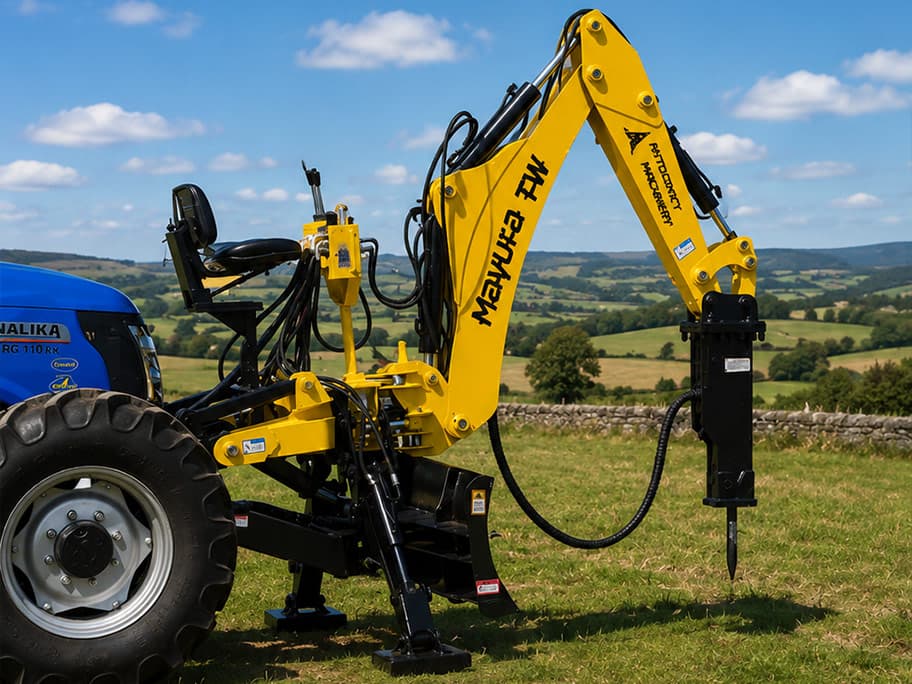
The integrated hydraulic breaker allows operators to immediately address rock layers or hard strata, avoiding stoppages and eliminating the need for separate rock-breaking equipment.
The back hoe system supports on-the-go excavation tasks, such as clearing obstacles, preparing trench paths, and handling localized digging near inverter or substation zones.The 4-way hydraulic dozer ensures that trench closure and surface leveling are completed within the same cycle, helping maintain clean trench lines and ready-to-use cable routes.By integrating all these functions, the machine enables consistent execution speed, reduced downtime, and better control over trench quality across large solar project sites.
WORKFLOW
Map route requirements, trench depth, and site access before deploying Mayura TW.
Use the attachment setup to keep trench output consistent across solar park rows, inverter blocks, and power evacuation corridors.
Cleaner trench profiles help cable laying, earthing, backfilling, and commissioning teams proceed with less rework.
Autocracy Machinery can help match machine configuration, brochure details, and application guidance to the project.
APPLICATION SUPPORT
Share your site conditions, output goals, and timeline so the Autocracy team can guide model fit, brochure details, and next steps for your project.
Built for performance. Trusted by contractors, municipalities, and EPC teams across sectors.
| Feature | Value |
|---|---|
| Lift Height | 2.0 – 3.5 m |
| Lifting Capacity: | 1500 kg |
| Bucket Capacity | 0.12 – 0.15 cubic metre |
| Overall Length | 1300mm |
| Overall Width | 2800 mm |
| Overall Height | 3000 mm |
| Gross Weight | 8100 kg |
Common questions about using Mayura TW in this application.
Industry model fit in India
Mayura TW is listed here for project teams in India planning solar energy work with trenchers. Selection should come down to carrier fit, operating method, array layout, cable depth, tracker clearance, soil profile, and commissioning milestones, and whether the machine supports repeatable output, cable-route accuracy, panel-field access, and EPC schedule control.
For Solar Energy work, compare Mayura TW against array layout, cable depth, tracker clearance, soil profile, and commissioning milestones before finalising equipment deployment, because these details decide whether the machine fits the route, access, and daily output target.
Mayura TW may suit DC cable trenches, earthing routes, tracker support works, inverter corridors, and solar EPC utilities when access, output goals, support arrangements, and follow-on crews line up with the job.
Use the page to move from specification review into a clearer discussion about solar energy suitability, brochure details, field support, and quotation requirements.
For trenchers, check trench depth, trench width, spoil handling, route crossings, surface reinstatement, and carrier fit together with solar parks, cable corridors, pile rows, open sites, and long internal utility runs; this helps separate a suitable solar energy setup from a generic model match.


