


Support Vehicle
Tractor
110–280 mm
Up to 1800 mm
40 - 300 m/hr as per soil
Trenchers in India
Equipment
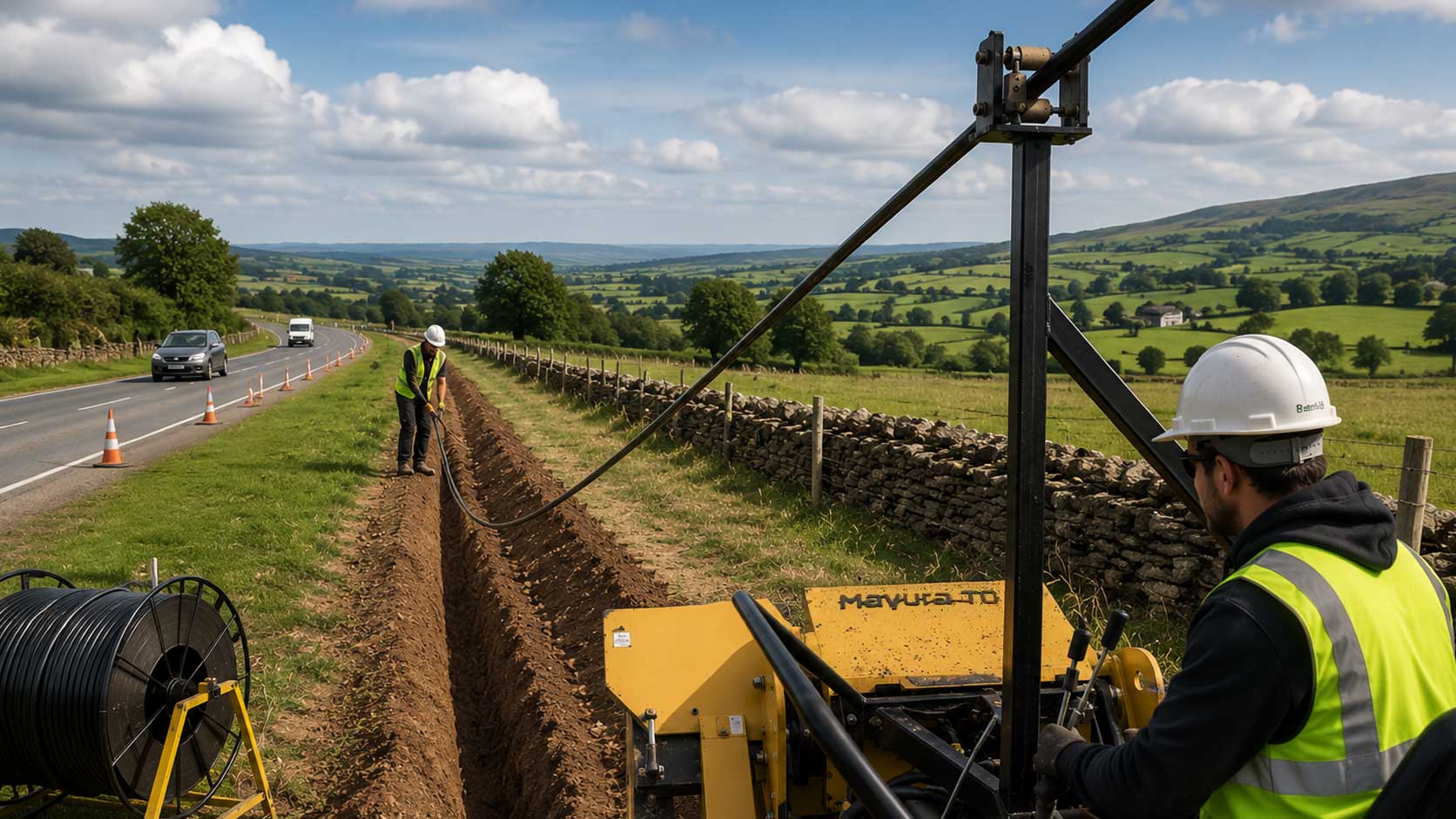
Underground utility projects demand equipment that can complete multiple operations in a single pass without compromising installation quality. The Mayura TO is developed to simplify this process by combining trenching, HDPE duct laying, and backfilling into one continuous operation. As a Mayura TO trencher machine in India, it helps contractors complete utility installation faster while reducing labour requirements, equipment movement, and overall project costs.
Compatible with tractors above 60 HP, the machine features a front-mounted hydraulic decoiler for continuous duct placement and an integrated two-plate dozer that closes the trench immediately after installation. This Mayura TO trench maker machine is ideal for long-distance OFC networks, solar cable corridors, irrigation pipelines, underground electrical utilities, defence communication lines, and construction infrastructure. Completing three activities in a single pass reduces site disruption and improves project efficiency across highways, rural roads, urban corridors, and utility networks.
The Mayura TO is designed for organisations that require faster deployment with consistent trench quality and reliable hydraulic performance. Built by experienced Mayura TO trenching machine manufacturers In India, it offers a practical solution for telecom contractors, infrastructure developers, utility service providers, and government agencies executing OFC, solar, agriculture, construction, and defence projects where speed, accuracy, and operational efficiency are equally important.
Built for performance. Trusted by contractors, municipalities, and EPC teams across sectors.
Tractor
>60 HP
PTO / Hydraulic
300 m/hr (150 m/hr in soft soil, 90 m/hr in hard soil)
110–280 mm
Up to 1800 mm
30–60 mm
850 mm (adjustable)
600 mm
Up to 2000 mm
5–6 L/hr
2000 mm
2500 mm
1000 mm
10500 mm
3200 mm
4500 mm
Discover what makes the Mayura TO stand out from the competition
The Mayura TO is designed as a tractor-mounted machine, allowing easy mobility across project sites while delivering efficient trenching, duct laying, and backfilling in a single operation.
Compatible with tractors above 60 HP, the machine provides sufficient power to handle continuous trenching and utility installation across OFC, solar, and infrastructure projects.
The PTO and hydraulic transmission system ensures smooth power delivery, stable operation, and consistent performance during long-duration field work.
With trenching speeds of up to 300 m/hr (150 m/hr in soft soil and 90 m/hr in hard soil), the Mayura TO enables rapid project execution across varying ground conditions.
110–280 mm trench width capability helps Mayura TO support trenchers work in India with controlled output, dependable operation, and smoother execution across OFC, irrigation, utility, agriculture, and construction sites.
Up to 1800 mm trench depth capability helps Mayura TO support trenchers work in India with controlled output, dependable operation, and smoother execution across OFC, irrigation, utility, agriculture, and construction sites.
BEST SUITED FOR INDUSTRIES
Match Mayura TO with industry use cases where equipment reliability, field output, and site readiness matter most.
The Mayura TO is designed for fast OFC cable installation by carrying out trenching, HDPE duct laying, and backfilling in a single pass. It helps telecom contractors complete fibre network projects quickly and efficiently.
The machine is suitable for underground power cable installation in solar projects. It creates accurate trenches, lays ducts, and completes backfilling in one operation, reducing project time and improving productivity.
The Mayura TO helps install irrigation pipelines, drainage systems, and underground utility lines with minimal manual effort. It supports faster field preparation and improves water management in agricultural projects.
The machine is ideal for defence infrastructure projects that require underground communication cables and utility networks. Its single-pass operation helps complete trenching work efficiently, even in remote locations.
The Mayura TO supports underground utility installation in construction projects by combining trenching, duct laying, and backfilling in one pass. This helps contractors reduce labour, save time, and improve work efficiency.
PRODUCT FIT
Understand how Mayura TO fits project planning, field deployment, and daily operating priorities.
The Mayura TO is specially designed for OFC projects and is also suitable for solar, agriculture, defence, and construction applications. It performs trenching, duct laying, and backfilling together, making it an ideal solution for underground utility installation across urban and rural areas.
The machine allows contractors to select the required trench width based on project needs. Its hydraulic decoiler and well-planned machine layout help maintain proper duct alignment and ensure smooth operation throughout the trenching process.
The Mayura TO combines a trencher, hydraulic decoiler, and backfilling dozer into a single tractor-mounted unit. This reduces the need for multiple machines, lowers manpower requirements, and improves equipment utilisation on site.
By completing trenching, duct laying, and backfilling in one pass, the Mayura TO helps reduce project duration, fuel consumption, and operating costs. Its hydraulic system and low-maintenance design ensure reliable performance across OFC, solar, agriculture, defence, and construction projects.
Pole erection machine | Equipment

Common questions about Mayura TO specifications, applications, and project fit.
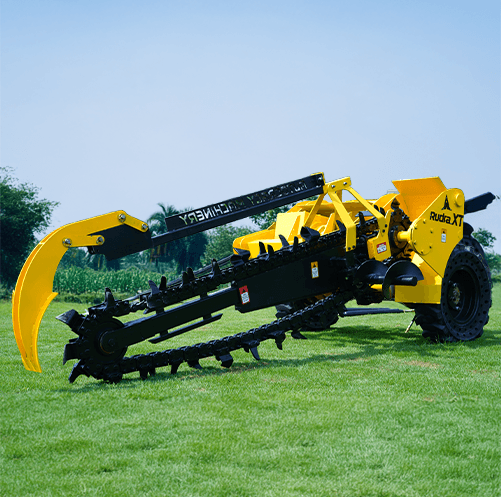
Model details in India
Mayura TO is listed for Indian buyers who need to compare machine capability, applications, specifications, and quote readiness for practical field deployment.
OFC Deployment Machine
Use this page to review Mayura TO for Indian soil conditions, access constraints, productivity targets, carrier fit, and industry requirements.
Autocracy Machinery can help project teams confirm model fit for telecom, irrigation, agriculture, construction, solar, water management, and utility applications in India.


