


Route Planning
Map route requirements, trench depth, and site access before deploying Gaja 100XT.
| | |
|---|---|
| | |
| | |
| | |
| | |
| | |
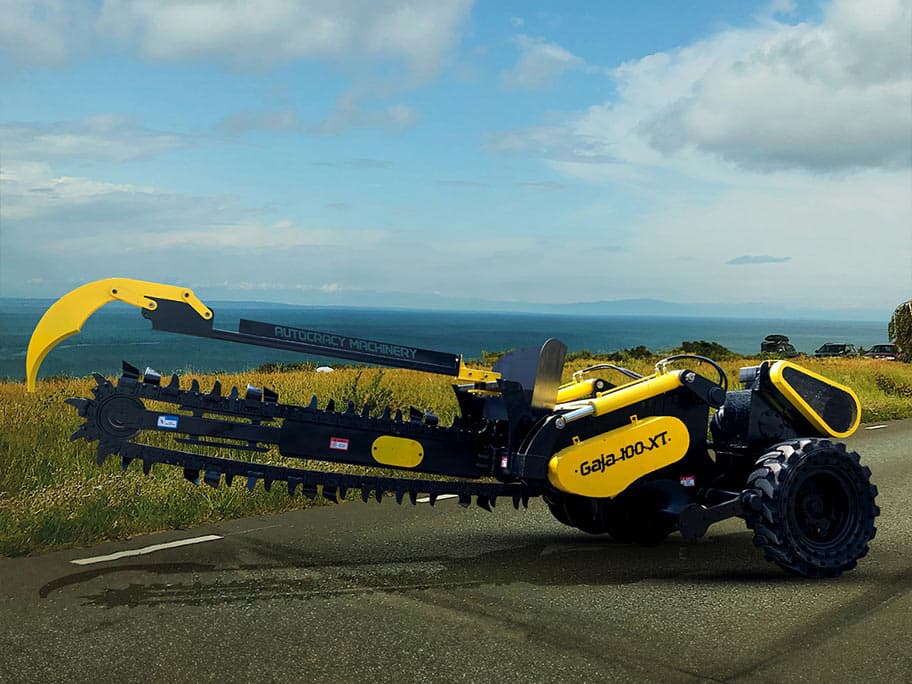
- | Attachment
Tractor
>60 HP
PTO / Hydraulic
200m/hr in soft soil, 150m/hr in hard soil
110-280 mm
1200-1500 mm
>25 lpm
Large-scale solar developments require dependable trenching solutions capable of supporting underground power distribution, communication systems, monitoring networks, and grid interconnection infrastructure. The Gaja 100XT Trencher is designed to meet these requirements through controlled excavation performance that supports efficient cable routing while minimizing disruption across active construction zones. Its adjustable trench dimensions allow project teams to accommodate varying installation specifications for renewable energy infrastructure.
The Gaja 100XT Solar Energy Trencher is particularly suited to utility-scale photovoltaic projects where underground cable protection and installation accuracy are critical. Its tractor-mounted design offers flexibility across expansive project sites, while its trenching capability supports efficient deployment of electrical infrastructure. For developers and engineering teams, the machine contributes to structured construction workflows and helps maintain consistency across multiple installation phases throughout the project lifecycle.
PROJECT EXECUTION
Solar Energy
Modern solar facilities depend on extensive underground utility networks linking solar arrays, inverter stations, substations, control systems, and export transmission infrastructure. The Gaja 100XT Trencher supports these applications by enabling precise trench creation for cable routing and utility corridor development. Its operational design helps contractors maintain alignment accuracy across long installation routes while adapting to changing field conditions.
The Gaja 100XT Solar Cable Installation Trencher is suitable for inter-array connections, feeder cable networks, monitoring systems, and renewable energy utility corridors. It also supports last-mile connectivity projects where newly developed solar assets must be integrated into existing power transmission infrastructure. Consistent trench profiles contribute to installation quality, helping reduce corrective work and supporting efficient cable deployment across large-scale renewable energy developments.
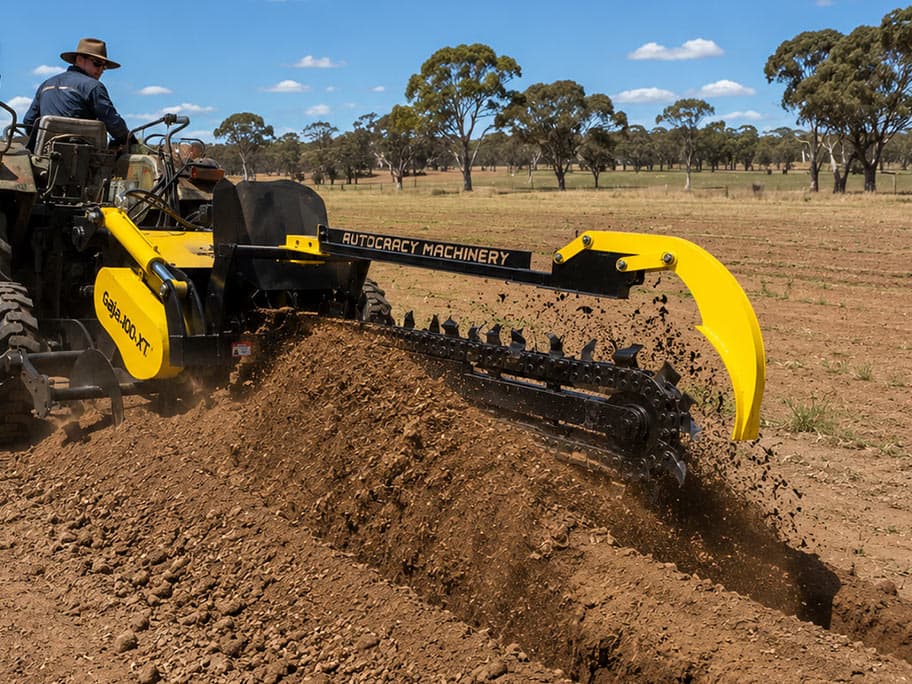
Solar Energy
Solar infrastructure projects often operate within strict construction schedules where coordination between civil works, electrical installation, and commissioning activities is essential. Effective trenching operations must support cable protection requirements while enabling uninterrupted progress across multiple work fronts. The Gaja 100XT Trencher assists project teams by providing controlled excavation performance suitable for phased solar construction programs.
For EPC contractors managing large renewable energy developments, the Gaja 100XT Solar EPC Cable Trenching Machine supports efficient trench preparation and utility infrastructure deployment. Its stable operating characteristics and fuel-efficient performance help maintain productivity throughout extended construction periods. By supporting accurate cable corridor development and consistent installation quality, the machine contributes to predictable project execution and facilitates the successful delivery of underground electrical infrastructure within modern solar energy facilities.
WORKFLOW
Map route requirements, trench depth, and site access before deploying Gaja 100XT.
Use the attachment setup to keep trench output consistent across solar park rows, inverter blocks, and power evacuation corridors.
Cleaner trench profiles help cable laying, earthing, backfilling, and commissioning teams proceed with less rework.
Autocracy Machinery can help match machine configuration, brochure details, and application guidance to the project.
APPLICATION SUPPORT
Share your site conditions, output goals, and timeline so the Autocracy team can guide model fit, brochure details, and next steps for your project.
Built for performance. Trusted by contractors, municipalities, and EPC teams across sectors.
| Feature | Value |
|---|---|
| Gross Weight | 2100kgs |
| Overall Length | 5.1 mts |
| Overall Width | 1.85 mts |
| Overall Height | 1.3 mts |
Common questions about using Gaja 100XT in this application.
Industry model fit
Gaja 100XT is listed here for project teams planning solar energy work with trenchers. Selection should come down to carrier fit, operating method, array layout, cable depth, tracker clearance, soil profile, and commissioning milestones, and whether the machine supports repeatable output, cable-route accuracy, panel-field access, and EPC schedule control.
For Solar Energy work, compare Gaja 100XT against array layout, cable depth, tracker clearance, soil profile, and commissioning milestones before finalising equipment deployment, because these details decide whether the machine fits the route, access, and daily output target.
Gaja 100XT may suit DC cable trenches, earthing routes, tracker support works, inverter corridors, and solar EPC utilities when access, output goals, support arrangements, and follow-on crews line up with the job.
Use the page to move from specification review into a clearer discussion about solar energy suitability, brochure details, field support, and quotation requirements.
For trenchers, check trench depth, trench width, spoil handling, route crossings, surface reinstatement, and carrier fit together with solar parks, cable corridors, pile rows, open sites, and long internal utility runs; this helps separate a suitable solar energy setup from a generic model match.


