Water bodies are rarely stable for very long. Mud builds up, plants grow, silt settles at the bottom, and sand is transported into areas where it can obstruct water flow. Neglecting this content makes the problem more challenging to manage over time.
Regular maintenance is necessary for rivers, lakes, reservoirs, and ponds to keep working. Removing collected material is often difficult since the work must be done in damp, uneven, and often inaccessible areas. It's possible that conventional equipment won't always be able to safely access these areas or function well at varying water depths.
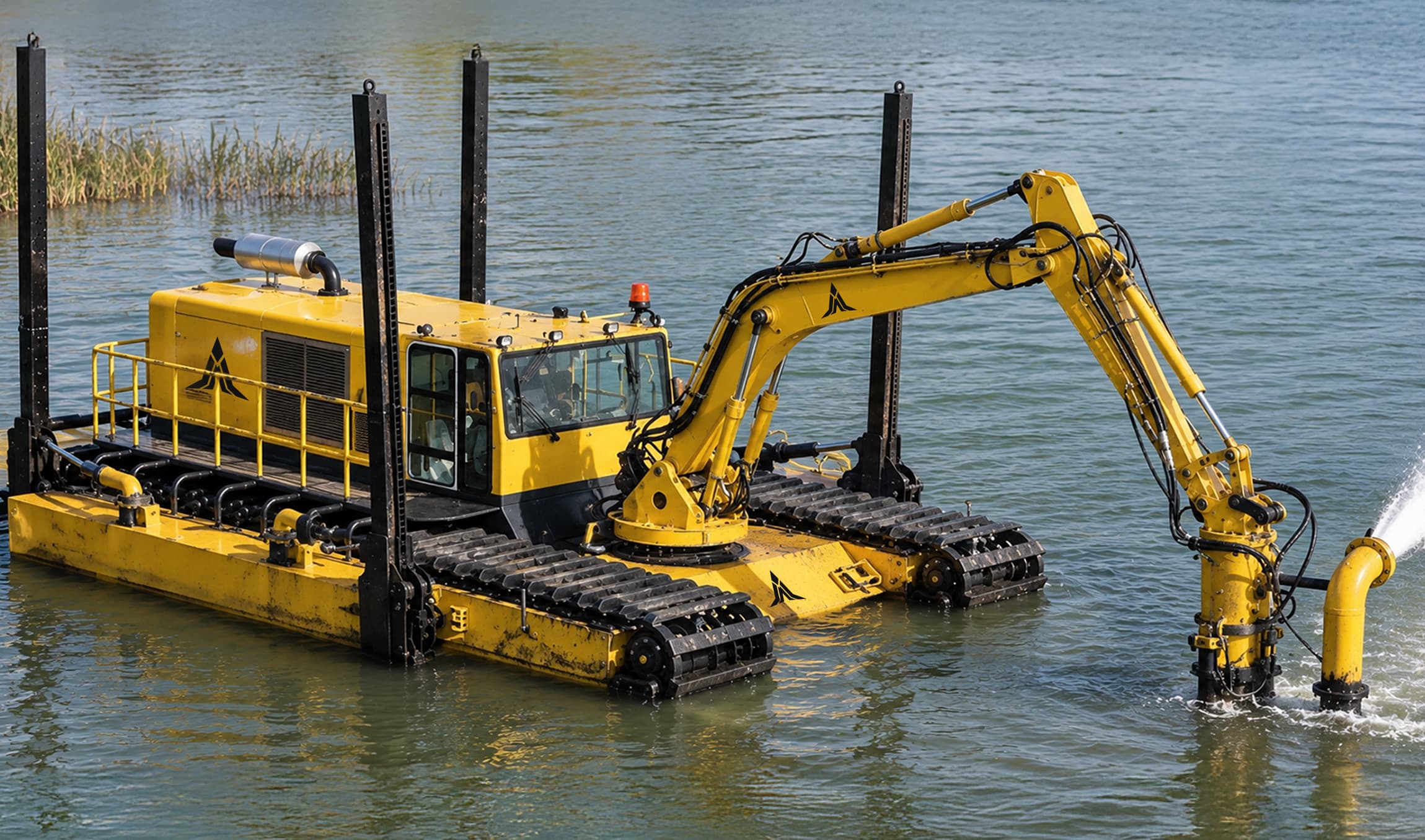
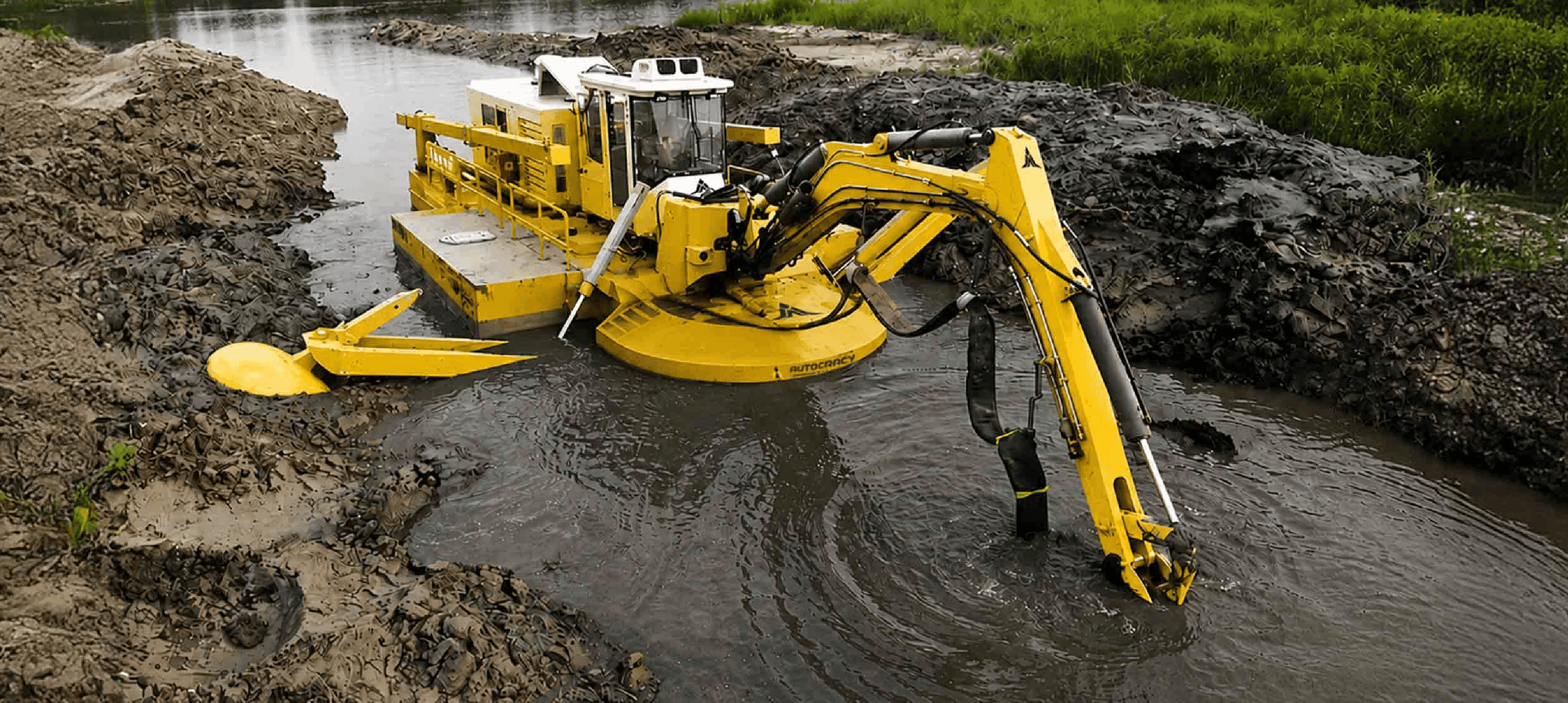
An amphibious dredging machine is built for such working conditions. It combines the mobility needed for water-based operations with the digging and dredging capabilities required to remove material from the bed and surrounding areas.
Working around water is very different from working on solid ground. The machine needs to remain stable while the excavating arm reaches into the water, and it must be able to move through shallow sections without getting stuck.
The amphibious configuration provides the floating support needed for these operations. The structure provides a stable working platform while the machine carries out excavation and dredging activities.
The machine can also operate at different water depths, making it useful for locations where ground conditions change within the same work area.
A waterbody can appear clean from the surface while a significant amount of material has already accumulated underneath.
Silt and mud gradually reduce the available depth. Sand can settle in channels and restrict water movement. Aquatic vegetation can spread across large sections and make access more difficult. In reservoirs and storage ponds, sediment accumulation can reduce usable capacity over time.
These problems can affect water flow, storage, flood management, and general waterbody maintenance. If the accumulated material is not removed, future maintenance can become more difficult and expensive.
Dredging provides a practical way to remove this material and restore the working depth of the waterbody.
The dredger brings several functions together on a single working platform. While the dredging pump manages the passage of dredged material, its excavation arm can be utilized for digging and material removal.
The equipment can dredge up to 6.5 meters deep and features a 200 mm suction system. When excavation work requires the removal of compacted sediment, mud, or other deposited material, its boom cylinder generates a digging force of 50 kN.
Interchangeable attachments also allow the machine to be adapted for different types of work. This makes it possible to approach excavation, dredging and maintenance requirements with the same base machine rather than depending on several specialised machines for separate operations.
Access is often the first challenge in waterbody maintenance. Some sections may be too deep for conventional land-based machinery, while other areas may have soft or unstable ground.
Its 180-degree rotation angle provides a wide working range from a fixed position. This can be useful when working along waterbody edges or covering a larger section without constantly repositioning the entire machine.
Different waterbodies present different maintenance challenges, but the basic requirement remains the same: removing unwanted material and restoring usable space.
River Desilting
Soil, sand, and other elements are naturally carried downstream by rivers. Deposits may build up in some areas of the river over time and affect water flow.
These deposits can be removed from locations that are challenging to reach with traditional machinery with the use of a river dredger. This can assist maintain channels and keep rivers unobstructed.
Lake Maintenance
Lakes may have significant vegetation growth in addition to silt and organic matter buildup. These circumstances may progressively decrease the amount of available water space and complicate maintenance.The machine can work within shallow and deeper sections to remove deposited material and support long-term lake maintenance.
Reservoir Desilting
Sediment accumulation is a common concern in reservoirs. As material settles at the bottom, the effective storage area can gradually decrease.
Regular desilting helps maintain the available capacity and keeps the reservoir in better working condition. The machine's reach and dredging depth make it suitable for tackling sediment deposits in difficult sections.
Pond Restoration
Smaller ponds can also experience significant sediment buildup, particularly when maintenance has been delayed for several years.
Removing accumulated mud and silt can help restore depth and improve the overall condition of the pond. The machine can be used where access conditions make conventional excavation difficult.
Flood Mitigation Work
Blocked or restricted waterways can contribute to poor water movement during periods of heavy rainfall. Removing accumulated sediment and unwanted material can help improve the flow capacity of selected water channels.
While dredging is only one part of broader flood management, maintaining clear waterways can play an important role in reducing the impact of blockages and sediment buildup.
Shoreline Development and Restoration
Waterbody edges often contain soft ground, mud, and vegetation that make conventional machinery difficult to operate.
An amphibious platform can provide access to these areas while carrying out excavation and material removal. This makes it useful for shoreline preparation, restoration work, and other projects where work has to be carried out close to or within the water.
Waterbody maintenance can involve long working hours and difficult material conditions. The machine is powered by a 179 kW engine operating at 2,200 rpm, providing the power required for its hydraulic and dredging systems.
The excavating arm, dredging pump and hydraulic propeller work as part of the same machine system. The hydraulic propeller also helps the machine move through water and position itself around the work area.
This combination of power, reach and mobility gives operators the flexibility to handle different stages of a dredging project without constantly changing equipment.
Choosing dredging equipment is not only about digging depth or engine power. Site conditions matter just as much.
A machine has limited use if it can reach the necessary region but is unable to sustain stability. Similarly, equipment that works well in deep water may not work well in soft or shallow areas.
These practical issues are addressed by the amphibious structure, which offers a stable platform for work in changing water conditions. Its hydraulic mobility, reach, dredge depth, and attachment choices make it appropriate for a variety of waterbody maintenance needs.
One multipurpose machine can streamline operations and eliminate the need to set up several equipment types for various jobs for contractors and organisations engaged in desilting, restoration, flood mitigation, or water resource management.
Waterbody maintenance is ongoing work. Sediment will continue to settle, vegetation will continue to grow, and conditions will change with seasons and weather.
Regular removal of accumulated material can help maintain water depth, improve water movement, and preserve the usable area of lakes, rivers, reservoirs, and ponds. It also allows maintenance teams to address problems before deposits become much harder to remove.
A dredging machine built for changing water conditions gives operators the reach and flexibility needed to work where conventional machinery may struggle. More importantly, it provides a practical approach to keeping water bodies accessible, functional, and easier to maintain over time.
Autocracy Machinery develops heavy-duty machinery and engineered equipment for challenging applications across water management, construction, agriculture, and infrastructure. Its focus is on building practical machines that can handle demanding field conditions and deliver dependable performance where access and operating conditions are difficult.
With solutions designed around real working requirements, Autocracy Machinery continues to develop equipment that helps industries take on complex jobs with greater confidence and efficiency.