A dredging project does not always happen in deep water.
Sometimes the work begins on the bank. Then it moves into shallow water. A section of marsh may need to be crossed before the machine reaches the area that needs attention. In another location, the same project may involve deeper water and a completely different working condition.
This is one of the practical difficulties of water-body maintenance. The working environment can change within a few meters.
A machine that is useful in one location may become difficult to operate in another. Moving conventional equipment between land and water can also add time, handling requirements, and additional equipment to the project.
This is why amphibious machines have become useful for projects where access cannot be treated as a simple land-or-water decision.
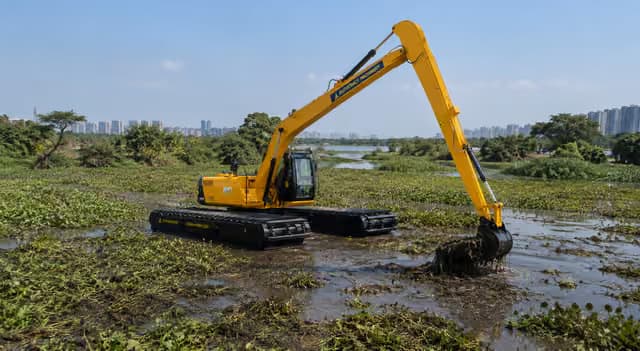
Autocracy Machinery develops amphibious dredging solutions for work across land, shallow water, marshy areas and deeper water. The machines are available in different configurations, while specialised models can also be developed around particular site conditions and project requirements.
Consider a lake with a heavily silted shoreline.
The first section may be firm enough for equipment to approach from land. A few metres further, the ground becomes soft. Beyond that, the machine has to enter shallow water to reach the sediment.
The project has not changed. The working conditions have.
This is where a conventional setup can become complicated. Equipment may need to be changed, repositioned, or supported by additional machinery simply to reach the next section.
An amphibious dredger is designed with this kind of transition in mind.
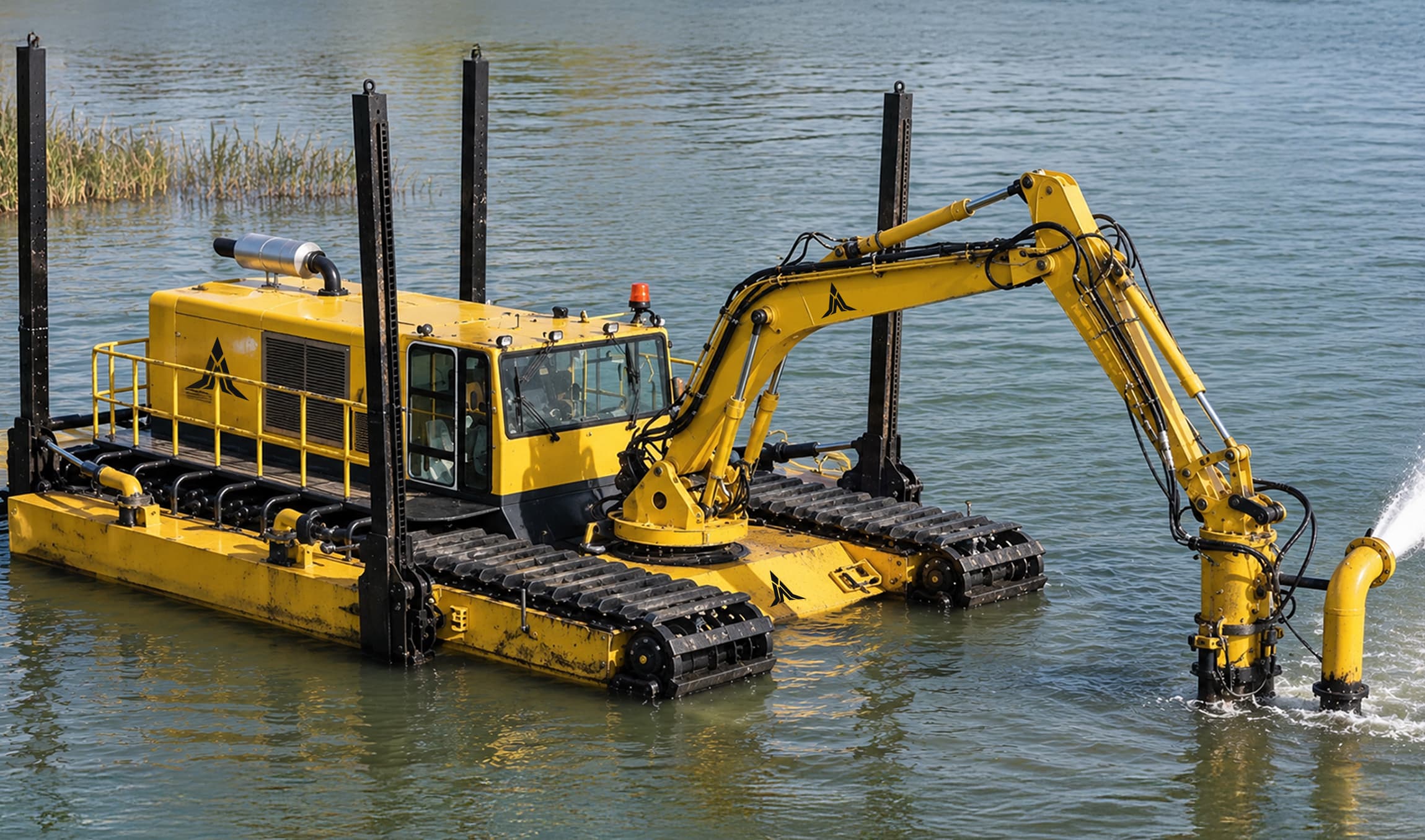
Its buoyancy tanks and crawler system allow it to travel on land while also working in water. That combination gives the operator more freedom when approaching areas where firm ground gradually gives way to shallow or marshy conditions.
For the people planning the project, that flexibility can be more valuable than simply having a machine with a higher digging capacity.
Dredging is often associated with sediment removal, but water-body projects rarely involve only one task.
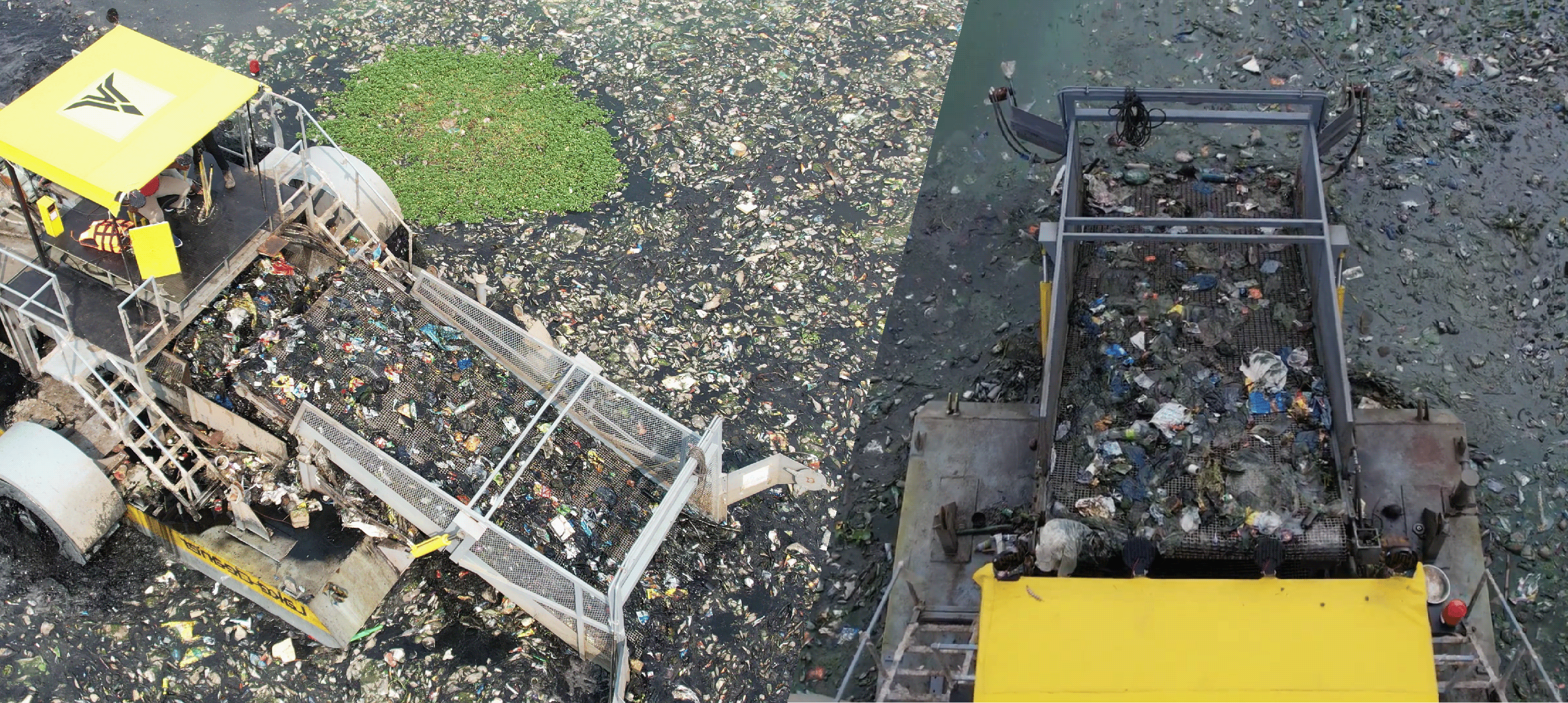
A site may have silt in one section, dense weeds in another and floating waste further along the shoreline. A project may also require excavation or the removal and discharge of accumulated mud.
Using separate machines for every activity can make the operation more complicated.
A multi-purpose configuration provides another option.
The equipment can be fitted with different working units according to the job. An excavating bucket can be used when material needs to be dug out. A dredge pump can handle mud suction and discharge. A weed-cutting unit can be used for aquatic vegetation, while a collecting rake can help gather floating or loose material.
A T-type cutter can also be used for specific cutting requirements.
The important point is not that one machine does everything at once. It is that the machine can be configured for the work that is actually taking place at the site.
Water bodies rarely present the same problem from one location to another.
Take a lake restoration project as an example.
The first stage may involve removing sediment from a shallow section. Once that work is completed, the team may need to clear dense aquatic vegetation. Later, floating debris may have to be collected from another area.
The machine itself does not necessarily need to be replaced for every task.
Changing the working unit allows the same base machine to be adapted to the next requirement.
That can simplify mobilisation and reduce the need to bring several different types of equipment to the site. It can also help project teams make better use of the machine over the course of a longer assignment.
The right attachment, of course, depends on the material and the work required. Equipment selection still needs to follow a proper assessment of the site.
Shallow water is one of the areas where conventional waterborne equipment can face limitations.
A vessel designed primarily for deeper water may not be able to approach the shoreline closely. At the same time, land-based equipment may not have the reach or stability required once the ground becomes submerged.
An amphibious configuration bridges part of that gap.
The buoyancy tank supports operation over water, while the crawler arrangement allows movement over land and softer terrain. This makes it possible to approach shallow areas without treating the shoreline and water as two completely separate work zones.
For lake restoration, wetland maintenance and similar projects, this can make the working sequence considerably easier to organise.
The actual work depends on the attachment being used.
With an excavating bucket, the machine can remove accumulated material mechanically. With a dredge pump, mud can be suctioned from the working area and discharged through the pumping system.
Vegetation requires a different approach.
A water weed cutter can cut aquatic growth, while a collecting rake can gather material after it has been loosened or cut. For sites with floating waste, the collection arrangement can help bring the material together for removal.
This makes the machine particularly relevant to projects where the condition of the water body cannot be described by sediment alone.
The operator is dealing with whatever the site presents.
A multi-purpose machine becomes particularly useful when a project has several connected tasks.
Imagine a water body where sediment has reduced the depth near the shoreline. At the same time, weeds have spread through the shallow areas and waste has collected along sections of the bank.
The project does not have three unrelated problems.
They are different parts of the same maintenance requirement.
A machine that can be configured for excavation, pumping, vegetation cutting and collection gives the project team the possibility of handling these tasks within one equipment platform.
That does not mean every attachment will be used on every project. It means the machine can be prepared according to what the site requires.
For contractors and project owners, this can make equipment planning more straightforward.
The applications extend beyond conventional lake dredging.
River maintenance can involve sediment removal and bank access. Lakes and reservoirs may require a combination of silt removal, weed management and floating waste collection. Marshy areas can require equipment that does not depend entirely on firm ground.
Ports and other water-based infrastructure can also have their own dredging requirements.
The common factor is the working environment.
When the project moves between land and water, or when several different types of material need to be handled, flexibility becomes an important part of equipment selection.
The equipment may be designed for demanding environments, but the people operating and maintaining it remain central to the project.
Operators need to understand the attachment being used and the conditions around the machine. Maintenance teams need to keep hydraulic and mechanical systems in working order. Service support becomes particularly useful when equipment is working continuously for extended periods.
For a contractor, avoiding unnecessary downtime can have a direct effect on the work schedule.
This is why equipment supply and after-sales support should be considered together, particularly for projects where the machine will be operating away from conventional workshop facilities.
There is no single type of water body and no single type of dredging requirement.
Some sites need sediment removal. Others need aquatic vegetation cleared. Some require mud pumping or waste collection. In many cases, several of these activities exist at the same site.
The working environment can also change from firm ground to marsh and then to water within the same project.
That is where a multi-purpose amphibious approach makes practical sense.
Autocracy Machinery's amphibious dredging solutions are built around this changing environment, using a buoyancy tank and crawler arrangement to support movement across land and water. Interchangeable working units allow the machine to be configured for excavation, mud suction and discharge, weed cutting, collection and other site-specific tasks. With different models available and the option to customise equipment around particular working conditions, Autocracy Machinery focuses on giving project teams a machine that fits the work in front of them rather than asking the site to fit a fixed machine.