A lake can change faster than people expect.
A few patches of floating weed near the edge may not seem like a serious concern. Over time, however, those patches can spread across open water and form dense mats. Areas that were once easy to access become difficult to reach. Boats struggle to move through the vegetation, and routine activities around the lake become harder.
Water hyacinth is one of the plants that can create this kind of problem. When growing conditions are favourable, it can spread quickly and occupy a large area of the water surface.
Once the growth becomes extensive, removing it is no longer a small maintenance job. The work involves cutting the vegetation, collecting it, moving it out of the water and finding a practical way to handle the material afterwards.
Manual work can be practical when the affected area is small. A team can remove the plants from the edge or work through a limited section of the lake.
The situation is different when large areas are covered.
Workers have to spend more time in the water, handle heavy wet vegetation and make repeated trips to the shore. Even after the plants are cut, someone still has to gather them and move them away from the water.
For a large lake, this can turn into a long and labour-intensive operation.
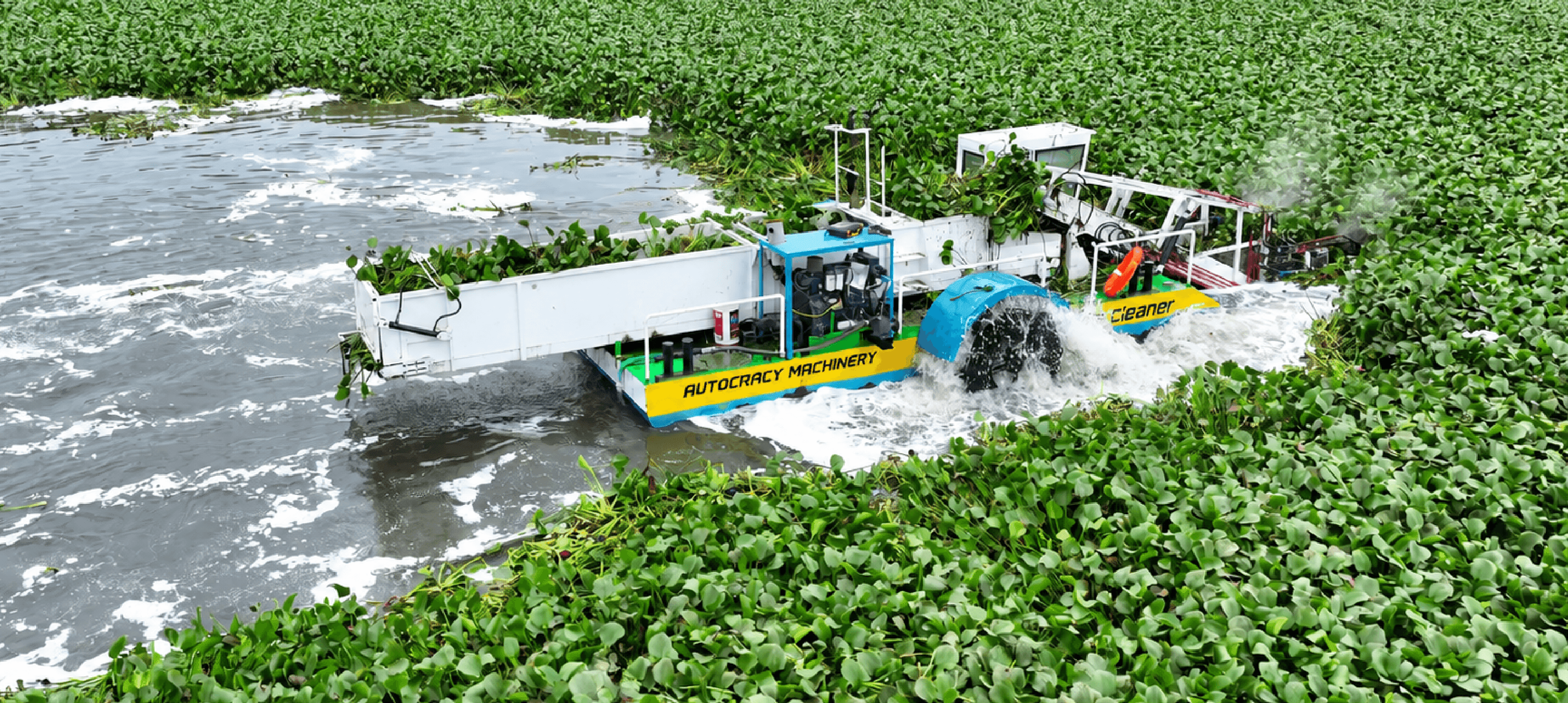
Mechanical harvesting provides another way of handling the work. An aquatic weed harvester can move through the affected area, cut the vegetation and collect it onboard. The material is removed from the water as part of the same operation instead of being left behind for another team to collect.
The Rudra Aquamax range is designed around this type of work.
The Rudra Aquamax 100X, for example, has storage capacity of up to 8 cubic metres and can handle loads of up to 3 tonnes. Its size makes it practical for sites where manoeuvrability and collection capacity both matter.
For larger operations, the Rudra Aquamax 150X and 160X offer wider working coverage and greater collection capability. Their configuration can be useful where vegetation is dense or spread across a larger section of the water body.
There is no single machine that suits every lake. The size of the water body, depth, access conditions, quantity of vegetation and unloading arrangements all need to be considered before work begins.
One of the common difficulties with lake cleaning is what happens after the vegetation has been cut.
If the material remains in the water, it can drift to another part of the lake or eventually sink. That means the work has not really solved the problem. The vegetation still needs to be collected and taken away.
Collection capacity therefore becomes important, particularly on larger projects.
The Rudra Aquamax collects the cut material onboard while it works. Once the storage area is filled, the material can be unloaded and moved away from the water.
This makes the overall operation easier to organise. Instead of depending entirely on workers to gather floating vegetation after it has been cut, cutting and collection can happen as the machine moves through the lake.
The unloading process also needs to be planned before work starts. There should be a suitable location for the collected material and a clear way to move it away from the water.
Small details such as these can have a noticeable effect on how smoothly a project runs.
Anyone who has dealt with a badly affected lake will probably have seen this happen.
The lake is cleaned, the water surface opens up again, and after some time the vegetation starts appearing in the same areas.
There is usually a reason for that.
Water hyacinth grows well in nutrient-rich water. Nutrients can enter a water body through wastewater, agricultural runoff, drainage and other sources. If those conditions remain unchanged, removing the existing plants does not prevent new growth.
Small areas that were missed during the initial operation can also become a source of regrowth.
That is why regular checks can help identify new growth before it becomes widespread.
A few small patches are much easier to deal with than another large area covering the lake.
The maintenance schedule will vary from one water body to another. Lakes with rapid growth may require more frequent attention, while others may need only periodic inspection. The condition of the surrounding area matters too
A lake does not exist on its own.
What enters the water from the surrounding area can influence its condition. Rain can carry soil and nutrients into the lake. Drainage channels can bring material from nearby land. Wastewater and activities around the catchment can also affect water quality.
When vegetation keeps returning, looking only at the surface of the lake may not provide the complete picture.
Mechanical removal deals with the vegetation that is already present. Addressing the conditions that support its growth can reduce the pressure on the lake over time.
The measures required will depend on the site. In some places, attention may be needed around drainage. In others, nutrient inflow or wastewater may need to be addressed.
There is no universal solution because every water body has its own set of conditions.
Large-scale removal involves repeated movement across the water.
The machine needs to reach the affected area, cut the vegetation, collect it, carry the load and return for unloading. When these tasks are handled manually, the amount of labour and time required can increase considerably.
The Rudra Aquamax combines several of these operations into one machine.
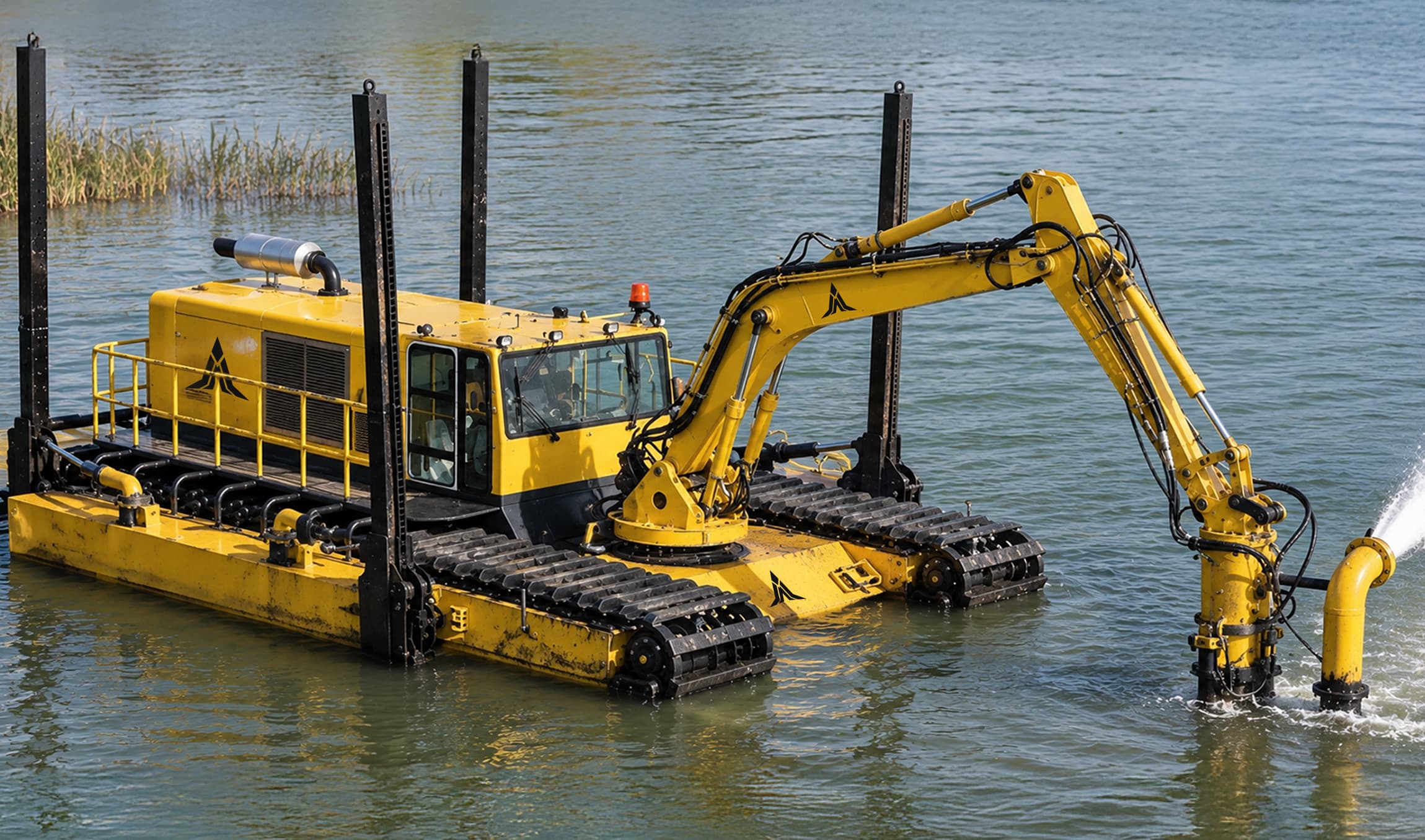
Its floating platform allows it to work directly on the water. Vegetation is cut and transferred into the onboard collection area as the machine moves through the affected section.
The different models provide options for different working requirements. A smaller water body or maintenance operation may require a different configuration from a large lake with extensive vegetation.
For the people operating the equipment, the practical advantage is the reduction in separate handling activities. The vegetation can be collected as the machine works rather than being scattered across the water for later collection.
This does not remove the need for planning. Access, unloading points, transportation of the collected material and the condition of the lake all remain important.
The first change is usually easy to see.
Open water becomes visible again.
Areas that were hidden under vegetation can be accessed. Boats can move through sections that were previously blocked, and maintenance teams can inspect the water more easily.
But keeping the lake in that condition requires continued attention.
New growth should be noticed early. Areas where vegetation tends to appear first can be checked during routine inspections. Collected material should also be moved away from the water instead of being left along the shoreline.
This is where a planned maintenance routine can help.
The goal is not to wait until the vegetation becomes a major problem and then start another large cleanup. Smaller interventions carried out at the right time can prevent the need for repeated intensive work.
Every lake presents a different working environment.
Some have shallow edges. Some have large open areas. Others have vegetation concentrated around the shoreline or in difficult-to-access sections.
The amount of vegetation is only one consideration. Water depth, working width, storage capacity, access to the shore and unloading arrangements also influence equipment selection.
For this reason, machine selection should begin with the actual site conditions.
The Rudra Aquamax range provides different configurations for varying requirements. The 100X can suit operations where a more compact setup is useful, while the larger models provide greater collection capacity and working coverage for demanding projects.
The machine needs to match the work rather than the other way around.
A major cleanup can make a visible difference, but it should be viewed as the start of a maintenance cycle rather than the final step.
Once the bulk of the vegetation has been removed, the focus can shift towards monitoring and early intervention.
If new growth is found in a small section, removing it at that stage is considerably more manageable than waiting until it spreads across a large area.
At the same time, the surrounding conditions should be reviewed where necessary. If nutrients or other material continue to enter the lake, the underlying issue will remain.
This combination of physical removal, regular monitoring and attention to the surrounding catchment can support longer-term lake restoration.
Managing a heavily weed-covered lake is not a one-day task.
It involves understanding how the vegetation is spreading, choosing suitable equipment, removing the material properly and continuing to monitor the water after the main operation.
For larger areas, mechanical equipment can reduce the amount of manual handling involved and make the removal process more organised.
Autocracy Machinery develops specialised machinery for aquatic cleaning and environmental applications. The Rudra Aquamax range is built to help operators cut, collect and remove floating vegetation directly from the water.
For sites dealing with persistent growth, having equipment that can handle both cutting and collection can make routine maintenance more practical.
The objective is simple. Clear the affected area, keep the vegetation from building up again, and make the lake easier to maintain over time.