Managing a large solar farm requires more than just installing panels. Before installation begins, the site must be prepped by shifting things, situating equipment, and routing subterranean wires. When these obligations are distributed over a large region, effective planning and machinery are required to handle the workload.
Solar EPC companies usually oversee multiple projects at the same time. Foundation drilling, carrying installation equipment, and laying cable routes must all be coordinated across numerous sections of the site.
Using the right solar farm equipment can help to speed these processes. Purpose-built equipment facilitates various stages of solar construction, allowing teams to manage site requirements without relying on repetitive manual work. Autocracy Machinery offers specialized equipment for foundation drilling, trenching, and material handling to support solar infrastructure projects.
How Equipment Makes Solar Installation Easier
Solar farm building entails numerous operations that must be accomplished in order. Although panel installation is the most visible aspect of the project, the labor that precedes and surrounds it is equally significant.
Some frequent requirements are
-Foundation preparation: Creating foundation holes in predetermined locations for solar mounting structures.
- Material movement: Moving mounting structures and other installation equipment throughout huge project areas.
- Underground cable routing: Digging holes for electrical wires that connect different portions of the solar farm.
- Site accessibility: Transporting machinery and materials over varying terrain conditions.
- Work coordination: Ensuring that equipment and installation teams are available at the right stages of construction.
Having machinery suitable for these activities allows project teams to manage specific operations without relying solely on manual methods.
Exploring Equipment for Solar Installation
Autocracy Machinery provides specialized equipment to support various activities involved in solar farm development.
Vedhan Series: Solar Foundation Equipment
Solar mounting structures necessitate the excavation of predetermined foundation holes. This technique can be time-consuming to perform manually in hundreds of locations throughout large solar installations.
The Vedhan Series was designed for solar foundation drilling and other related applications. It automates hole preparation for mounting structures, which makes installation easier during the foundation phase.
Gaja Series: Underground Cable Trenching
Electrical wires connect the various components of a solar farm and must follow predetermined underground paths. These lines require continuing trench excavation in compliance with the proposed cable architecture.
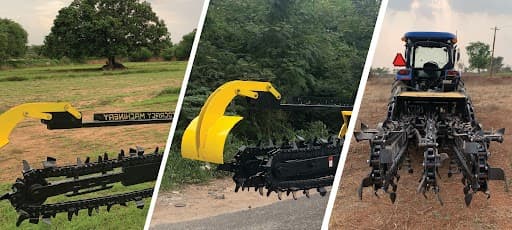
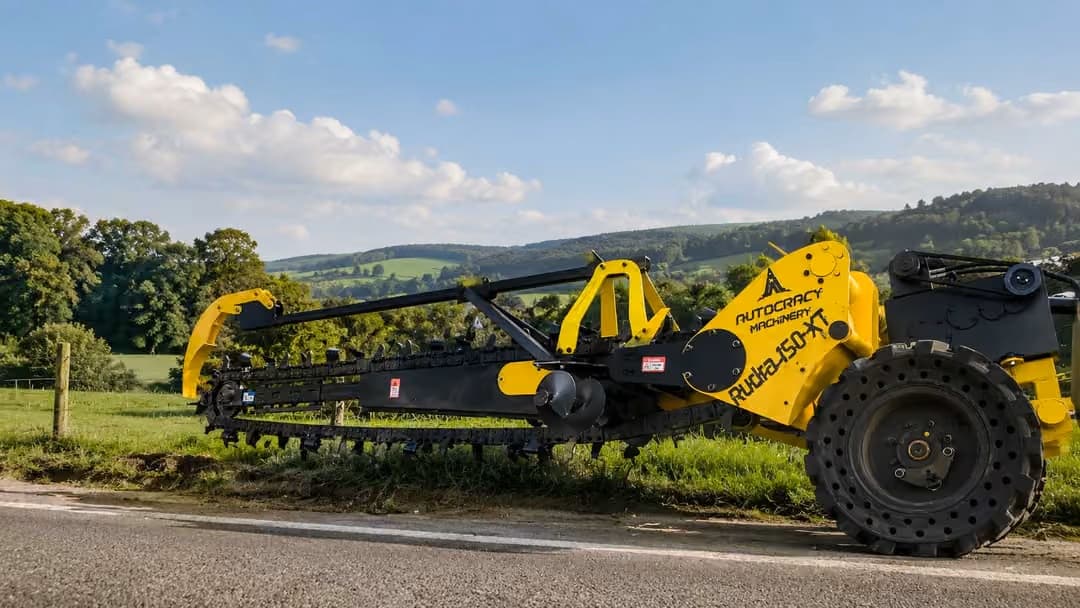
The Gaja Trencher Series offers robotic trenching for underground electrical cable and utility installations. It is ideal for applications that require lengthy trenching routes in open solar farm locations.
Mayura TL: Trenching and Material Handling
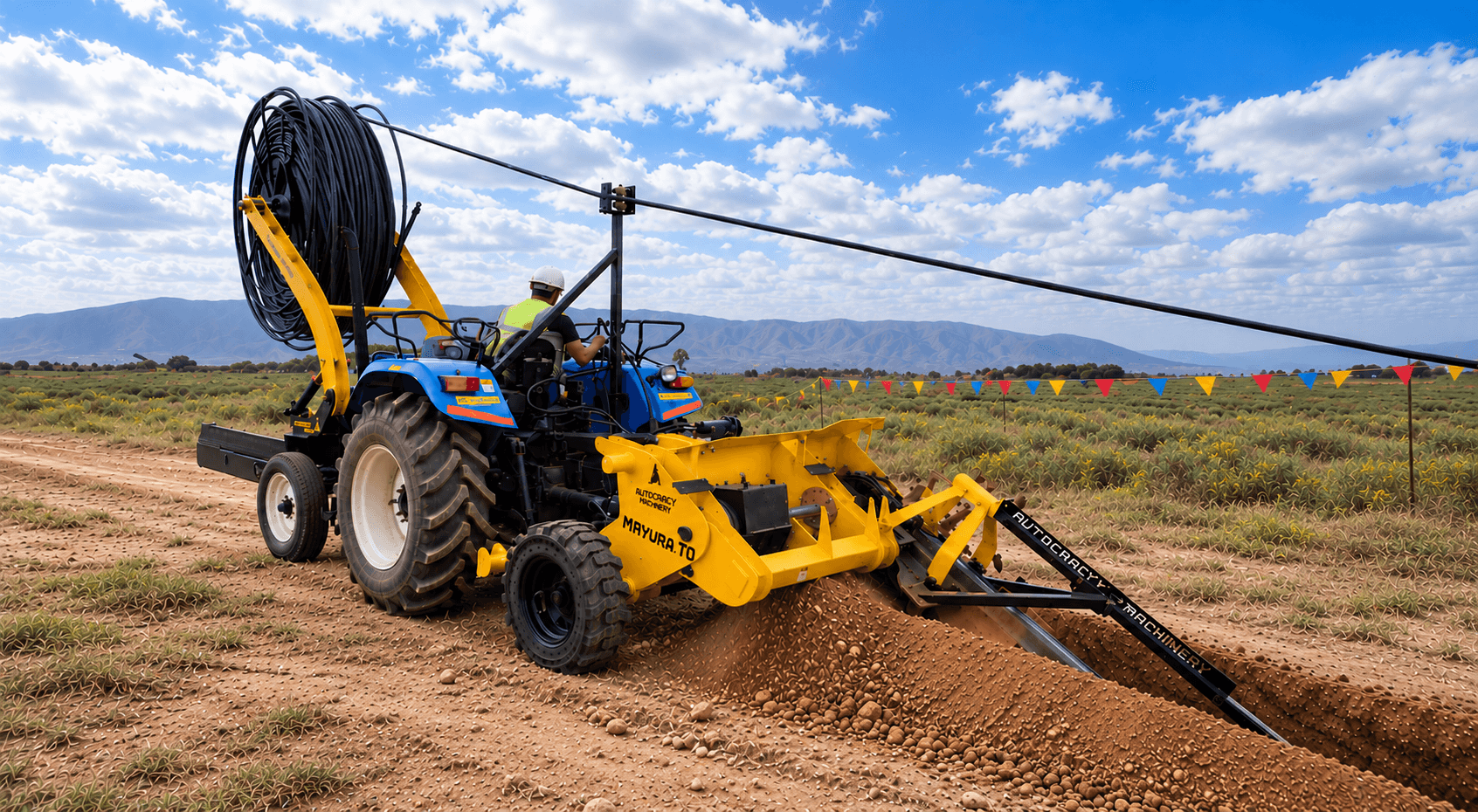
Some solar installations require equipment that can manage a variety of site operations. The Mayura TL is a trencher loader with a variety of uses, including trenching and material handling.
Depending on the project specifications and attachment configuration, it can assist with underground utility preparation and other excavation tasks.
Pole Stacker: Material Handling
Long supplies and installation components must be carried across the solar farm while construction is underway. Handling and arranging these materials requires specialized instruments.
The Pole Stacker Machine makes material handling and placement easier, assisting teams in managing the transportation of necessary supplies throughout the project.
Applications Across Solar Farm Construction
Different stages of a solar project require different machinery. Selecting equipment according to the activity helps project teams organise their construction workflow.
- Foundation preparation: Drilling equipment supports the preparation of foundation holes for solar mounting structures.
- Electrical infrastructure: Trenchers dig subterranean paths for electrical lines and utility connections.
- Material handling: Appropriate handling equipment facilitates the movement and positioning of installation materials across wide project areas.
- Site development: Depending on the project architecture, excavators and trenching machines can support extra infrastructure needs.
Mechanizing these tasks can help to decrease repetitious manual labor and coordinate operations among different installation crews.
Choosing the Right Solar Installation Machinery
Prior to selecting solar installation equipment, EPCs and project managers should consider:
- Project area: Site size and distance between work zones.
- Ground conditions include soil type, terrain, and accessibility.
- Foundation standards define the number, size, and location of foundation holes.
- Cable routing: Determine the trench's depth, width, and overall cable route length.
- Material handling: The size and weight of the materials to be moved.
- Equipment compatibility: Determine whether the machinery is suitable for its intended purpose and site activities.
Conclusion
In addition to panel installation, solar farm construction entails a number of duties. Foundation drilling, underground cable trenching, material handling, and site preparation are all activities that contribute to project progress.
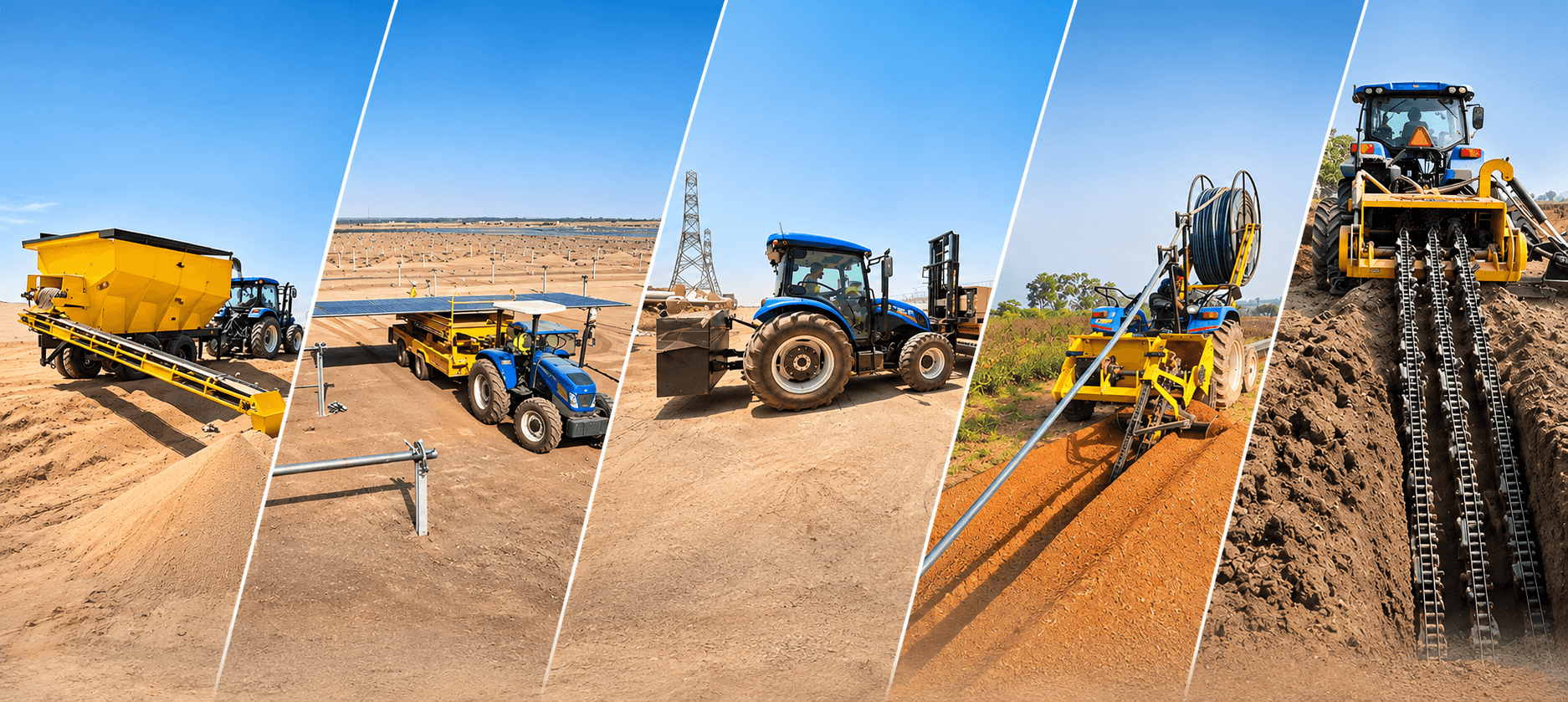
Using proper solar farm building equipment can help EPC teams manage these processes without relying on manual labor. Autocracy Machinery offers solutions to suit a variety of solar infrastructure project requirements, including the Vedhan Series, Gaja Series, Mayura TL, and Pole Stacker.
Before selecting the proper machinery, the site, application, and project workflow must all be considered.
Explore Autocracy Machinery's Solar Equipment to discuss equipment requirements for your next solar project.