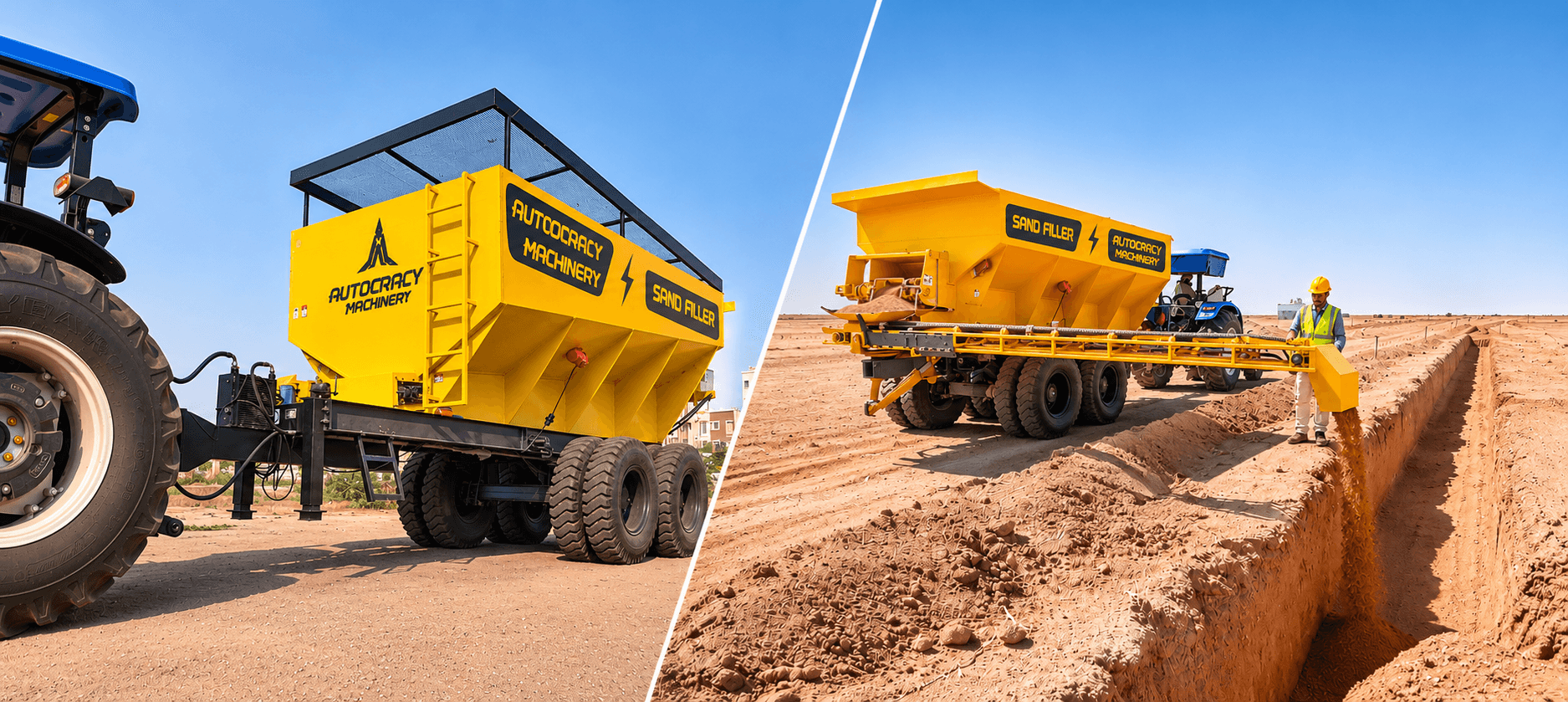
Harvesting crops is only one part of farm operations. Once the produce is ready, moving it from the field, loading it for transportation, and handling bulk quantities can take considerable time and labour. When these activities are managed manually or with unsuitable equipment, they can slow down the entire farm workflow.
For farmers handling large quantities of harvested crops, mechanising material handling can make everyday operations more organised. However, choosing the right equipment requires more than looking at its loading capacity. The type of crop, tractor compatibility, working conditions, and handling requirements all play an important role.
Before investing in agricultural material handling equipment, it is important to understand what needs to be moved and how frequently the operation takes place.
Different crops have different handling requirements. Loose agricultural materials, bulk crops, and harvested produce may require different loading methods and attachment configurations.
Some important factors to consider include:
Type of material: Understand whether you are handling loose crops, bulk agricultural produce, or other farm materials.
Loading requirements: Consider the quantity of material that needs to be lifted and transferred during each operation.
Frequency of operation: Equipment requirements may vary depending on whether loading is occasional or part of daily farm activities.
Working space: Field conditions, ground surfaces, and available movement space can influence equipment selection.
Understanding these requirements helps narrow down the equipment options suitable for your agricultural operations.
For many farms, tractors are already an important part of daily operations. Using tractor-mounted attachments for material handling can help farmers make better use of their existing machinery.
However, compatibility should always be checked before selecting an attachment.
Consider the following:
Tractor horsepower and available hydraulic capacity
Attachment mounting and coupling compatibility
Lifting and loading requirements
Tractor stability during material handling
Operating conditions at the worksite
Selecting an attachment that matches the tractor's capabilities helps maintain smoother operation and avoids unnecessary strain on the equipment.
When agricultural operations involve frequent loading and movement of bulk materials, a tractor-mounted bulk crop loader can be a practical equipment option.
Instead of depending entirely on manual handling, farmers can use a suitable loader attachment to lift and transfer agricultural materials during routine farm operations.
It can support activities such as moving harvested materials, loading bulk crops, and transferring produce for further handling or transportation.
The right loader configuration depends on the material being handled, tractor specifications, and the nature of the operation. Evaluating these requirements beforehand helps farmers choose equipment that fits their existing workflow.
Mechanisation is not simply about replacing manual work with machinery. It is about selecting equipment that suits the actual requirements of the farm.
Before finalising your choice, evaluate the material handling capacity you need, tractor compatibility, attachment requirements, site conditions, and frequency of use.
Choosing suitable agricultural attachments can help organise loading activities and make better use of available farm machinery.
If you are planning to mechanise material handling on your farm, explore Autocracy Machinery's Bulk Crop Loader and agricultural attachments to find equipment suited to your operational requirements.
1. What is agricultural material handling equipment?
Agricultural material handling equipment refers to machinery and attachments used to lift, move, load, and transfer crops and other materials during farm operations.
2. What is a tractor-mounted bulk crop loader used for?
It is used to support the loading and movement of bulk agricultural materials, helping reduce dependence on manual handling.
3. What should farmers check before choosing a tractor-mounted loader?
Farmers should consider tractor horsepower, hydraulic capacity, attachment compatibility, loading requirements, and working conditions.
4. Can agricultural attachments be used with existing tractors?
Yes, suitable tractor-mounted attachments can be used with existing tractors, provided their mounting arrangements, power requirements, and operating capabilities are compatible.
5. How does mechanised material handling help farm operations?
It can reduce manual handling requirements, support bulk loading activities, and make the movement of agricultural materials more organised.