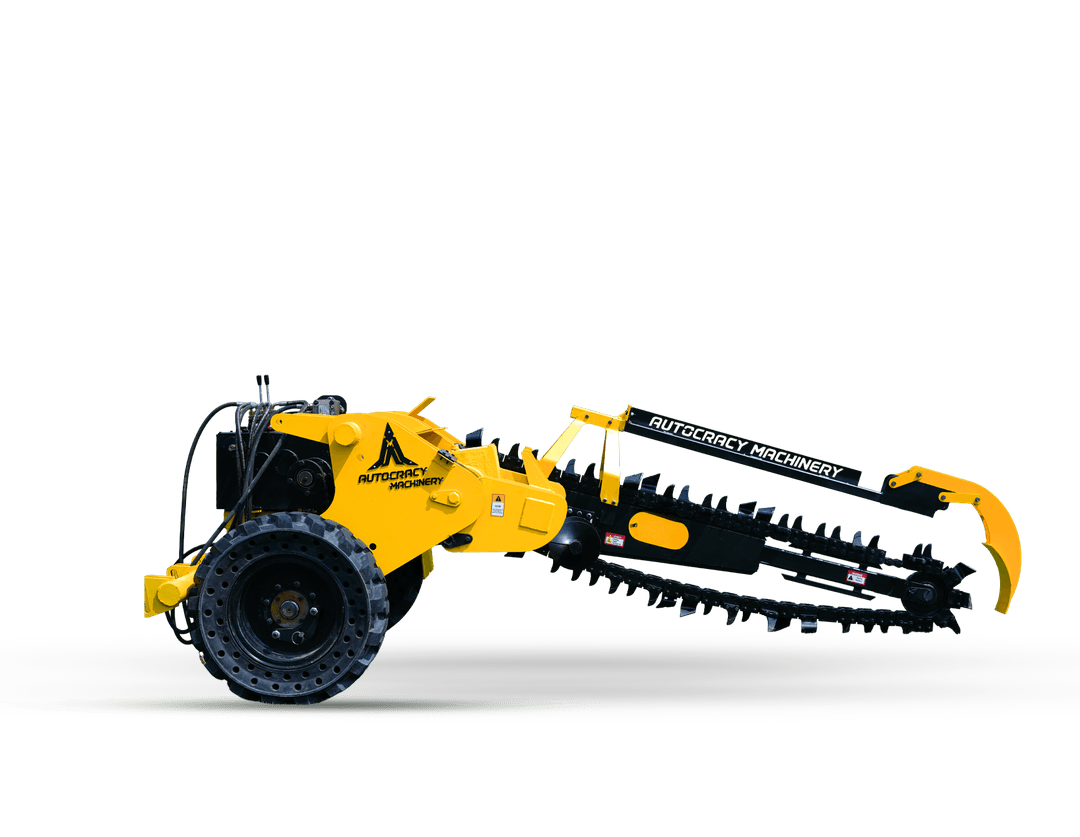
Route Planning
Map route requirements, trench depth, and site access before deploying Mayura TO.
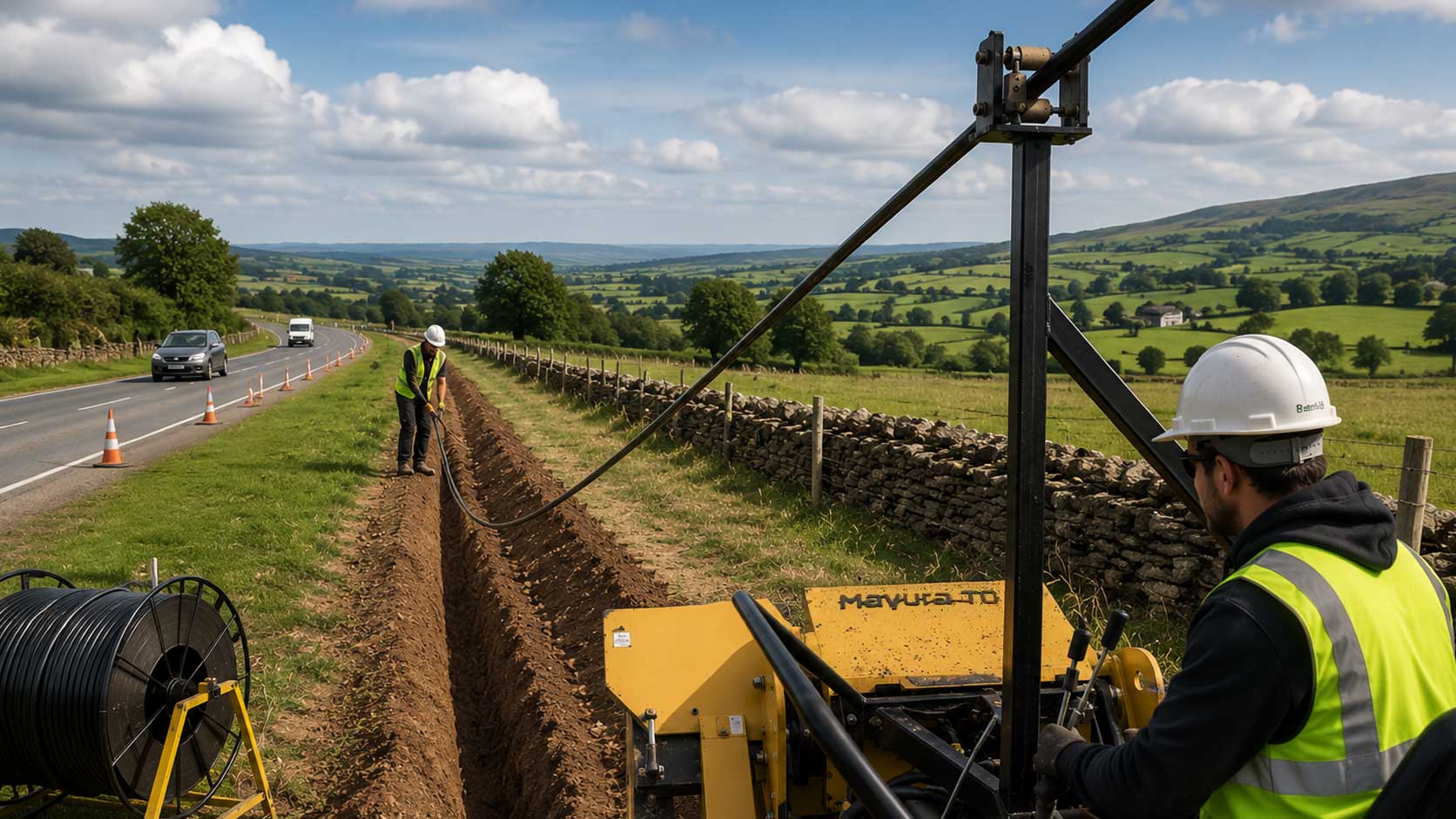
- | Equipment
Tractor
>60 HP
PTO / Hydraulic
300 m/hr (150 m/hr in soft soil, 90 m/hr in hard soil)
110–280 mm
Up to 1800 mm
30–60 mm
Large-scale agricultural and infrastructure projects often face challenges in coordinating trenching, duct laying, and backfilling as separate operations. This not only increases execution time but also creates alignment issues between each stage.
The Mayura TO Agriculture Utility Tractor Attachment is designed to eliminate these inefficiencies by combining all three operations into a single workflow. It integrates directly with tractors above 60 HP, allowing project teams to execute trenching tasks without relying on multiple machines.
By performing trench cutting, duct placement, and backfilling in one pass, it solves the problem of misalignment between trench and duct positioning. This is especially critical in OFC and underground utility projects where accuracy directly impacts system performance.
Its ability to maintain a synchronized operation across all stages ensures consistent trench quality, proper duct placement, and immediate closure, making it highly effective for structured agricultural and rural infrastructure development.
PROJECT EXECUTION
Agriculture
Agricultural trenching is widely used across irrigation systems, drainage networks, and general farm development activities. The Mayura TO Farm Trenching Machine is built to handle these varied applications where precision and continuity are critical.
In irrigation projects, it enables the creation of straight and consistent trenches that allow efficient pipeline placement and uniform water distribution across fields. This helps improve crop irrigation efficiency and reduces water wastage.
For drainage applications, it supports the formation of properly graded channels that help remove excess water from agricultural land, preventing soil damage and protecting crop health during heavy rainfall conditions.
It is also highly effective in farm layout development, where structured trenching is required for bund formation, boundary definition, and organized field planning across large agricultural areas.
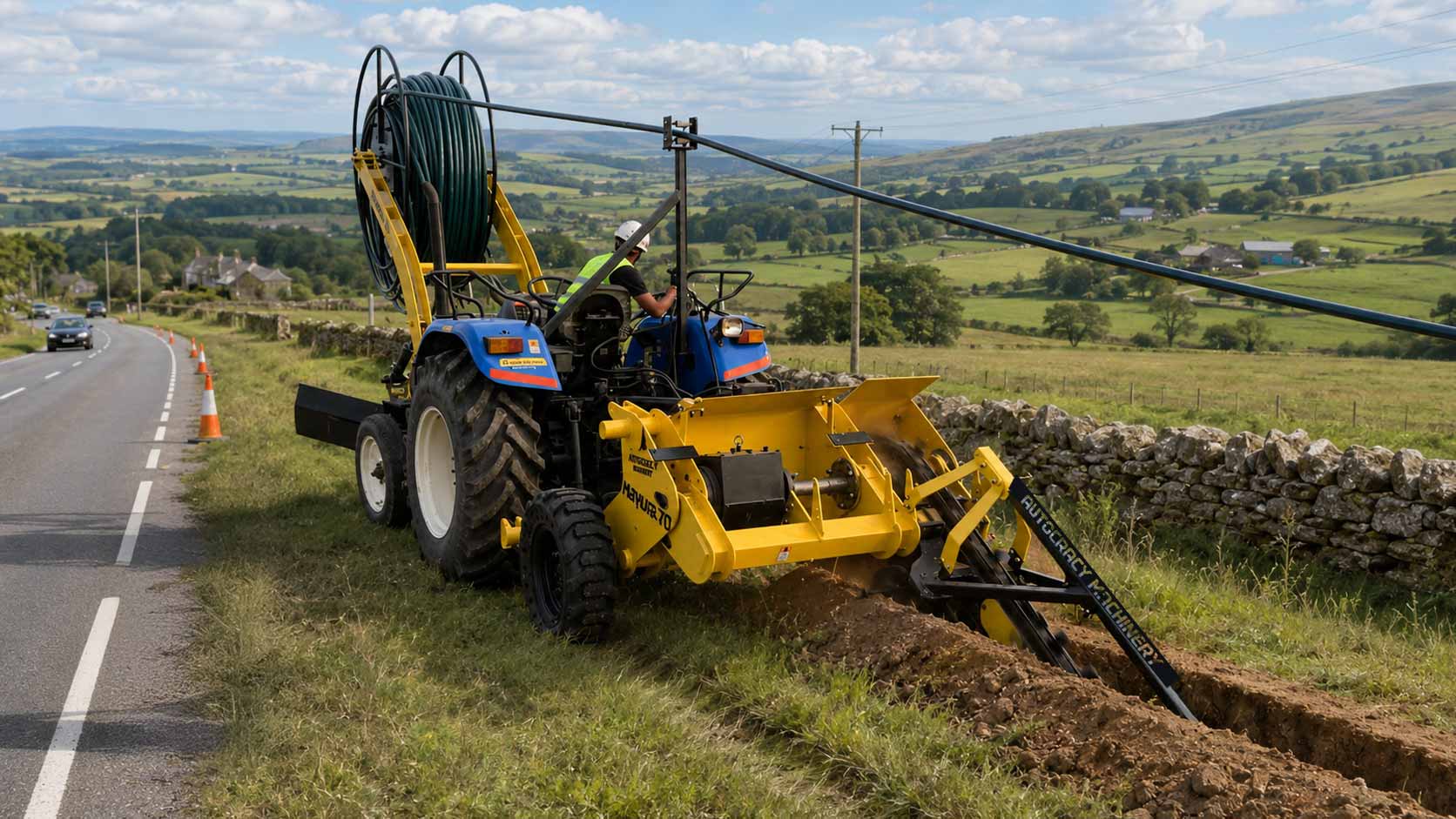
Agriculture
Efficient agricultural execution depends on reducing time delays, minimizing manual intervention, and ensuring consistent output across large land areas. The Mayura TO Heavy Duty Farm Trencher is designed to meet these operational priorities through a single-pass working system.
By combining trenching and soil handling functions into one continuous process, it eliminates repeated passes over the same field, reducing soil compaction and saving operational time.This helps address common farming challenges such as delayed irrigation setup, uneven trench depth, and high labour dependency during peak agricultural seasons.
Its stable performance across different soil conditions ensures reliable operation even in challenging field environments, making it suitable for both seasonal farming and large-scale agricultural development projects.
WORKFLOW
Map route requirements, trench depth, and site access before deploying Mayura TO.
Use the attachment setup to keep trench output consistent across farm lanes, park areas, plantation rows, and narrow landscaped spaces.
Cleaner trench profiles help pipe placement, sprinkler installation, drainage, and landscape reinstatement teams proceed with less rework.
Autocracy Machinery can help match machine configuration, brochure details, and application guidance to the project.
APPLICATION SUPPORT
Share your site conditions, output goals, and timeline so the Autocracy team can guide model fit, brochure details, and next steps for your project.
Built for performance. Trusted by contractors, municipalities, and EPC teams across sectors.
| Feature | Value |
|---|---|
| ID of Duct roll (adjustable) | 850 mm (adjustable) |
| Width of Duct Roll | 600 mm |
| OD of Duct roll | Up to 2000 mm |
| Fuel Consumption Rate | 5–6 L/hr |
| Max Backfilling Depth: | 2000 mm |
| Max Blades Filling Width: | 2500 mm |
| Min Blades Filling Width: | 1000 mm |
| Overall Length: | 10500 mm |
| Overall Width: | 3200 mm |
| Overall Height: | 4500 mm |
Common questions about using Mayura TO in this application.
Industry model fit in India
Mayura TO is presented for Agriculture applications on India project sites, where a equipment has to work around farm tracks, irrigation routes, plantation rows, and seasonal soil windows. This page adds india-focused context for trenchers, so teams can judge whether the model supports crop safety, narrow access, low disturbance, and dependable daily output.
Start by checking Mayura TO against row spacing, soil moisture, trench depth, tractor availability, and harvest calendar constraints; that route-specific review is more useful than treating every trenchers page as the same model brochure.
Common agriculture use cases for Mayura TO include irrigation lines, farm utilities, plantation support, fencing, and rural water movement, provided the site setup supports the machine, crew movement, and next work stage properly.
Use this model page to discuss Agriculture fit, specification limits, transport readiness, brochure details, and quote requirements with Autocracy Machinery.
project teams in India should confirm soil condition, daily metres, trench profile, access width, and downstream installation speed before shortlisting Mayura TO, especially when farm tracks, irrigation routes, plantation rows, and seasonal soil windows affect access or productivity.