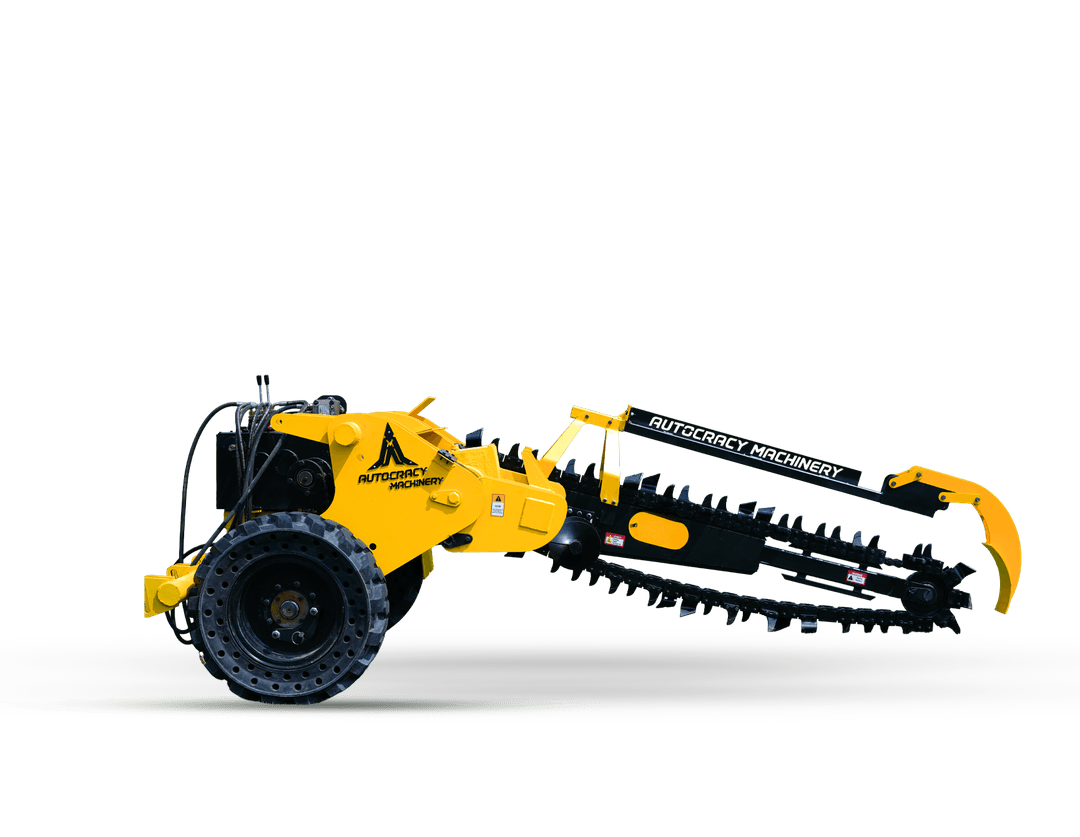
Route Planning
Map route requirements, trench depth, and site access before deploying Mayura TW.
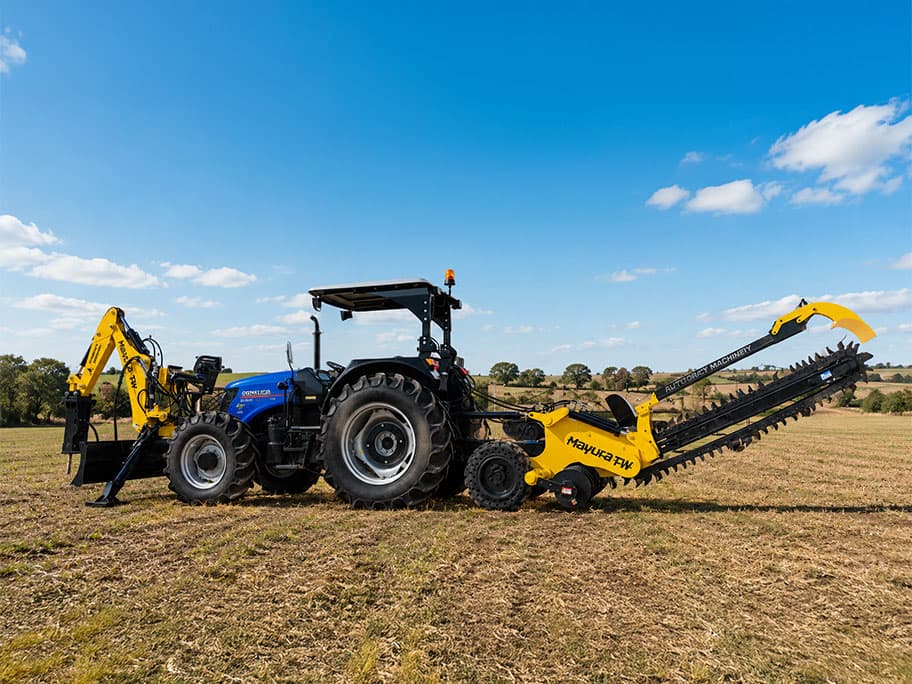
- | Equipment
Tractor
>90 HP
PTO/Hydraulic
Up to 1800 mm
110–900 mm
Up to 300 m/hr
5–6 litres/hr
Large-scale agricultural development increasingly depends on integrated earthmoving solutions capable of supporting irrigation expansion, land improvement, and plantation infrastructure. The Mayura TW Land Development Equipment is designed for agricultural projects requiring deep excavation, trenching, grading, and site restoration within a unified workflow. It enables preparation of land for irrigation reservoirs, subsurface water distribution systems, plantation layouts, and field access improvements while minimizing equipment mobilization.
The integrated hydraulic breaker also assists in preparing land with rocky or compact formations that can delay conventional excavation methods. Suitable for commercial farms, plantations, agro-industrial developments, and rural infrastructure projects, the machine supports efficient field preparation while helping maintain planned construction sequences for long-term agricultural productivity.
PROJECT EXECUTION
Agriculture
Modern agricultural operations require dependable underground infrastructure to improve water availability, field accessibility, and utility integration. The Mayura TW Plantation Trencher supports excavation for irrigation mains, drainage collectors, plantation service trenches, buried utility conduits, and water transfer pipelines across extensive agricultural estates.
It is equally effective for utility corridors that connect pump stations, processing facilities, storage areas, and remote cultivation zones through underground service networks. Integrated grading and backfilling capabilities simplify restoration after installation, helping preserve field usability and minimize disruption to surrounding agricultural activities. The machine also supports expansion of plantation developments where reliable underground infrastructure is essential for efficient resource management and future operational growth.
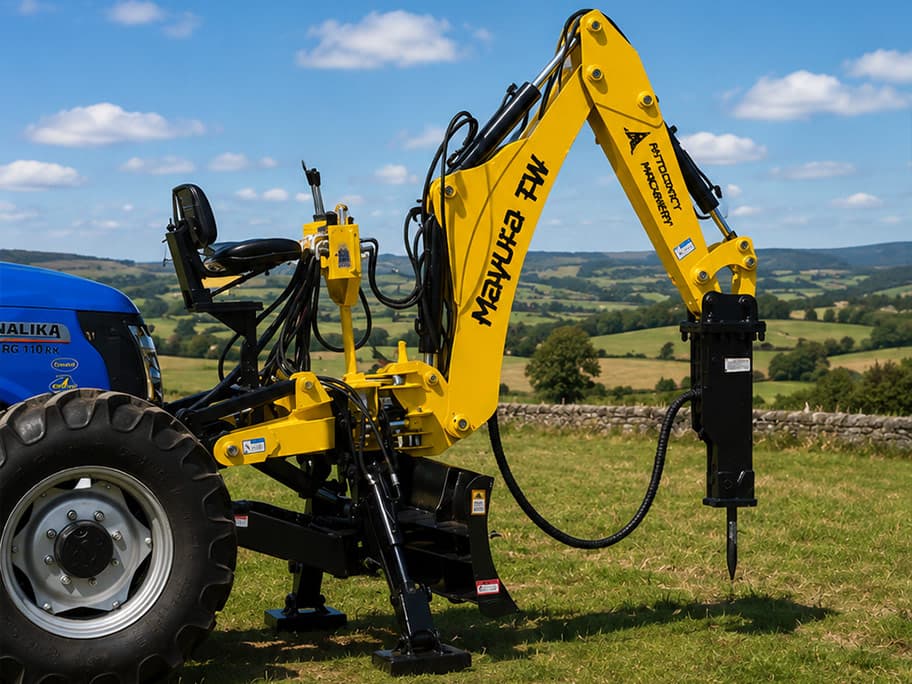
Agriculture
Agricultural earthwork projects require careful coordination between land preparation, soil conservation, and seasonal farming schedules to achieve sustainable outcomes. The Mayura TW Field Drainage Machine supports structured execution by combining excavation, grading, and restoration within a single operational platform. Before work begins, project teams should evaluate soil composition, field gradients, water flow characteristics, and existing irrigation assets to determine optimal excavation strategies.
Excavation sequences should be coordinated to minimize soil compaction and preserve productive cultivation areas. Following installation, grading and reinstatement activities should restore natural drainage patterns while maintaining field accessibility for agricultural machinery. A comprehensive execution approach improves long-term water management, supports efficient land utilization, and enhances the resilience of agricultural infrastructure.
WORKFLOW
Map route requirements, trench depth, and site access before deploying Mayura TW.
Use the attachment setup to keep trench output consistent across farm lanes, park areas, plantation rows, and narrow landscaped spaces.
Cleaner trench profiles help pipe placement, sprinkler installation, drainage, and landscape reinstatement teams proceed with less rework.
Autocracy Machinery can help match machine configuration, brochure details, and application guidance to the project.
APPLICATION SUPPORT
Share your site conditions, output goals, and timeline so the Autocracy team can guide model fit, brochure details, and next steps for your project.
Built for performance. Trusted by contractors, municipalities, and EPC teams across sectors.
| Feature | Value |
|---|---|
| Lift Height | 2.0 – 3.5 m |
| Lifting Capacity: | 1500 kg |
| Bucket Capacity | 0.12 – 0.15 cubic metre |
| Overall Length | 1300mm |
| Overall Width | 2800 mm |
| Overall Height | 3000 mm |
| Gross Weight | 8100 kg |
Common questions about using Mayura TW in this application.
Industry model fit in India
Mayura TW is presented for Agriculture applications on India project sites, where a equipment has to work around farm tracks, irrigation routes, plantation rows, and seasonal soil windows. This page adds india-focused context for trenchers, so teams can judge whether the model supports crop safety, narrow access, low disturbance, and dependable daily output.
Start by checking Mayura TW against row spacing, soil moisture, trench depth, tractor availability, and harvest calendar constraints; that route-specific review is more useful than treating every trenchers page as the same model brochure.
Common agriculture use cases for Mayura TW include irrigation lines, farm utilities, plantation support, fencing, and rural water movement, provided the site setup supports the machine, crew movement, and next work stage properly.
Use this model page to discuss Agriculture fit, specification limits, transport readiness, brochure details, and quote requirements with Autocracy Machinery.
project teams in India should confirm soil condition, daily metres, trench profile, access width, and downstream installation speed before shortlisting Mayura TW, especially when farm tracks, irrigation routes, plantation rows, and seasonal soil windows affect access or productivity.