


Route Planning
Map route requirements, trench depth, and site access before deploying Wheel Trencher Chakra RS100.
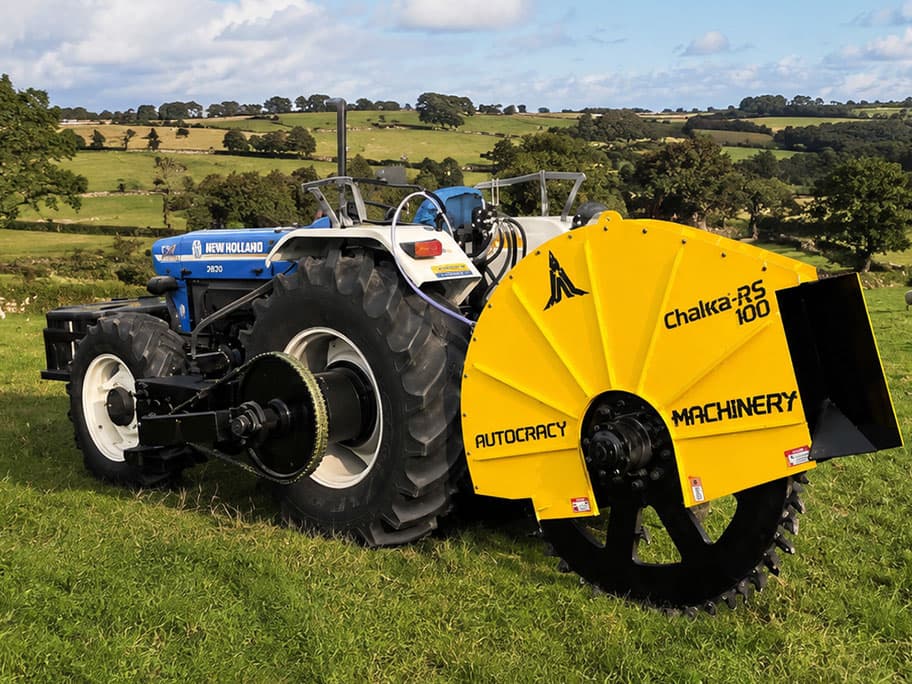
- | Attachment
Tractor
75–105 HP
PTO / Hydraulic
40–100 m/hr, depending on trench depth and soil condition
50 mm, 65 mm, 80 mm
Up to 450 mm
5–6 L/hr during trenching
The Chakra RS100 Fiber Optic Cable Wheel Trencher is specifically suited for OFC deployment projects that require controlled road cutting and accurate trench alignment along highways, urban streets, industrial zones, and rural connectivity corridors. Fiber network contractors often face challenges such as uneven trench dimensions, excessive road damage, and lengthy restoration work when deploying underground communication infrastructure.
The Chakra RS100 addresses these issues through its carbide-tipped wheel cutting system, which creates narrow and precise trenches while minimizing surface disruption. Its tractor-mounted configuration allows quick mobilization between project locations, making it highly effective for large-scale telecom expansion programs. The machine helps maintain trench consistency across asphalt, concrete, and compact soil surfaces, ensuring reliable cable routing and supporting faster network rollout schedules with improved installation quality.
PROJECT EXECUTION
OFC Telecommunications
The Chakra RS100 OFC Telecommunications Wheel Trencher is widely used in backbone fiber network deployment, metropolitan fiber expansion, FTTH projects, broadband infrastructure development, and last-mile connectivity installations. In densely populated urban areas, the machine enables precise road-edge trenching for communication cable placement without extensive disruption to traffic movement or existing infrastructure. It is equally effective in rural broadband projects where long trench stretches require dependable productivity and consistent trench geometry.
Telecom contractors also utilize the machine for utility corridor development where communication networks are installed alongside other underground services. Its ability to create narrow trenches helps reduce restoration requirements and improve overall project efficiency. These advantages make it a practical solution for telecom operators and EPC contractors working on high-volume fiber infrastructure programs.
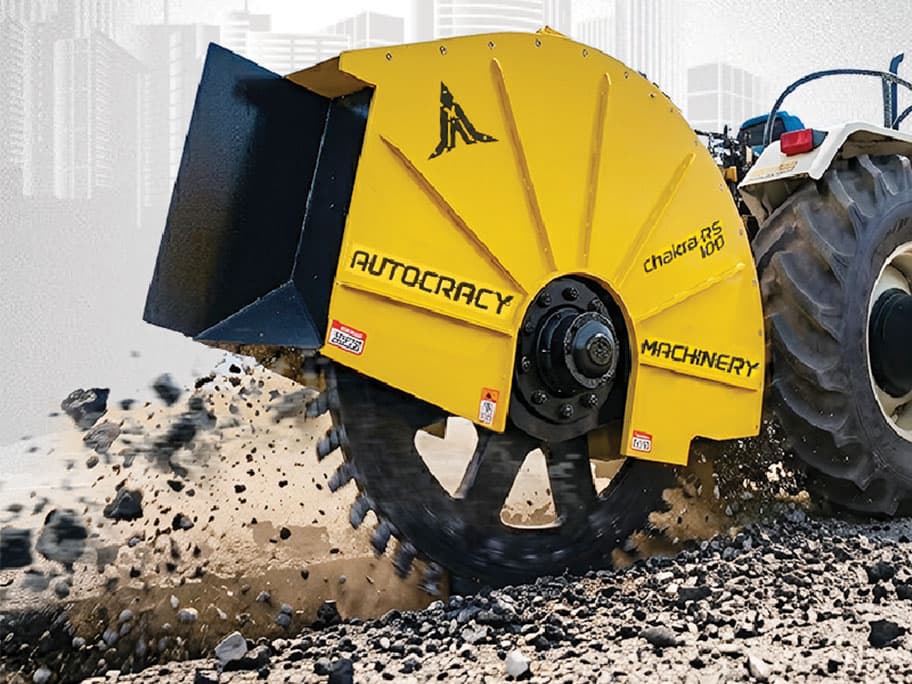
OFC Telecommunications
For telecom infrastructure projects, maintaining cable protection, trench accuracy, and installation speed are critical execution priorities. The Chakra RS100 OFC Cable Laying Wheel Trencher is designed to support these objectives through controlled trench width and depth capabilities that help ensure proper fiber placement. Its PTO-driven operation eliminates the complexity of additional power units, simplifying field operations and reducing maintenance demands.
The hydraulic control system enables stable cutting performance across varying road and ground conditions, allowing project teams to maintain productivity throughout the deployment cycle. By producing clean trench profiles with minimal overcutting, the machine reduces reinstatement workloads and helps contractors meet strict project timelines. This combination of accuracy, mobility, and operational efficiency supports cost-effective OFC installation while maintaining the quality standards required for modern telecommunications networks.
WORKFLOW
Map route requirements, trench depth, and site access before deploying Wheel Trencher Chakra RS100.
Use the attachment setup to keep trench output consistent across rural, semi-urban, and last-mile utility corridors.
Cleaner trench profiles help duct laying, cable pulling, jointing, and surface restoration teams proceed with less rework.
Autocracy Machinery can help match machine configuration, brochure details, and application guidance to the project.
APPLICATION SUPPORT
Share your site conditions, output goals, and timeline so the Autocracy team can guide model fit, brochure details, and next steps for your project.
Built for performance. Trusted by contractors, municipalities, and EPC teams across sectors.
| Feature | Value |
|---|---|
| Aux Hydraulic Oil Flow (Min) | >25 LPM |
| Machine Overall Length | 5200 mm |
| Machine Overall Width | 2600 mm |
| Machine Overall Height | 1500 mm |
| Gross Weight | 2000 kgs |
| Cutting Tool Type | Carbide-tipped bullet teeth with angle holders |
Common questions about using Wheel Trencher Chakra RS100 in this application.
Industry model fit in India
Wheel Trencher Chakra RS100 is listed here for project teams in India planning ofc telecommunications work with trenchers. Selection should come down to carrier fit, operating method, right-of-way, duct depth, spoil handling, traffic interface, and crew sequencing, and whether the machine supports route accuracy, cable protection, trench consistency, and kilometre-level productivity.
For OFC Telecommunications work, compare Wheel Trencher Chakra RS100 against right-of-way, duct depth, spoil handling, traffic interface, and crew sequencing before finalising equipment deployment, because these details decide whether the machine fits the route, access, and daily output target.
Wheel Trencher Chakra RS100 may suit OFC cable laying, telecom ducts, utility corridors, broadband rollout, and city network expansion when access, output goals, support arrangements, and follow-on crews line up with the job.
Use the page to move from specification review into a clearer discussion about ofc telecommunications suitability, brochure details, field support, and quotation requirements.
For trenchers, check trench depth, trench width, spoil handling, route crossings, surface reinstatement, and carrier fit together with road shoulders, urban corridors, utility crossings, and long linear cable routes; this helps separate a suitable ofc telecommunications setup from a generic model match.


